Beacons

Whistleblowing, new Anac guidelines coming soon

A few more weeks and then the new guidelines, which have already been the subject of public consultation, will be definitively published

by Alessia Valentini

3' min read

Translated by AI
Versione italiana

3' min read

Translated by AI
Versione italiana

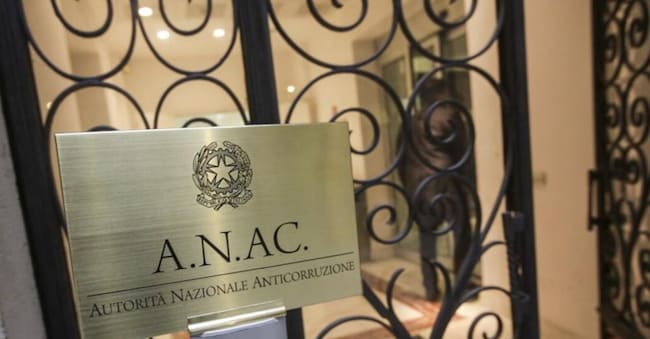
Just a few more weeks and then the new Anac guidelines on whistleblowing will come into force. The scheme was prepared last year by the National Anti-Corruption Authority and was then subject to consultation. Once the consultation phase is over, the final publication will take place shortly.

Whistleblowing is the confidential and anonymous reporting of cases of corruption and wrongdoing committed within a public or private organisation, for action to be taken or by the competent authorities. Whistleblowing concerns criminal offences, violations of laws, regulations, unethical conduct detrimental to the integrity of an organisation, and/or conduct, acts or omissions detrimental to the public interest.

In 2023, Legislative Decree No. 24 transposed in Italy Directive (EU) 2019/1937 on the protection of persons who report breaches of EU law that come to their attention in the workplace (public or private). In this new context, Anac's role was and is decisive also because it provided companies with clarifications and interpretations on the complex legislation.

After an initial clarification package, a monitoring exercise was then launched. "The Authority, aware of the critical issues generated by the new rules on whistleblowing set out in the aforementioned Legislative Decree No. 24/2023," reads the document accompanying the monitoring, "decided to launch a monitoring exercise, by means of a questionnaire submitted to subjects, both in the public and private sectors, called upon to activate the internal reporting channels in their administrations/entities. An anonymous survey, with compulsory questions on issues of particular relevance, aimed at detecting the main problems faced or to be faced.

And it was precisely the results of this initiative that pushed Anac towards a new outline of the Guidelines whose final publication is awaited.

The institute of whistleblowing has existed since 2012 ( Law No. 190 of 6 November 2012) but only with the current legislation, governed by Legislative Decree 24/2023, which transposes EU Directive 2019/1937, were measures introduced to protect the whistleblower from retaliatory acts and guarantees on the confidentiality of his or her identity by encrypting communications on the whistleblowing channel.

Companies subject to the obligation to set up internal, secure reporting channels, guaranteeing the confidentiality of whistleblowers, are of three types those that have employed, in the last year, an average of at least fifty employees, with permanent or fixed-term employment contracts; companies that, while not having an average of fifty employees, deal with certain specific sectors (services, financial products and markets and prevention of money laundering or the financing of terrorism, transport safety and environmental protection); organisations that, while not having an average of fifty employees, adopt organisation and management models as set out in Legislative Decree 231/2001.

Internal and external signalling channel

The choice of reporting channel is not discretionary for the reporter. One should primarily use the internal channel within the organisation where one works and only use the external channel when the internal channel is not active or compliant with the law; when the internal report made has not been followed up; if the whistleblower thinks it may not be followed up or cause retaliation; or when the whistleblower believes that the breach may pose an imminent/likely danger to the public interest.

There are three types of external channels: reporting to Anac, reporting to the judicial or accounting authorities, and public disclosure. The external reporting channel Anac is available from its website at the dedicated page. The enabling platform is realised through the open source software Global Leakes, a social enterprise.

The Italian Competition Authority (Agcm) has also made the whistleblowing service available for violations of competition law (antitrust). In general, every public entity has whistleblowing sections on its website and for each one the following can report: their own internal staff, temporary or occasional staff of that public entity and staff of third parties working with that public entity.

Copyright reserved ©
Loading...

Brand connect

Loading...

Newsletter

Notizie e approfondimenti sugli avvenimenti politici, economici e finanziari.

Iscriviti