Great Britain/ 2

Who is Andy Burnham, the King of the North who threatens Starmer

However, the mayor of the Manchester metropolitan area is not in parliament, a necessary condition for becoming prime minister

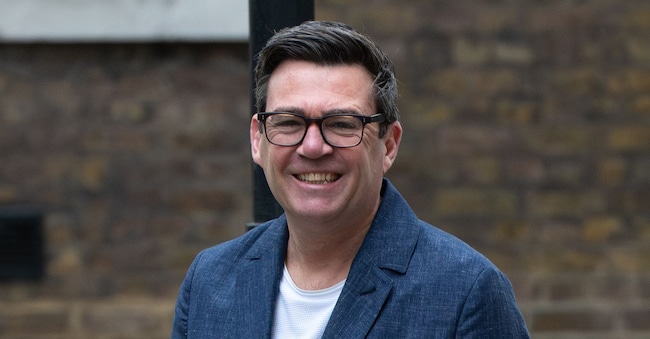
by Angela Manganaro

 Andy Burnham (Reuters)

5' min read

Translated by AI
Versione italiana

5' min read

Translated by AI
Versione italiana

During the coronavirus pandemic, Andy Burnham, the Labour mayor of the Manchester metropolitan area whom many would now like to see as premier in place of Keir Starmer, now weakened by the heavy election defeat, sharply criticised the administration of the then Conservative prime minister Boris Johnson, so much so that he earned the nickname 'King of the North', a title he still holds to this day and which goes beyond that period of emergency and marks the rise of a local politician to a nationally recognisable leader in a difficult area, always in the spotlight during elections.

According to the rules of the Labour Party, only an MP can become prime minister and this effectively prevents Burnham from competing for the post unless someone resigns and a by-election is held, but this takes time and at the moment, after the last local elections, no seat seems really safe.

Loading...

The bookmakers, a substantial part of the party and the polls (the latest from YouGov) seem to ignore this and continue to bet on Burnham as Keir Starmer's successor.

The man himself, who had previously promised to complete a third term as mayor, had already given his willingness last autumn, on the eve of the party congress, at a time when the enemies of the current premier were beginning to rear their heads.

In early 2026, Burnham made an even more outspoken move, running as a Labour representative in the Gorton and Denton by-elections, but was thwarted and then blocked by his party colleagues in government.

Labour then lost that vote andBurnham's allies had good game in claiming he would win. Now he is running again, he has more powerful allies including Lucy Powell, Angela Rayner and Lisa Nandy, who are calling for him to be allowed to stand in the by-election.

Burnham, a Dutch wife, three children, Cambridge graduate, was born in Liverpool in 1970 but grew up in Culcheth, a quiet village in the suburban belt of Cheshire, near Warrington.

The son of a BT engineer and a receptionist, he often referred to his working class upbringing. He joined the Labour Party very early, at the age of 14, also influenced by the miners' strikes, started working as a researcher for the party's politicians, but also made a brief transition into journalism and trade unions.

He first became an MP in 2001, withGordon Brown premier, and had a rapid career, first Chief secretary to the treasury, then Minister for Digital, Culture, Media and Sportt, finally in 2009 Minister for Health (a post he loved very much, he has said several times). He tried to become party leader in 2010 and 2015 but was unsuccessful,

He then served as Home Secretary in Jeremy Corbyn's shadow government before leaving it all behind and devoting himself to running for mayor of the Manchester metropolitan area, a position he has held since 2017. As mayor he gained increasing popularity, so much so that in 2021 he was re-elected with 67.3% of the vote, and in 2024 confirmed for a third term with 63%.

Burnham's political positions have evolved over time but have followed a fairly linear path: he went from an 'aspirational socialism' aiming at redistribution measures with internationalist ambitions to launching his second run for the party leadership in 2015 in front of an audience of Ernst & Young accountants, arguing that entrepreneurs should be considered 'our heroes like nurses'.

At the same time he supported the renationalisation of the railways to steal votes from Jeremy Corbyn with whom he has never had any real point of contact. In the past he has supported the abolition of the mansion tax, calling it an example of the 'politics of envy' but has supported the restoration of the 50% top rate on income tax.

Today he is considered an exponent of Labour's soft left, somewhere between centrists and the extreme left: many MPs of this current would like him in Downing Street, some of his allies have ventured to say that it is 'a matter of weeks'.

If Burnham actually succeeded in becoming premier, he would make one of the most radical changes in British politics and culture. He wants to introduce a proportional electoral system and abandon the traditional majority system.

Burnham makes no secret of the fact that he would focus on higher taxes and a boost to consumption. Contrary to his past claims on the mansion tax, he would now raise local taxes on luxury homes in London and the South East, promise a £40 billion loan to build social housing and cuts in income tax for the lowest earners. He wants more to be spent on defence but not at the cost of cutting welfare, rather by resorting to government borrowing.

He wants to return to the EU and has criticised his party for, in his view, not doing enough to expose the damage of Brexit. On immigration, however, he has always held the firm line: during the referendum to leave the EU in 2016 he even argued that the free movement of people 'was a danger to the safety of our roads'.

The strength of the mayor of the North at this time is that he has not been involved in the last two years of government. He represents a new beginning. "He has shown in Greater Manchester what the Labour Party can do with a new approach to politics and a determination to reverse what Thatcherism has done to our country and its people.

He is the best person to save the Labour Party and avoid the same fate as a government led byNigel Farage. He enjoys enormous popularity among the public and among party members, who will ultimately decide who leads the party in the future,' wrote the Guardian these days.

He insisted on his commitment to change the British economy in order to create the political stability necessary for businesses to invest.

Burnham spoke of 'pro-business socialism' and proposed an economic model involving control of basic necessities such as water, energy, housing and transport (which he did in Manchester).

Luke Tryl, head of the think tank More in Common, wrote in the Spectator: "Having spoken to hundreds of voters across Greater Manchester in focus groups, I can confirm that the Burnham factor is real and not just a Westminster propaganda bubble."

But Tryl also pointed out 'So why did the Labour Party get such a disappointing result in Greater Manchester last Thursday? (in the last local elections ed.). Simply put, why was Burnham not on the ballot paper'.

Copyright reserved ©
Loading...

Brand connect

Loading...

Newsletter

Notizie e approfondimenti sugli avvenimenti politici, economici e finanziari.

Iscriviti