Epstein files

Who is Ghislaine Maxwell, the British socialite accomplice of Jeffrey Epstein

Daughter of tycoon Robert Maxwell, brought up in the drawing rooms of London and New York high society, Ghislaine Maxwell became a key figure in the system of abuse orchestrated by Jeffrey Epstein

by Silvia Martelli

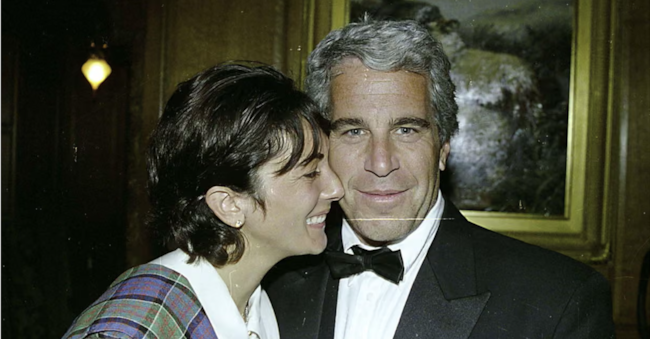
Ghislaine Maxwell e Jeffrey Epstein.

5' min read

Translated by AI
Versione italiana

5' min read

Translated by AI
Versione italiana

At the end of January, when new documents desecreted started circulating among editorial offices and law firms - hundreds of pages of notes, e-mails, depositions, diary fragments - Ghislaine Maxwell's name re-emerged with the force of a tide that never fully recedes. The files, published after years of court battles and reported by all the world's major newspapers, do not change the substance of her conviction. But they do rekindle the question that has accompanied her figure for more than a decade: who was really the woman who, with a velvety British accent and a diplomatic salon naturalness, became the essential cog in the system of abuse orchestrated by Jeffrey Epstein?

In the new documents, Maxwell appears against the light: not only as an already convicted defendant, but as a social junction, as a mediator, as a creature bred in power and plunged into its darker side. The "Epstein Files" do not just recount a crime: they recount an environment. And within that environment, Maxwell is a constant, almost choreographic presence.

Loading...

The Beloved Daughter

To understand Maxwell one has to go back a long way, before Manhattan and private flights, before Caribbean islands and compromising photographs. One has to enter the house in Headington Hill Hall, Oxford: fifty-three rooms, thick carpets, telephones ringing at all hours of the day and night. His father, Robert Maxwell, was a man whose presence filled the room as naturally as others breathe. Labour MP, publishing magnate, Holocaust survivor reinvented tycoon, Maxwell father ruled family and business with a mixture of affection and terror.

Ghislaine, the youngest of nine children, was - according to many accounts - the favourite. Brilliant, multilingual, able to move among powerful adults with precocious confidence. She studied at Marlborough College and then Balliol College, England, where she cultivated the cosmopolitan air that would become her trademark. She was not only beautiful: she was competent in conversation, quick to absorb hierarchies, adept at understanding who really mattered around her.

When Robert Maxwell fell from his yacht, the Lady Ghislaine, off the Canary Islands in 1991, personal tragedy was intertwined with public scandal. In the following months it emerged that he had looted hundreds of millions of pounds from his employees' pension funds. The empire crumbled. The surname Maxwell became synonymous with fraud. For Ghislaine it was a double loss: her father and the system that had protected her.
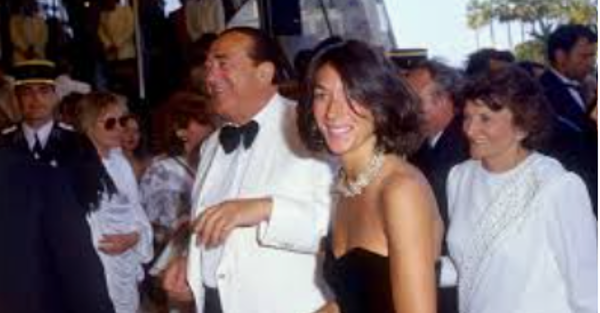
Some friends will say, years later, that it was at that moment that the void was created that Epstein knew how to fill.

Manhattan, Reinvention and Power

When Maxwell moves to New York in the early 1990s, she brings with her a bruised reputation, but an intact social capital. She frequents exclusive clubs, throws parties, presents herself as a philanthropist, and founds a small environmental organisation. It is in that ecosystem that she consolidates her relationship with Jeffrey Epstein.

Their love affair ended relatively early, but the collaboration became structural. According to reconstructions published over the years, Maxwell was not a decorative figure. Trial testimonies describe her as the woman who approached vulnerable teenagers, reassured them, introduced them into a seemingly sophisticated and safe world. In the courtroom, some victims recalled her as 'friendly', 'almost maternal', before the situation turned abusive.

The federal trial in 2021, which ended with her sentencing in 2022 to 20 years in prison, fixed in legal terms what had been hanging in the balance for years between suspicions and out-of-court settlements. The jury found her guilty of conspiring and facilitating the sex trafficking of minors between the mid-1990s and early 2000s.

Yet even during the proceedings, Maxwell never quite lost that aristocratic hostess composure. Reporters noted the pastel jumpers, the neat notebooks on the defence bench, the upright posture. A woman raised on the idea that image control was a fundamental form of survival.

The Prison and the Paradox

Since 2022, Maxwell has been serving his sentence at the Federal Prison Camp Bryan, a low-security facility in Texas. His transfer there, reported by several American media in 2025, caused controversy: some spoke of privileged treatment. But the prison authorities argued that the placement met standard criteria.

From the few communications filtered through lawyers and family, the image emerges of a disciplined inmate, engaged in classes and activities, who continues to proclaim her innocence. Her siblings have called the trial unfair, claiming Maxwell has been turned into a symbol, almost a trial surrogate for Epstein, who died by suicide in 2019 while awaiting trial.

It is a subject that finds little echo in public opinion, but one that touches a raw nerve: how much of what Maxwell represents goes beyond what she has done? She has become, for many, the female face of a predatory system dominated by powerful men. For others, she is the example of how privilege does not guarantee eternal impunity.

The character and the mask

People who knew her before the scandal speak of an energetic, sporty woman, passionate about oceans and technology, capable of organising an impeccable dinner party and quoting environmental statistics with equal ease. The victims, on the other hand, describe a controlling presence, capable of alternating warmth and intimidation.

Perhaps the key lies in this dual identity. Growing up next to a father who embodied excess and fall, Maxwell learned early on that the world is a stage and that reputations can evaporate overnight. Over the years with Epstein, that lesson seems to have morphed into a form of moral pragmatism: maintain access, protect the system, don't ask questions that might undermine the structure.

The 'Epstein Files' does not add a final twist. There is no revelation that overturns the verdict. But they do add detail and context: they show how extensive was the social network Maxwell helped to weave. And they remind us that her story is not just that of a completed trial, but that of a woman who traversed the most elegant chambers of Western power, leaving behind a trail of destruction.

Provisional Summary

There is a photograph that keeps circulating online: Maxwell smiling, in a suit, his chin slightly raised. It is an image that belongs to an era when his name evoked worldliness, not federal courts.

Today, as new documents are analysed line by line and newsrooms return to put her name on the front page, Ghislaine Maxwell is a figure frozen between two narratives: that of the brilliant socialite and that of the convicted prisoner. Between the lit salon and the tidy cell. Between the illusion of invulnerability and the reality of punishment.

And perhaps it is precisely this tension that makes his story not just a criminal scandal, but a revealing chapter on how power is built, protected and sometimes crumbles.

Copyright reserved ©
Loading...

Brand connect

Loading...

Newsletter

Notizie e approfondimenti sugli avvenimenti politici, economici e finanziari.

Iscriviti