
Who is Abdul El-Sayed, the progressive doctor who wants to change the Democratic Party?
El-Sayed has won the Democratic primary for the Senate in Michigan, establishing himself as one of the leading figures of the party’s progressive wing

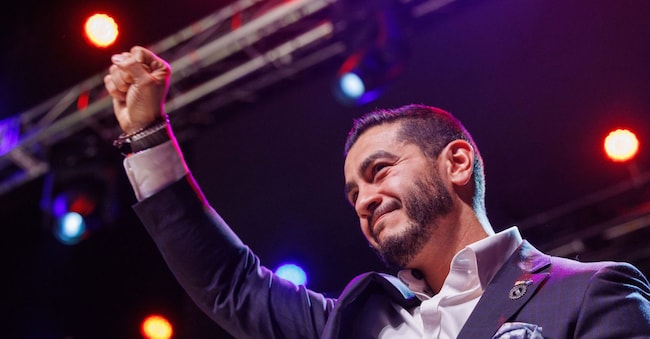
At the age of 41 Abdul El-Sayed has become one of the new faces of the American left. A doctor, public health expert, former Detroit city official and television commentator, the Democrat has won the Michigan Senate primary, establishing himself as the candidate of the party’s progressive wing.
His victory represents not only a personal success, but also a political statement: the Democratic base has rewarded a candidate who is openly critical of the Washington establishment and of the lobbies that traditionally wield influence within the party, including the American Israel Public Affairs Committee (AIPAC), which had backed her opponent, Haley Stevens.
Should he also win the November elections, El-Sayed would become the first Muslim senator in US history, a symbolic milestone set to have a significant impact on political representation in the United States.
Born in Ann Arbor, Michigan, in 1985, El-Sayed is the son of Egyptian immigrants. He grew up in a Muslim family and Arabic was his first language. He often says that his experiences as a child and teenager taught him what it means to feel like an outsider: following the 9/11 attacks, he was the target of anti-Arab insults and discrimination, incidents which he still cites today as one of the factors that have shaped his political outlook. In his campaign speeches, he frequently emphasises the idea that the United States is a country capable of offering enormous opportunities, but that all too often it fails to guarantee the same opportunities to all its citizens.
Before entering electoral politics, he built his career in the public health sector. A doctor by training, he served as Director of the City of Detroit’s Department of Health, focusing on health inequalities, prevention and access to healthcare. That administrative experience has become one of the cornerstones of his political narrative: El-Sayed likes to present himself as a specialist who has turned to politics, capable of tackling concrete problems rather than limiting himself to slogans. Over the years, he has also worked as a commentator for CNN and hosted a podcast, developing remarkable communication skills that many consider to be one of his main strengths.


