Portugal

Who is António José Seguro, winner of the first round of the presidential elections in Portugal

The former socialist secretary received more votes than expected and is the favourite in the runoff against far-right leader Ventura

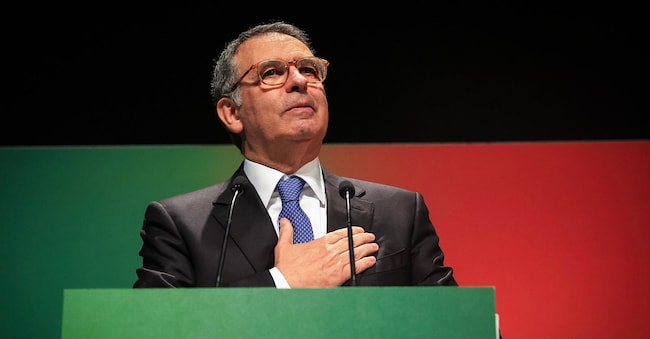
by Massimo De Laurentiis

 Il candidato presidenziale Antonio Jose Seguro si rivolge ai suoi sostenitori dopo essere passato al secondo turno delle elezioni presidenziali nella sede della sua campagna elettorale a Caldas da Rainha, in Portogallo, il 18 gennaio 2026. Il ballottaggio è previsto per l'8 febbraio tra Seguro e Andre Ventura.  EPA/JOSE COELHO

3' min read

Translated by AI
Versione italiana

3' min read

Translated by AI
Versione italiana

António José Seguro, a leading member of the Socialist Party, won the first round of Portugal's crowded presidential election with 31.1% of the vote. For the first time since 1986, no candidate exceeded the 50% threshold of votes in the first round, so Seguro will face a runoff with André Ventura, leader of the far-right 'Chega' party, who obtained 23.5% of the vote.

Education and political career

Seguro is considered a moderate socialist, sometimes criticised on the left for his positions that are considered too centrist. His victory in the first round came after a campaign without sensationalism, in contrast to that of 'Chega', much criticised for its provocative tone.

Loading...

Born in 1962, he was born in Penamacor, a small town in the Portuguese hinterland on the border with Spain. From a young age, he actively participated in political life, joining the youth section of the Socialist Party, of which he soon became general secretary.

In 1991 he was elected to Parliament for the first time and from 1995 he held various positions within the governments of António Guterres, including Minister of Youth and Vice-Premier. From 1999 to 2001 he was a member of the European Parliament, a role from which he resigned to return to national politics.

In 2011 he became secretary of the Socialist Party, succeeding José Sócrates, who was also prime minister at the time. Seguro remained party leader until 2014, when, after a disappointing result in the European elections, the then mayor of Lisbon António Costa defeated him in the party's first primaries.

From that moment on, Seguro retired from politics, during which time he taught in the International Relations department of the Autonomous University of Lisbon for over a decade. A long period of silence only recently interrupted with his return to the field for the last presidential elections.

What a Seguro presidency would look like

In an interview with the Cnn at the end of 2024, Seguro had opened up about his possible candidature for the presidential elections in January 2026, describing himself as a simple citizen concerned about Portugal. Among the most important issues for the former socialist leader are health, employment, public services and security.

According to Seguro, the future president of the Republic will have to take on a difficult role of mediation between political and social forces to try to solve the country's structural problems. His presidency, considered likely at this point by many observers, will have a cautious and moderate orientation, marked by collaboration on both the domestic and international fronts.

The key to understanding Seguro's unexpected success may be his composure, which convinced voters in an increasingly polarised political environment, where the runner-up, André Ventura, opted instead for aggressive communication.

Of the socialist candidate, the weekly Expresso writes: 'In these difficult times we are going through, António José Seguro is a benchmark of dignity and decency. And that is precisely what we need most'.

Moreover, now that at the summit of the European Council is former Portuguese Prime Minister António Costa, towards whom Seguro assures that he has no hard feelings about the events of 2014, the second round of the elections will also determine Portugal's position towards the Union. On the one hand the moderate and reassuring face of Seguro, an experienced institutional profile, on the other the provocative style of Ventura, a reference point for Eurosceptic sovereignists and decidedly more hostile to Brussels.

Copyright reserved ©
Loading...

Brand connect

Loading...

Newsletter

Notizie e approfondimenti sugli avvenimenti politici, economici e finanziari.

Iscriviti