
Who is Guido Gianni, the jeweller pardoned by Mattarella?
He had been convicted of two counts of murder and one count of attempted murder, committed in 2008 during an attempted robbery

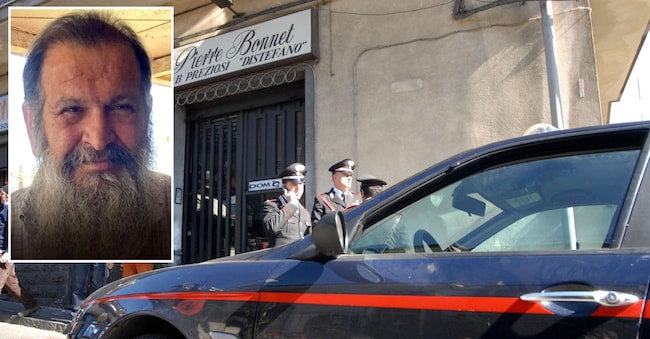
Eighteen years after the robbery at his jewellery shop in Nicolosi, which left two people dead, Guido Gianni’s sentence has been reduced. It is one of the three pardons signed by Sergio Mattarella, which reduces his 12-year-and-four-month sentence for double murder and attempted murder by three years and two months. A case that has been marked over the years by appeals, a petition from his wife and support from the Lega. It has returned to the limelight after weeks in which another similar case, that of Mario Roggero, has ignited the political debate, marked by Matteo Salvini’s campaign for clemency.
The story
Originally from Turin but now living in Catania, in 2008 Gianni found himself facing a robbery for the second time, having foiled another one nine years earlier by firing a shot into the air. The robbers attacked his wife and threatened her with a gun, which later turned out to be a blank-firing weapon. The goldsmith fired: two 21-year-old robbers were killed and a third was wounded. ‘I defended my wife and my family; I didn’t want to kill anyone,’ he explained to the investigators. In the judges’ view, however, the fatal shots were fired when the robbers were already fleeing: there was no self-defence, and in 2022 Gianni was sent to prison. The case had, however, already reached beyond the courtrooms, with a petition on Change.org launched by his wife, Maria Angela Distefano, bolstered by the support of Lega MEP Susanna Ceccardi. Salvini reaffirmed this support when he met the goldsmith at Ucciardone prison.
The aftermath of the Roggero case
For Gianni, this pardon brings with it – at least in the news – echoes of Roggero case. The leader of the Carroccio is also calling for clemency for the jeweller from Grinzane Cavour – sentenced to 14 years and nine months for killing two robbers and wounding a third. The similarities, however, end there: the facts, the legal proceedings and the personal circumstances on which each decision is based are different. On the relationship between security and respect for the rules, Mattarella had already drawn a line in the sand back in July, at the Ventaglio ceremony. ‘Individual behaviour must comply with the common rules, those laid down by law,’ the Head of State had emphasised, warning that thinking instead of adapting the rules to individual behaviour, ‘on a case-by-case basis’, does not strengthen security but leads to the ‘abdication of the State’. In Gianni’s case, the President of the Republic ‘took into account the favourable opinion of the supervisory judge’ and the five years and three months already served. The pardon is partial: it does not overturn the conviction, but reduces the remaining sentence, bringing it below four years and thus allowing for the possibility of probation under the supervision of social services.
The other two, thank you
The other two pardons tell entirely different stories. In the case of a man born in 1972, sentenced to seven years for offences including drug-related crimes, Mattarella remitted the remaining five years, five months and ten days of his sentence due to his extremely serious and irreversible health conditions. The final decision concerns a 45-year-old man sentenced to ten years for drug offences: the pardon reduces his sentence by one year and nine months, in light of his rehabilitation programme and the health of his minor daughter. For him too, the remaining sentence allows for the possibility of conditional release to be considered.

