
Kash Patel, rise and controversies of Trump's man to lead FBI
From the controversy over the purges to the heated confrontation in the Senate, Patel is now at the centre of a political storm. And the FBI finds itself torn between loyalty to the leader and loss of institutional credibility

4' min read
4' min read
When Donald Trump, newly re-elected in 2024, decided on the key names of his new administration, the criterion was not institutional experience, but personal loyalty. Kashyap 'Kash' Patel, 44, the son of Indian immigrants who grew up in Queens (New York), was among the most surprising choices. A law graduate, federal prosecutor in Florida, then legal advisor at the NSA and the Pentagon, Patel had already gained notoriety as a Republican staffer in the House, where he led investigations against the FBI accusing it of having 'fabricated' Russiagate against Trump. It was a battle that established him as a figurehead for the then president and paved the way for him to head the Bureau. His style - combative, partisan, often more of a TV pundit than a bureaucrat - has marked his career and continues to cause debate.
A combative director
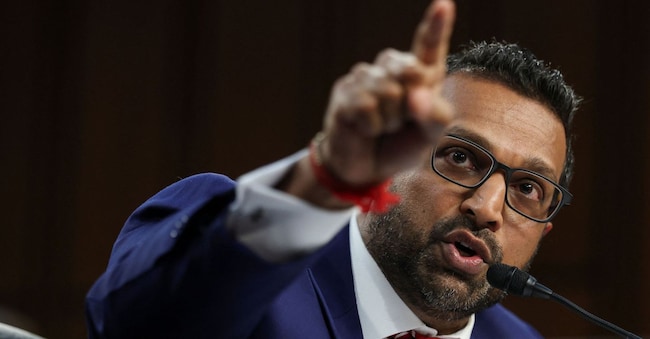
.Since his appointment, Patel has set his leadership on a line of frontal confrontation. He has never sought mediation; on the contrary, before Congress he has turned hearings into political stages. In his debut in the Senate Judiciary Committee, the Democrats pressed him on internal purges and the handling of sensitive cases, but he reacted furiously. He dismissed questions and criticism as 'disgusting' or 'disgraceful', accused the senators of 'drama' and even apostrophised Adam Schiff as 'the biggest crook ever to sit in the Senate'. For his Republican supporters, Patel is the man who restored the FBI's crime-fighting mission after years of politicisation. For his opponents, he is politicisation personified. Verbal confrontation has become the hallmark of his tenure.
Purge and accusations of politicisation
One of the most controversial chapters concerns the purges at the top of the bureau. Dozens of executives and agents have been fired or forced to leave. Many had played a role in the Trump or 6 January investigations. According to three former senior officials - including Brian Driscoll, former acting director - it was a 'political purge' agreed with the White House, so much so that they sued the agency. Patel strongly rejects this reading: he claims that those who were removed 'did not comply with constitutional duties' and that the decisions were his, not the presidency's. The fact remains that the FBI, under his leadership, has reduced resources on counterterrorism and corruption to focus them on immigration and street crime, in line with the Trump administration's priorities. It is this twist that fuels accusations of politicisation.
The Kirk Case
The most sensitive moment for Patel and the FBI is the current one: the handling of the murder of Charlie Kirk, 31, the face of conservative activism, who was shot dead during a university event in Utah. Patel took over the investigation and communication, updating the public live on social media. It is here that he stumbles: he prematurely announces the arrest of a suspect, who is in fact immediately released. The mistake fuels doubts about his ability to lead a complex investigation.
Eventually, the suspect, Tyler Robinson, turns himself in voluntarily, recognised by his father after high-resolution images were released. Against him, according to Patel, there is overwhelming evidence: a note in which he announces that he wants to kill Kirk and DNA traces on the weapon and tools used for the crime. The question of motive remains. Patel and Republican Governor Spencer Cox speak of left-wing radicalisation, portraying Robinson as a 'very normal' young man who, after dropping out of school, would have turned to extreme progressive ideologies. The democrats accuse the director of politicising the affair to hit back at opponents.


