
Who is Peter Magyar, the man who beat Orban. And how Tisza is changing Hungary
From former Fidesz follower to opposition leader, Magyar leads a movement that promises reforms, anti-corruption and a new relationship with Europe

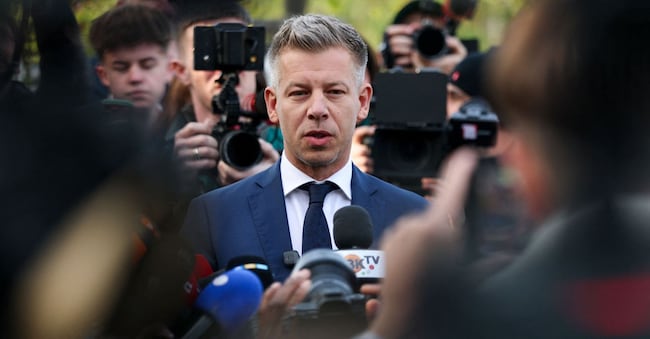
Hanging in his childhood room was a picture of Viktor Orban. Not the opponent who ruled Hungary for sixteen years, but the young lawyer who in 1989 called for the withdrawal of Soviet troops, symbolising a season that promised freedom and a future. Peter Magyar was nine years old when communism collapsed. Today he is the one to change the course of the country, to break the strongman of Budapest, bringing to fruition a challenge that until recently - in the very words of the many supporters of the newly formed Tisza galaxy - seemed impossible. The triumph hands him the future of a country that must return, he chanted on the eve of the decisive hour, 'a democratic state under the rule of law'. Born in 1981, under the sign of Pisces, into a family of jurists - his mother a High Court judge, his grandfather a state figure -, Magyar grew up within the Magyar elite, studying law at the Catholic University of Budapest, one of the forges of conservatism. A convinced believer, former Fidesz adept, underdog born from the rib of power whose language and rules he soon absorbed. So much so that it challenged and eventually beat him. The 45-year-old's entry into the system was gradual.
The turning point came in 2006 with his marriage to party colleague Judit Varga, who was destined to become Minister of Justice. When his wife's career took him to Brussels, he also entered the circuit of European institutions, soon learning to move between the heart of national power and the corridors of the EU. Back home, however, he remained on the fringes of real politics: technical roles, positions in public companies, a presence that did not break through. The Fidesz leadership considers him to be too autonomous, difficult to control, not inclined to stable orders. The lawyer meanwhile observes and becomes Varga's spin doctor, contributing to his rise.
Then the personal break-up that anticipated the political one: the marriage ended in 2023 and he, shortly afterwards, was progressively excluded from the centres of power. Until the epilogue, a year later, with the scandal of the pardon to a paedophile that overwhelms the system, bringing down the President of the Republic and his ex-wife. Hungary finds itself through a moral crack. Magyar decided to enter it with an unfiltered interview with the Partizan channel, making frontal accusations against Fidesz of corruption and abuse and garnering millions of views.
Within a few weeks he founded his Tisza - from the Tisza, the river that runs through the vast Hungarian plain - with the idea of driving change. Barely four months later, at the European elections, he touches 30%. It was an earthquake that catapulted him to centre stage, propelled by an astonishing machine taking shape behind him: tens of thousands of volunteers, the 'Tisza islands', ignited the campaign from below, neighbourhood after neighbourhood, bringing him to the threshold of victory. Speaking to Hungarians with the "language of humanity", he intercepted the urban and progressive electorate, holding together patriotism and criticism of the system, sovereignty and openness to Europe. A strategy that was ultimately rewarded, even if in the eyes of many - including some who chose the opposition at the polls - he remains little more than a 'baby Orban', elusive and not too far removed from some of the premier's policies. He now promises to unblock EU funds, revive the economy, fight corruption and reduce dependence on Russia, but without tears. Around him remain the shadows of personal accusations and doubts that have never been entirely dispelled. Yet his strong point was timing: he arrived in the presence of a Hungary ready to turn over a new leaf.

