
Who is Shaath, the engineer behind the plan to push Gaza's rubble into the sea
A Palestinian with technical expertise, chosen by Trump, Shaath was chosen to lead the committee that is to transform Gaza from rubble to a civilised future

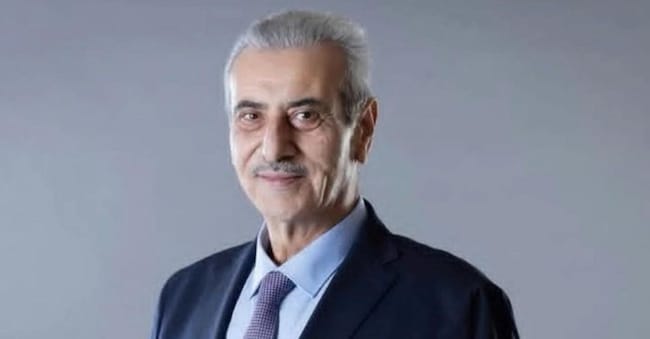
The Gaza Strip as a huge construction site, before being a political problem. This is the starting point of the vision of Ali Shaath, the Palestinian engineer called to lead the technical committee in charge of administering the territory in the post-conflict transition phase. A task that he himself summed up with a phrase that is bound to cause discussion: 'If I bring in the bulldozers and push the rubble into the sea, creating new islands, I can rid Gaza of the debris and at the same time gain new land'.
The statement is not hyperbole but the heart of a pragmatic approach to the material devastation left by the conflict. According to Shaath, the main problem is not rebuilding houses and infrastructure, but physically ridding the urban space of millions of tonnes of concrete, metal and unexploded ordnance. Without this preliminary step, he argues, any rebirth plan is destined to remain on paper.
Shaath does not come to the leadership of the committee as a traditional political figure. Born in Khan Younis, south of the Strip, in 1958, he is a civil engineer with a PhD from Queen's University Belfast and a long career in the Palestinian administration, where he held positions related to planning and infrastructure development. For years he stayed out of the spotlight, moving into a technical field. His sudden centrality is a reflection of a precise choice: to entrust the post-war management to a profile considered 'neutral', closer to numbers and construction sites than to factional balances.
The 15-member committee he chairs is part of the US administration-backed plan for Gaza's future. The aim is to create a temporary authority that guarantees essential services, coordinates reconstruction and takes the territory out of the direct control of Hamas, without an immediate return to full political rule by the Palestinian National Authority. A compromise solution, fragile by definition, that rests on the promise of concrete results.
On the time front, Shaath displays an optimism that contrasts with UN estimates. According to his estimates, the removal of rubble could take about three years, while the overall reconstruction would allow Gaza to 'return and become better than it was in seven years'. A prediction that departs sharply from more cautious scenarios, which speak of decades before full economic and urban recovery.

