Mexico

Who was El Mencho, lord of fentanyl and master of Jalisco

His power was born far from the palaces. With the CJNG, he declared war on his rivals in Sinaloa. He had a hospital built in his stronghold

by Biagio Simonetta

Messico, non si fermano le violenze dopo l'uccisione di "El Mencho"

3' min read

Translated by AI
Versione italiana

3' min read

Translated by AI
Versione italiana

The death of Nemesio Oseguera Cervantes, for all El Mencho, blew the corks off an entire criminal geography.

In these hours, between Jalisco and the neighbouring states, the CJNG (the famous four-letter code for the Cártel de Jalisco Nueva Generación) has responded the way organisations that feel like a state within a state respond: with guerrilla warfare. Roads cut, vehicles set on fire, blockades, fear running through the streets of Guadalajara.

Loading...
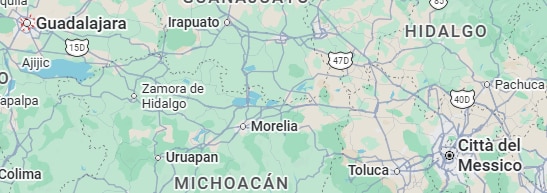
Guadalajara

A 550 Km da Città del Messico

In the last few hours it has emerged that the world's most wanted drug trafficking boss has died in a helicopter, after being wounded in a military operation by Mexican special forces in a wooded area outside the town of Tapalpa in the western state of Jalisco. And his capture was the result of a sin of love: the police forces had long been on the trail of his lover.

But who was El Mencho. And above all, how he became one of the kings of fentanyl. His power originated far from the palaces. Aguililla, Michoacán: a province that for decades has taught many kids one thing, that the border between legality and crime is a revolving door. Some sources say that El Mencho even dressed as a policeman when he was very young. Certainly as a kid, he worked the avocado harvest with his family.

Then he emigrated to the United States, mixing with thousands of indocumentados who cross the border every day. But in the States, Nemesio Oseguera Cervantes, collected a few arrests and stayed very little. He returned to Mexico and became linked to Ignacio Coronel Villarreal, the historical man of the Sinaloa Cartel.

But his aspirations as a leader are stronger. So, a few years later, he founds a semi-autonomous group together with Erick Valencia Salazar. At first, he remains loyal to the Sinaloa clan. Then, when Coronel Villarreal is killed in 2010, El Mencho realises that his time has come. And the CJNG opens the war against Sinaloa, with an escalation of trafficking and heinous violence.

The Mexican cartels, with the arrival of the men from Jalisco, change their ways. They become decidedly more violent, and the narrative around them also changes. Criminal groups become increasingly militarised.

It is the late 2000s, and the CJNG is growing in acceleration, until it has become a machine with widespread presence and national ambition. Today, it has over 30,000 affiliates, including fighters, hit men and logistical networks. And it is present in 21 of the 31 Mexican states.

Messico, non si fermano le violenze dopo l'uccisione di "El Mencho"
Messico, la morte di "El Mencho" pesa sui rapporti con Washington
Messico, ucciso "El Mencho": Guardia Nacional schierata in Procura

The turning point for El Mencho's criminal career is the fentanyl. With the synthetic opiate, the grammar of drug trafficking changes: less fields, more chemistry. Fentanyl is more potent and less cumbersome, offers more economic margins, and is faster to produce and transport. In just a few years, Mexican cartels flood the American streets with blue pills that kill tens of thousands of people every year.

And the role of the CJNG is paramount, along with that of the Sinaloa cartel (they are the dominant cartels in the global fentanyl chain).

But the myth of El Mencho, a boss considered invisible due to his long fugitance, is also made up of infrastructure. El Universal documents that he had a private hospital built in Jalisco, in the community of El Alcíhuatl, municipality of Villa Purificación: a garrison designed to cure himself (he has been suffering from kidney disease for some time) and protect his circle, in an area considered a stronghold of the cartel. A place where the State does not arrive.

Then there is the family, because a modern cartel is also a structure. His wife, Rosalinda González Valencia, was arrested, tried and convicted for money laundering, with transitions between detentions, convictions and applications for benefits. She had been El Mencho's hook to the criminal world, as she belonged to a family of money launderers.

Messico, ucciso il boss El Mencho: nel Paese scoppia il caos

One of the sons, Rubén Oseguera González, known as 'El Menchito', was also sentenced to life imprisonment in the United States.

The question now is the one that always comes back the same in Mexico when a leader falls: what happens to the market. The risk of internal fractures and a struggle for succession is real, but there are those who already list the names of possible heirs. After all, the narco-traffic machine is like an industry that cannot stop. This is how the market wants it.

El Mencho ruled Jalisco like an informal capital: with fear, with money, with the ability to bring a country to a halt in a matter of hours. Fentanyl has been his accelerator. The CJNG, its tool. And what we see today in the streets, among the narcobloqueos and the fires, is the immediate echo of a power that survives death.

Copyright reserved ©

Brand connect

Loading...

Newsletter

Notizie e approfondimenti sugli avvenimenti politici, economici e finanziari.

Iscriviti