The Wsj analysis

Who wins and who loses in the economy due to the war in Iran

The war in the Middle East influences growth and global inflation, with differential effects on the US, Europe, Asia, Russia and the Gulf countries, between price rises and adaptation strategies

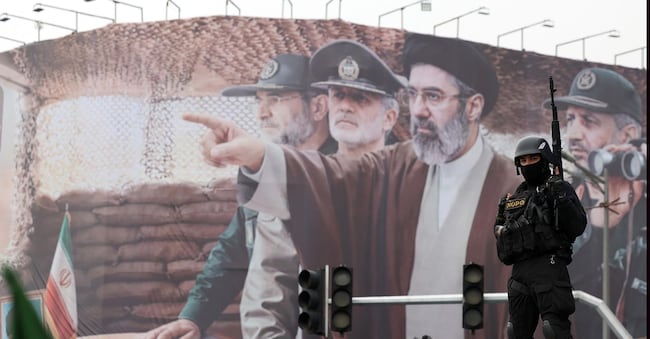
Un membro delle forze di sicurezza iraniane monta la guardia davanti a un cartellone pubblicitario che raffigura il leader supremo iraniano Mojtaba Khamenei e alcuni comandanti militari iraniani durante una manifestazione per celebrare la Giornata internazionale di Quds a Teheran, in Iran, il 13 marzo 2026. Istituita nel 1979, la Giornata di Quds si celebra ogni anno l'ultimo venerdì del Ramadan per esprimere solidarietà al popolo palestinese e protestare contro il controllo israeliano su Gerusalemme. La celebrazione di quest'anno si svolge mentre un'operazione militare congiunta tra Stati Uniti e Israele, avviata il 28 febbraio, continua a colpire siti strategici in tutto l'Iran.  EPA/ABEDIN TAHERKENAREH

4' min read

Translated by AI
Versione italiana

4' min read

Translated by AI
Versione italiana

From the US to the EU, from China to Russia, from Pakistan to Latin America and Canada, no global player is immune to the economic repercussions of the war against Iran. More or less intense and prolonged effects depending on whether the scenario of a short war with subsequent normalisation of oil and gas prices by the summer without substantially affecting growth and inflation or a longer crisis with prolonged energy supply disruptions and chain price increases, from fuel to food and travel, prevails.

In the most pessimistic scenario assumed by Goldman Sachs, the oil would remain at USD 100 per barrel, with global growth declining by about 0.5 percentage points and inflation rising by almost 1 percentage point over the next year.

Loading...

But who 'wins' and who 'loses' economically in the new crisis? An analysis in the Wall Street journal takes a look at the countries that have been hit the hardest and those that could benefit.

Used isolated but not immune

The boom in fracking to extract oil has turned the US into a net exporter of energy over the past decade, reducing vulnerability to oil shocks. But the world's largest economy is not completely sheltered. Take prices at the pump, for example: the cost of a gallon of unleaded gasoline has risen by 20 per cent since the start of the conflict and this could erode household consumption. Rising fuel costs also threaten to affect the profits of airlines, cruise operators and industries, although it may favour US energy producers. If the average price of Brent crude remains at USD 80 per barrel in the coming months, inflation in the US could rise by about 0.2 percentage points, while growth could fall by about 0.1 percentage points, according to Oxford Economics. Considering that it is travelling at 100 plus the impact would be greater.

Gulf countries, from luxury haven to target of war

Although the Gulf typically benefits from rising oil prices, paralysis in the Strait of Hormuz has limited sales and forced cuts in production. According to Capital Economics, a short war could lead to a contraction of the Gulf economies by up to 2% this year, while prolonged clashes could trigger a 15% drop. Kuwait and Qatar would be hardest hit due to their oversized energy industries, while Saudi Arabia and the United Arab Emirates may be able to partially offset losses by increasing pipeline shipments. The conflict has also shaken the 'safe haven' image that the Emirati and its neighbours had carefully constructed for themselves. This threatens ambitious economic reforms such as the Saudi Arabia's Vision 2030, which relies on foreign investment. And tourism will also suffer: according to the research firm Tourism Economics, international visitors could contract by 27% this year, with losses of $56 billion. But the contagion has spread throughout the region: this week the Egyptian pound fell to record lows against the dollar on fears that a rise in the cost of energy imports could put a strain on fragile public finances. Meanwhile, the conflict will aggravate Iran's economic crisis.

Europe facing a new energy shock (but not like Ukraine)

A prolonged period of high energy prices could jeopardise Europe's timid economic recovery. The EU depends on fossil fuel imports for about 58% of its energy needs, more than the EU only South Korea and Japan. Although most European countries do not purchase much energy from the Middle East, EU partners are exposed to rising global prices. And the drop in supply from the Gulf has triggered a price war with other exporters, driving up gas prices in Europe by more than 50% this month. Oxford Economics predicts that the impact of rising energy prices on eurozone inflation could be three times that of the US. Italy would suffer more in part because of its greater dependence on liquefied natural gas from Qatar. However, few economists foresee a crisis similar to the one triggered by the conflict in Ukraine, when natural gas prices rose above EUR 300 per megawatt-hour, bringing Euroland's inflation to an all-time high of 10.6 per cent in October 2022, compared to EUR 50 today.

Fuel rationing and smart working, Asia is already running for cover

China is the world's largest importer of oil but has spent years building defences against energy shocks. It is estimated that the country has over one billion barrels of oil in strategic reserves, enough to last for months. It has also invested heavily in renewable energy, subsidised electric vehicles and has a large domestic coal industry to draw on. Japan and South Korea, highly dependent on oil from the Middle East, also have large reserves. Many Asian economies are also dependent on LNG from the Middle East, which is harder to store and may run out sooner, with Pakistan and Taiwan being the most vulnerable. Some countries are already scrambling to conserve stocks: South Korea and Thailand have capped some fuel prices; the military junta in Myanmar has begun rationing fuel for private cars, while Pakistan has ordered some civil servants to work from home; the Philippines has asked government offices to turn off computers during lunch breaks and moderate the use of air conditioning.

Russia, Putin's oil back in options

The conflict with Iran has offered Moscow an unexpected economic lifeline, at least temporarily. Before the war, Russia was struggling to sell its oil because of Western sanctions. The turmoil in the Gulf now promises to stimulate new demand for Russian crude, potentially strengthening Moscow's position in relations with China, India and other major importers. The US, meanwhile, has eased some sanctions, allowing some buyers to purchase crude from Moscow. And rising oil and gas prices are refreshing the Kremlin's coffers, strained by sanctions and four years of war.

GDP of Latin America and Canada may rise

Rising energy prices should also support growth in oil-rich countries such as Canada, Brazil, and Venezuela, which is slowly increasing production after the fall of Nicolás Maduro in January. However, economists predict that countries will experience a slight increase in inflation due to higher global energy prices.

Copyright reserved ©
Loading...

Brand connect

Loading...

Newsletter

Notizie e approfondimenti sugli avvenimenti politici, economici e finanziari.

Iscriviti