
Why artificial intelligence cannot replace human expertise in management
Expert Rosario Sica highlights how AI, devoid of emotion and awareness, requires leadership that values critical thinking and continuous training to drive digital transformation

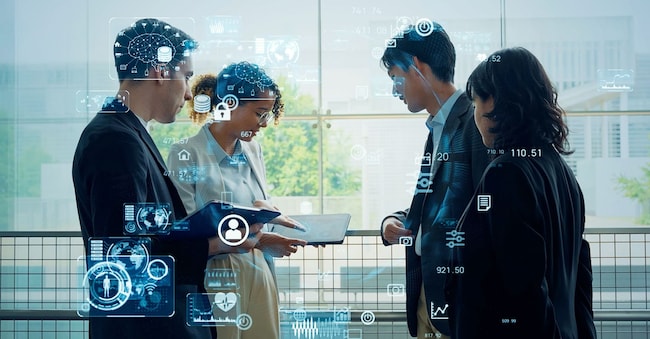
In the public and managerial debate on artificial intelligence, a misleading narrative has asserted itself: the one that attributes typically human qualities to machines. A linguistic shortcut that, in the opinion of Rosario Sica, a cybernetic physicist by training and expert in digital transformation processes (as well as former CEO of OpenKnowledge, adjunct professor at Polimi Graduate School of Management and author for Guerini Next of two books dedicated to innovation in organisational development, The value of Purpose. Finding meaning in an organisation: a duty towards people and the future and The Employee Experience in the era of AI), arises from a widespread and superficial anthropomorphisation of AI. The risk of confusion, in short, is not only theoretical but takes on a strategic character, because misunderstanding simulation and experience leads to erroneous organisational decisions, especially when artificial intelligence is presented as an autonomous cognitive subject. In an era in which the company is liquid and the mechanism of full-time office employment has broken down, understanding how human intelligence (critical thinking, creativity, awareness) should be enhanced is an indispensable priority for managers, in the wake of a revolution that, in its essence, is not (only) technological but (mainly) cognitive.
Computational efficiency does not equal decision intelligence
"A machine, no matter how sophisticated, does not sweat, does not tremble, does not cry. And, above all, it does not feel. Attributing human qualities to AI is not only a conceptual error but also a gamble that leads to overestimating its capabilities,' the expert states with conviction, reiterating how the fact that artificial intelligence operates without physiology and without vulnerability constitutes the clearest demarcation line with human intelligence, which instead remains irreplaceable. To confirm this thesis, Sica cites and contextualises the thought of three great contemporary scholars, whose theories have in fact demonstrated that thought is not an abstract process. Antonio Damasio, a Portuguese neurologist and essayist, clarified that emotions are not an accessory of rationality but rather its condition of possibility; they are not simple streams of data or codifiable bits but complex bodily responses that precede and orient decision-making. Joseph LeDoux, an American neuroscientist, has concretely proven that emotions arise from neural circuits deeply intertwined with the body and that consciousness emerges from this integration and not from a sequence of instructions. Federico Faggin, finally, a famous Italian physicist and inventor (he is called the 'father of the microchip'), radicalised the concept of consciousness, which is not a by-product of computational complexity but a primary property of the universe. From this perspective, Sica goes on to explain, 'an algorithm can reproduce behaviour, but not the subjective experience that accompanies it', and this distinction is crucial for management: 'AI is a tool that excels at pattern recognition and process optimisation, but remains devoid of consciousness. Therefore, assuming that computational efficiency does not equal understanding, reducing intelligence to mere calculation means neglecting what really drives complex decisions, i.e. emotions, values, responsibility'.
The Skills Node
The transformation taking place in the world of work does not coincide with a simple substitution of roles and tasks but involves a profound reconfiguration of the entire ecosystem of skills. An assumption that finds substance, according to Sica, in the data of the "Future of Jobs Report 2025" compiled by the World Economic Forum, which forecasts the disappearance of 92 million job roles and the creation of 170 million new positions, with a positive balance conditioned, however, by people's real ability to retrain quickly. By 2030, this is the expected scenario, about 39% of the skills required in key roles will undergo radical changes in relation to the spread of AI. In Italy, looking at the situation at home, 77% of workers have had at least one contact with artificial intelligence tools. Moreover, some OECD data highlight an enlightening paradox: while 60% of workers fear that AI may threaten their role, 63% recognise that the automation enabled by algorithms has improved the quality of work, freeing them from repetitive tasks. 'The question to ask,' Sica points out in this regard, 'is not if or when AI will enter business processes, but how human intelligence will be able to evolve to govern it effectively. If the ability of machines to calculate correlations is unquestionable, so is that of people to attribute meanings; this asymmetry, however, should not be read as a limitation, but rather as a competitive advantage. In a context that tends to reduce complexity through the intelligent use of data, preserving the emotional dimension means maintaining the ability to choose and take responsibility for decisions. "The human competitive advantage," adds the expert, "lies in the ability to interpret ambiguity, to learn from error and to intuit what is not immediately visible in the data. And in an environment dominated by automation, these skills become central'. AI, which Sica colourfully refers to as a 'stochastic parrot', does not destroy value but displaces it, calling on companies and their managers to focus on the time factor, and more precisely on the speed with which training can accompany this transformation.
Continuous Learning and Cognitive Capital
The skills required today, in the analysis of the former CEO of OpenKnowledge, are spread over three levels. The first is technical and concerns digital literacy, data analysis and understanding of algorithms. The second is hybrid and refers to figures capable of translating technology into business decisions. The third is meta-skills, meaning adaptability and the ability to learn and unlearn. According to the OECD, about half of the acquired skills lose relevance within five years and the most advanced companies are responding to this challenge by building continuous learning architectures, integrated into their daily work. Intelligence is no longer confined to the individual, but rises to an extended and distributed architecture in a cognitive ecosystem. Sica, not by chance, speaks of 'cognitive capital', and thus of shared knowledge, decision models and meanings to be governed with transparency, data ethics and accountability: machines learn faster and AI can produce flawless syntheses and suggest actions, but both cannot decide whether these actions are right and establish what is truly relevant. The real competitive advantage, therefore, no longer lies in the quantity of information processed, but in the quality of the interpretations. For organisations, therefore, there is an urgency imposed by the overcoming of the traditional distinction between hard and soft skills, by training metrics that shift from input to impact (speed of learning and ability to transfer skills) and by the fact that critical thinking, creativity, empathy and resilience become structural conditions of the innovation process and indispensable qualities for leaders.
Towards human-centred leadership
After decades of quantitative management, this is Sica's concluding reflection, artificial intelligence is bringing back a new managerial humanism as a necessary and strategic response to the impacts of its pervasive application. AI-ready' leadership has precise connotations: it is not oriented towards the control of technology but is co-evolutionary and dialogues with it; it integrates cognitive awareness and systemic vision, operational empathy and ethics of innovation. "The manager of the future will not be a controller of algorithms, but an interpreter capable of transforming data into decisions and decisions into organisational culture. The challenge is not so much technological as anthropological, and the companies that know how to use AI as an ally of human learning, and not as a cognitive shortcut, will be the ones to lead the next decade'. In a world of increasingly sophisticated and powerful machines, in short, the most enduring competitive advantage paradoxically remains the oldest intelligence, human intelligence.

