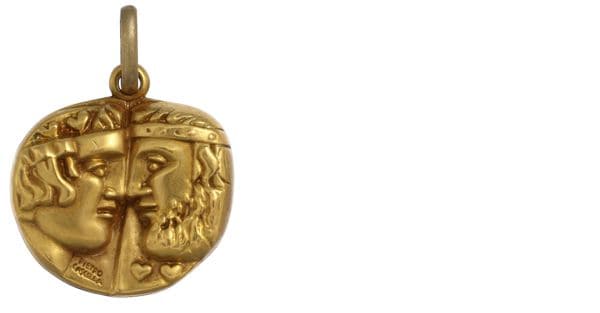
Why handmade jewellery attracts interest and investment
They straddle the boundary between two forms of elite collecting: the conceptual value of art and the poetics of wearable sculpture. Artistic jewellery has become an excellent investment

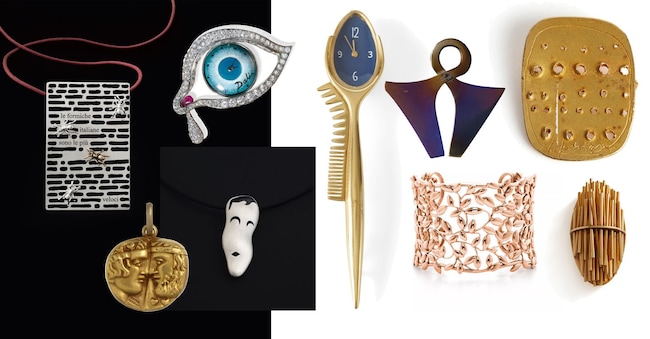
Over the years, the contemporary art scene has expanded its boundaries, opening up to multidisciplinary crossovers. This applies to values, aesthetics and artistic languages. Art, design and jewellery converge, brought together by trade fairs, auctions and social media. And as the economic crisis has eroded middle-class consumption, the aim is to create precious, unique pieces that can satisfy the aesthetic sensibilities, the cross-sector nature of investments and the social symbolism of a select elite of collectors. Thus, jewellery has made a powerful comeback, rediscovering that conceptual dimension which had characterised the artistic avant-garde of the 1960s. The preciousness of the gemstones in high-end jewellery now goes hand in hand with the conceptual preciousness of art, with jewellery designed and crafted as wearable sculptures capable of conveying the artists’ poetics, complete with their associated valuation. Nothing new, of course.
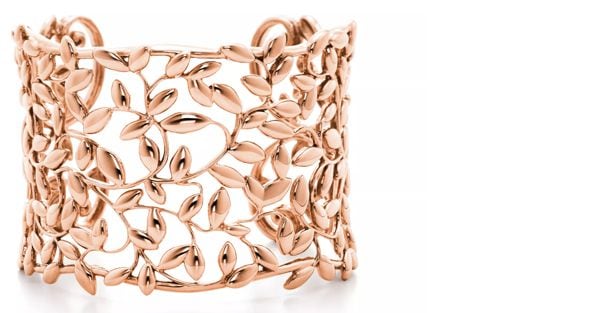
From the early 20th century onwards, the avant-garde movements promoted jewellery as a form of artistic expression, starting with Henry van de Velde, who was a staunch advocate of what Richard Wagner had termed the Gesamtkunstwerk, the ‘Gesamtkunstwerk’ , where artists devoted equal effort to creating a painting, a sculpture, a piece of furniture or a garment. Alexander Calder was one of the pioneers when, in 1926, he moved to Paris, where he created his first pieces of jewellery from brass wire, a craft to which he devoted the rest of his life. Subsequently, the leading painters and sculptors of the twentieth century – from Braque to Picasso, from Fontana to Dalí – incorporated them into their range of expressive media, collaborating with ‘editors’ (as the creators of designer jewellery call themselves), who produced the pieces and then presented them to the public, handling their marketing and promotion.
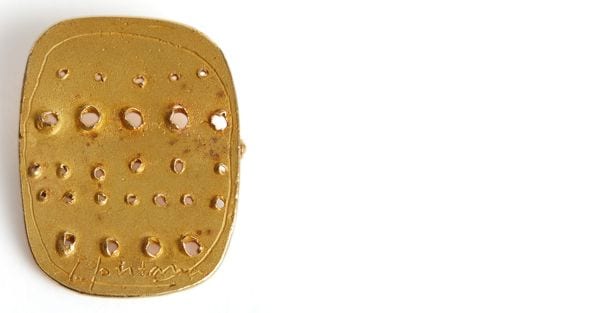
This was the case with François Hugo, who created the jewellery for Picasso, Jean Arp, Jean Cocteau and Max Ernst. Or with Carlos Alemany, the creator of Salvador Dalí’s jewellery. With Nilo Westerback, who brought Tapio Wirkkala’s designs to life. Or with the Masenzas, who produced the jewellery of Gino Severini, Franco Cannilla, Afro and Mirko Basaldella. Right up to Gem Montebello, responsible for the wearable sculptures of Man Ray, Niki de Saint Phalle, Soto, Lowell Nesbitt and Pol Bury. Since the late 19th century, painters, sculptors, architects and designers have explored this field for a wide variety of reasons: to engage with the scale of the body, to experiment with new materials or techniques, to translate their artistic language into a new medium, to give a precious object to their loved ones, or, quite simply, for financial gain or out of curiosity.
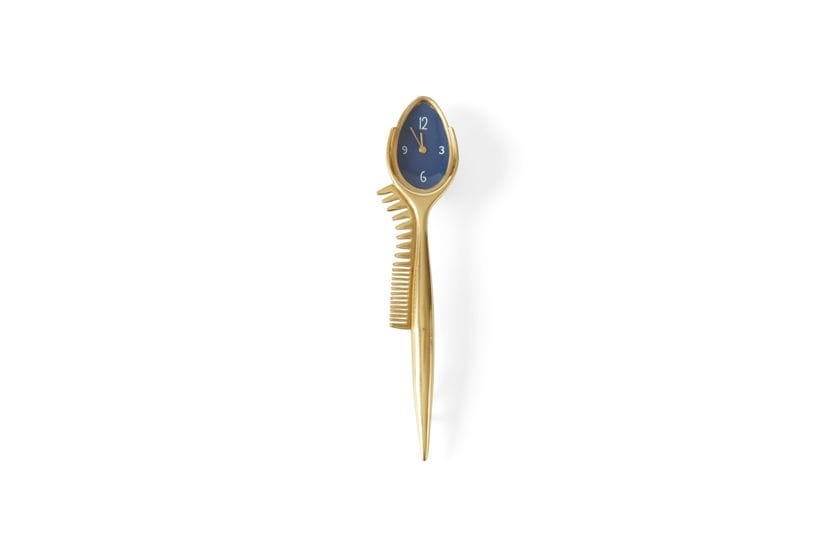
Elsa Schiaparelli played a decisive role in the history of designer jewellery, as recounted in the exhibition Schiaparelli: Fashion Becomes Art, on display until 8 November at the Victoria and Albert Museum in London. Thanks to her friend Gabrielle Picabia, the eccentric and self-centred couturier became the muse of Surrealism, and commissioned her artist friends to design numerous pieces of jewellery, such as Jean Clément’s electrically illuminated jewellery or the aspirin necklace by Elsa Triolet and Louis Aragon. Christian Bérard, Salvador Dalí and Jean Cocteau also designed necklaces for her featuring pea pods and brooches depicting ostriches, skates, insects, bagpipes and even the arrangement of moles on her cheek. Thanks to her, fashion and art came together, and the leading artists of the time – including Giacometti, despite not being goldsmiths – applied their creativity to this field.
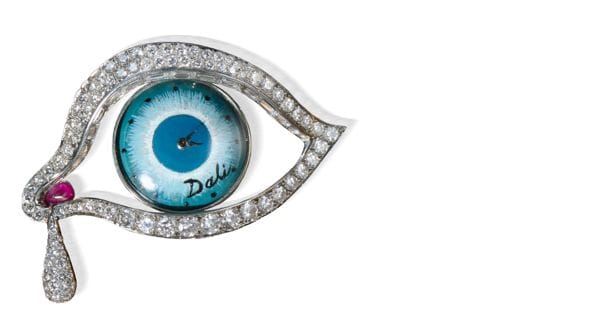
Artist-designed jewellery first came to prominence in 1946, with the exhibition Modern Handmade Jewellery at MoMA in New York, where pieces by 27 artists were showcased, but it was in 1954 at the Triennale in Milan that it achieved international acclaim, thanks to Salvador Dalí, who presented 21 unique pieces there, created to his designs by Alemany & Ertman of New York. The choice was no accident. The 10th Triennale of 1954 was dedicated to the unity of the arts, and Dalí’s jewellery caused a great sensation due to its formal extravagance and the preciousness of its materials, but, above all, for its imaginative opulence. Gold, platinum, precious stones, pearls and coral in the shape of hearts, lips, eyes, plants, animals, myths, symbols and anthropomorphic forms. Among these were the famous Los labios de rubi, a brooch in the shape of a mouth set with pearls and rubies; the Los pendientes telefonicos, earrings shaped like telephones; and the spectacular El ojo del tiempo, an eye-shaped watch set with diamonds, enamels and rubies.