
Why a conference on Einaudi in Cattolica
The Catholic University dedicates a day to Luigi Einaudi 150 years after his birth. He is one of the best known Italian economists and was a high-level institutional figure

4' min read
4' min read
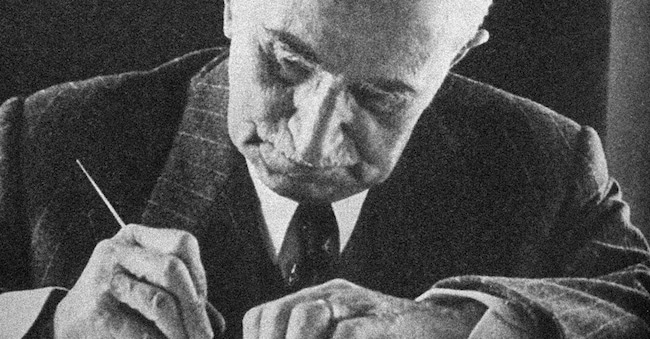
The Catholic University dedicates a day to Luigi Einaudi 150 years after his birth. He is one of Italy's best known economists and was a high-profile institutional figure. Until 1925 his scientific commitment was accompanied by his journalistic activity, first at La Stampa in Turin and then at Corriere della Sera in Milan. During Fascism, he gradually abandoned his public commitment to devote himself to scientific and historical research. During this period he collaborated with the Economist and founded the Rivista di Storia economica. From 1943 he returned to public life until his election as President of the Republic in 1948. During Fascism and then after World War II, his institutional commitment did not fail to produce a significant body of reflections.
The conference aims to reread this path of study and research, bearing in mind that Einaudi was a scientist who fully blended scholarly interest with civic passion in a variety of topics: international trade, European integration, agrarian and industrial economics, the history of economics and economic thought, the functioning of financial and monetary systems, and even social policy.
The study meeting to be held on 21 October would particularly like to focus on how Einaudi, true to his liberalist vision, conducted a reflection, which would come to maturity after the Second World War, on how to guarantee, along with the functioning of the market, also the defence of fundamental instances of social justice, understood as equal starting conditions. In this context, Einaudi carries out his economic analysis with careful consideration of the role of institutions, historical processes and the behaviour of social groups. Reviewing the collections of his scientific works, starting with the Bibliography of Luigi Einaudi's writings compiled by Luigi Firpo in 1971, makes it possible to escape a canonical view of the Piedmontese economist's thought and, at the same time, to grasp some suggestions for our contemporary times.
Einaudi's intellectual commitment and some of his reflections take on great relevance in the historical moment we are living in, in which we all feel the need to find an adequate response to the priorities dictated by the succession of crises and, at the same time, to the safeguarding of the economic system and work. It is now clear that there has been a break with the economic patterns of the late 20th century, which had already shown a number of limits in terms of social resilience due to the significant growth in inequalities and gaps. A situation that has fuelled the development of dangerous forms of populism and the emergence of phenomena of social tension, which have undoubtedly not contributed to the development and strengthening of Western democracies.
This observation has opened up a moment of reflection and debate. The response given by most Western governments has been to inject a significant amount of public resources into the economy in order to guarantee the protection of jobs and avoid the collapse of the economy. That is, it was decided to strengthen the presence of the state in order to deal with an economic situation fraught with great risks. However, the choices made appear to be an emergency response and it is necessary to identify new economic paradigms. And in constructing these paths, we cannot forget the warnings that come to us from the most recent period, where the choices made have profoundly affected certain primary goods - health, work, equity, education - leading to problems whose harmful effects have aggravated today's difficulties. Deciding to protect the public value of these primary goods to a greater extent does not mean, however, considering a more extensive presence of the state in economic activity to be inevitable, so that it is possible to define a new model that guarantees the right role for the private sector and enterprise in a system that is more attentive to the common good and social equity. This is a challenge made complex by the fact that it intersects with a profound transformation of society and value production linked to the use of new technologies and the digital and energy transition. In this logic, the Einaudi studies remain a term of comparison for the identification of a new path provided that we start from the study and knowledge of those that have been the great examples and experiences of the past.
On Monday 21 October from 10.30 a.m. to 6.30 p.m. in the Pio XI Lecture Hall of the Università Cattolica del Sacro Cuore (largo Gemelli 1 - Milan) the conference "Einaudi economist: 150 years of Italian history" will be held as part of the celebrations for the 150th anniversary of the economist's birth. The conference will be opened by Antonella Occhino, dean of the Faculty of Economics, Giovanni Petrella, dean of the Faculty of Banking, Finance and Insurance Sciences, and Giuseppe Vegas, president of the National Committee for the 150th anniversary of Luigi Einaudi's birth.
At 4.30 p.m., the final round table "Einaudi and liberal humanism: challenges for business and finance" will follow, moderated by Ferruccio De Bortoli, president of the Corriere della sera Foundation, and animated by the speeches of leading figures from the Italian economic, financial and institutional world. Speakers included Giampaolo Galli, director of the Observatory on Public Accounts at the Università Cattolica del Sacro Cuore, Maurizio Leo, deputy minister of the Economy and Finance, Marcello Messori, economist, Alessandra Perrazzelli, deputy director general of the Bank of Italy, and Maurizio Sella, chairman of the Sella Group..
(*) Professor of Economic History, Catholic University of the Sacred Heart

