
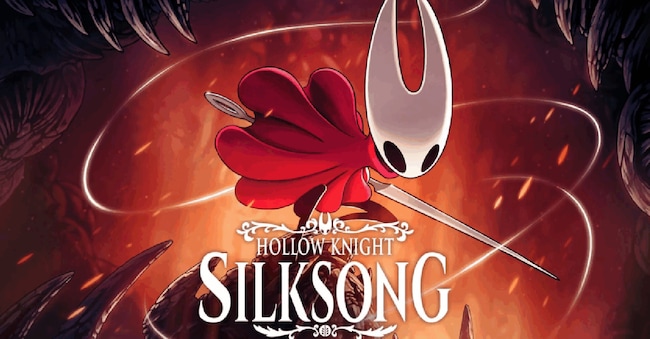
Why is everyone talking about the amazing little video game success of Hollow Knight: Silksong?
It is a beloved independent video game developed by the three members of a small Australian team, Team Cherry. Let's understand the genesis of a handcrafted media phenomenon
3' min read
3' min read
On 4 September 2025, Hollow Knight: Silksong was released. It is a beloved independent video game developed by the three members of a small Australian team, Team Cherry. Within hours, it sent Steam and Nintendo's eShop into meltdown with the number of players trying to download it. From a distance, it is still being discussed on social media: it has garnered some criticism and much praise, but for the vast majority of gamers it is a symptom of something broken in the video game market. How is it possible that a small production can engage the gamer community like this? Have gamers' tastes really changed that much, or has the market become so impoverished that anything that is not difficult, unconventional and deep is necessarily 'good'?
What is Holllow Knight: Silksong?
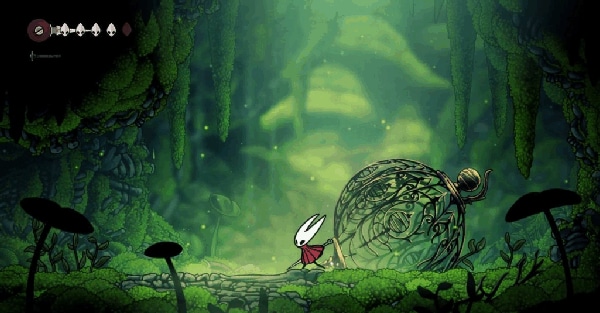
This is the sequel to Hollow Knight, a title that surprised in 2017 for its artistic quality and mechanical depth. Technically, it is a Metroidvania: a two-dimensional adventure of exploration, combat and new abilities that open up previously inaccessible paths.The protagonist, this time, is Hornet, a secondary character from the first chapter. His mission is to scale the realm of Pharloom, a world teeming with hostile insects and hidden secrets.While the first game pushed the Knight further and further down, here Hornet climbs to the top. It is a symbolic as well as a physical journey: from darkness to light.There is no clear narrative, but stories hinted at by characters, inscriptions, environments.The title alludes to two central themes. The silk represents Hornet, his threads, his weapons and his connection to his family. The song recalls the oral tradition of Pharloom, where tales and melodies preserve the memory of the kingdom.Every step forward costs effort: tough enemies, imposing bosses, platforms requiring quick reflexes. Those who fall must repeat. It is a game that gives nothing away, but rewards patience with moments of pure satisfaction. In this it follows the logic of the Souls, albeit in platformer format: so the essence is ruthless, but the gameplay is something very traditional: you jump, attack and use what's around you.
Why are we talking about it?
The first reason is the wait. Silksong was supposed to be additional content, became a game in itself and took six years to reach digital shelves. In this time, the community fuelled the hype. Each trailer was analysed like an episode of a TV series.
The second reason is quality. Reviews speak of smoother movement, precise combat, rich environments and polished sound. It is not a revolution compared to the first chapter, but a refinement.
The writer has not finished the first chapter and does not intend to finish the second.


