
Because the future of design, from spoon to city, is A.I.
Pilot projects resulting from the training of neural networks with modern-day icons. Limited edition collections generated by the collaboration between software and craftsmanship. Design 5.0 perspectives.
3' min read
3' min read
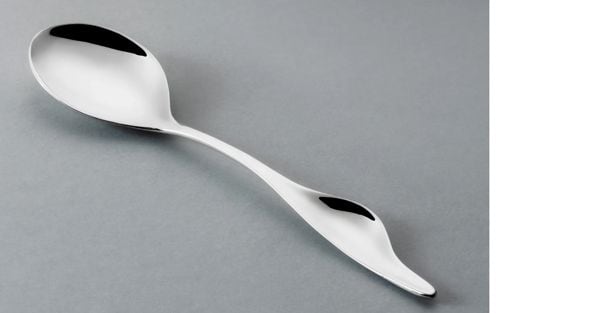
Imagine a spoon born from an algorithm, generated by analysing thousands of images of historical cutlery, then taken by craftsmen who transform it into a unique object. This is not science fiction, but the sheer reality of contemporary design. In 2023, the London-based creative team oio did just that: they fed an artificial intelligence with a library of images of spoons, letting the algorithm generate novel shapes, then refined by human craftsmanship. Spawns is the name of the project and oio, through a generative algorithm, tried to imagine a near-future world in which the new everyday object will be designed by a machine. With a reference to Ernesto Nathan Rogers' famous 1952 slogan 'from the spoon to the city', the creatives adopted a new process named craft intelligence, which combined history and antiques, high technology, 3D design and the master silversmiths of Greggio Argenterie. The result is a limited edition collection of three silver plate spoon models. A revolution that is redrawing the boundaries of creativity, with artificial intelligence acting as a co-designer that is transforming the way we think, design and create objects, spaces and entire worlds.
It was two years ago that Philippe Starck, one of the most innovative minds on the international creative scene, experimented with the A.I. collection for Kartell, realised with generative algorithms, where the purity of forms is born from the encounter between human intuition and computational calculation.
Loading...
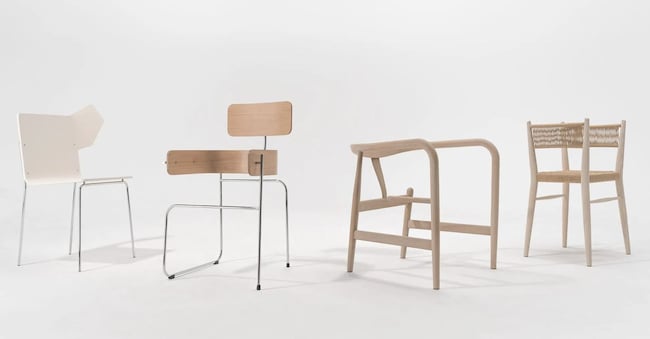
The real change, however, is happening in architecture. Platforms such as Archistar are demonstrating how complex design problems can be solved in a matter of minutes. An algorithm can now simultaneously analyse thousands of variables: from sun exposure to urban planning constraints, from space distribution to building regulations. Operations that used to take days and days, now take minutes. Hundreds of 3D drawings can be generated instantly, checking the consistency of every single detail, from natural lighting to room distribution. It is like having a business partner, an invisible architect, a co-pilot who translates an idea directly into mock-ups. If we then move on to the investigation of pure creativity and aesthetic synthesis, beyond the constraints of production functionality, fascinating scenarios open up that are contiguous with art. These experiments are not just technical exercises, but real philosophical explorations of the concept of creativity. What does it mean to create when a machine can generate thousands of variations in the space of a handful of seconds? Does artificial intelligence become an amplifier of imagination or a substitute for human talent? Take a project like The ChAIr Project by Philipp Schmitt & Steffen Weiss. Neural networks were trained with images of iconic chairs from the 20th century to see if AI can create an abstraction of common features, grasp what makes an object a classic and generate new classics.
Hundreds of models have been produced, some barely recognisable as furniture, many non-functional, lacking a seat or a leg. The most fascinating aspect is collaboration, not substitution. The AI does not eliminate the designer, but empowers him, helps him push imaginative boundaries, proposing endless variations on a theme, of which the human intuition then selects and concentrates the most innovative features. Today, moreover, we can set any furnishing component - wardrobe, chandelier, table - in perfectly realistic virtual contexts, which allows for more precise designs and precise analyses of needs and paths, gestures and real use. We are facing a new season where technology and imagination meet, where algorithms become brushes and data palettes to paint worlds yet unseen.
SPERIMENTATION ARCHISTAR. GREGGIO ARGENTERIE. KARTELL. OIO. PHILIPP SCHMITT. STEFFEN WEISS.
Copyright reserved ©


Loading...
