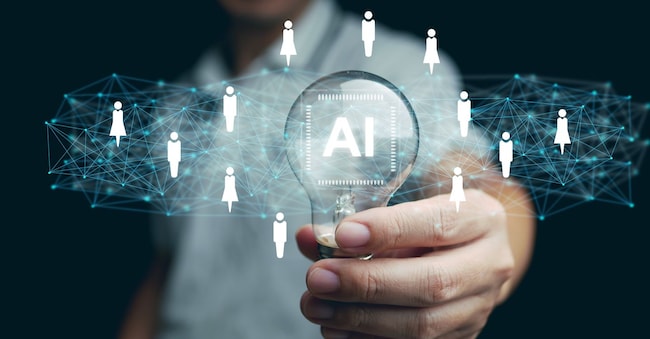
The Power of Networking

Why human relationships remain the engine of business in the AI era

Investing in relationships and trust remains the most effective strategy for lasting business

by Gianfranco Minutolo*.

(Adobe Stock)

4' min read

4' min read

One question crosses the minds of those who get up every morning to go to work: will machines really replace humans in everything?

For the networking - understood as the 'relational ability' to create lasting and valuable connections - the answer is a resounding 'not yet'.

Loading...

As a trainer, I have observed an incontrovertible truth: authentic relationships remain the invisible engine of the most extraordinary business results.

The numbers that really count

.

Acquiring structured interpersonal skills (or 'knowing how to network') generates concrete and measurable value.

- People find jobs mainly through their network of contacts

- Companies obtain information and business opportunities through their international networks

- Professionals consider face-to-face communication vital for long-term business

- In-person meetings more often end in sales or agreements than virtual ones

- Managers know that they would lose a significant part of their business if they stopped networking

But beware: networking is not about exchanging business cards. It is relationships built with methodical care.

The fundamental business equation

.

Companies live on turnover, margins and positive cash flows → which need high-performance teams to be generated → which are composed of people who only work at their best when they trust each other.

When trust is lacking, people suffer and in many cases quit.

Better: the best leave while the worst stay, fuelling the toxic climate from which the former want to escape.

And, in addition, each turnover costs about 15,000€ to the company.

A vicious circle.

Where AI stops (for now)

.

The artificial intelligence has made extraordinary progress, but has fundamental limitations in managing relationships.

Neuroscientific research shows that AI can simulate cognitive empathy, i.e. understand and predict emotions based on data, but it cannot experience emotional or compassionate empathy (for now). This is not just a technical limitation, but an ontological boundary.

The strongest business relationships arise from:

- Moments of shared vulnerability

- Mutually admitted errors

- Challenges overcome side by side

These are experiences that require 'relational biology': the ability to emotionally synchronise, to read non-verbal signals, to intuit what is not being said.

Simulated empathy is the opposite of empathy, because it is manipulative and misleading to the recipient.

To prepare for a talk on these topics at an international conference on the metaverse, however, I discovered late-stage research that can generate oxytocin through the use of tactical gloves, sensory suits, scent dispensers, professional management of metaverse environments that build memories for those attending the meeting.

We will have to become professionals in the use of these tools as well, because they will activate our 'chemistry' by impacting on the quality of relationships.

The four meta-behaviours that AI cannot replicate (for now)

.

In my experience, I have identified four fundamental meta-behaviours that distinguish those who know how to manage relationships professionally:

1. Courageous vulnerability

Admitting one's limitations and asking for help when needed. A CEO who confesses to a business partner that he has made a strategic mistake is not showing weakness, but creating room for deeper collaboration.

2. Authentic dialogue

It includes empathy, active listening and genuine communication. When you really listen to a colleague, you are not just waiting for your turn to speak, you are building trust. When people feel safe to contribute without fear of ridicule, they share their unique insights.

3. Active respect

It is not formal education, but genuine recognition of the other's value. It means celebrating the successes of others without envy and supporting them in difficult times.

4. Proven reliability

It includes effectiveness, integrity and sincerity. It is not enough to say you are trustworthy: you have to prove it with consistent actions over time.

Training oneself to master these behaviours is vital for managing relationships effectively and breaking the vicious circle mentioned above.

In the 86 courses held in companies to date, a paradox emerges from the participants' words: in the age of automation, the most profitable companies will be the most human ones.

In high-performance teams, trust manifests itself in four ways:

- They trust each other to deliver results

- They trust that they can share new ideas

- They trust that they can disagree

- They trust that they can make mistakes

When these four levels of trust are present, economic results automatically follow. This is not romanticism: it is biology applied to business.

The farmer's method applied to relationships

We must be inspired by the wisdom of the peasantry to manage relationships: just as a soil tended with patience and perseverance bears better fruit than one that is intensively exploited, so too will our networks bear fruit over time in proportion to the foresight and quality of our commitment to maintain them.

Practical exercise

.

Spend 15 minutes every Friday to 'cultivate relational terrain'. Write to three people in your professional network. Not to sell or ask for something, but to share an interesting article, congratulate them on a success, or simply ask how they are.

This practice, multiplied by 52 weeks, creates a network of authentic relationships that no algorithm can replicate and that will bear fruit over time.

The future of business will see the emergence of 'relational hybrid' leaders: professionals who know how to use AI to amplify their human capabilities without ever forgetting that the heart of business beats in the rhythm of authentic relationships.

This is what we do.

That is all we do, as human beings.

We are networkers, relationship managers. All.

No one excluded.

Robots can't network (for now), I wrote in 2019. And that is still the case.

But that "for now" is getting closer and closer if we do not train our distinctive skills.

*Networking Trainer & Community Builder

Copyright reserved ©
Loading...

Brand connect

Loading...

Newsletter

Notizie e approfondimenti sugli avvenimenti politici, economici e finanziari.

Iscriviti