
Why inequality is 'the' theme of our times

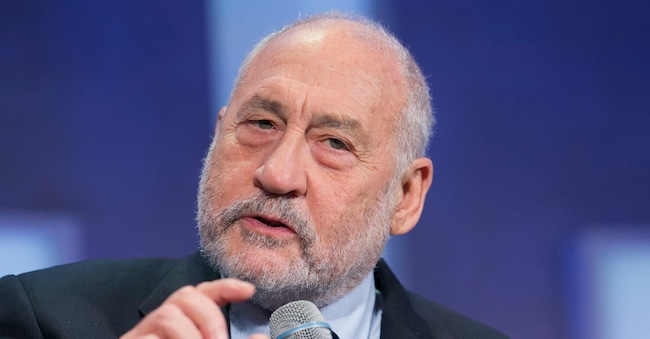
A few weeks ago, the report of the 'Global Committee of Independent Experts on Global Inequality' was published. The text was commissioned by the South African presidency of the G20 from Nobel Prize-winning economist Joseph Stiglitz, who had already published extensively on the subject of inequality (e.g. The Price of Inequality in 2012), and who was joined by other scholars, diplomats and policy makers, almost all of whom come from or operate in the Global South. It is an important document that makes clear why inequality is perhaps the issue of our times as it is at the root of a number of huge problems, including the crisis of democracy, economic stagnation and global instability. There is much in the Report that would be worth highlighting, but I think the following points are preponderant. Let's start with the size and recent trends in inequality: the world's richest 10% hold 54% of global income and 74% of global wealth; the richest 0.01% have seen their share of income and wealth grow exponentially in recent decades, while some 2.3 billion people in the world hover on the poverty line, set at just over $3 a day. This means that while we are about to 'greet' the first trillionaires in human history, people with assets of at least $1 trillion - when, to give a term of comparison, the Italian budget law 2025 does not move more than 28 - about ¼ of the human population finds itself having to survive every day on what $3 can buy. And not in the poorest countries, but in the prosperous United States. Even in the most welfare-oriented Western democracies, the richest 1 % has seen its slice of national wealth grow by an average of about 30 % since 2008, not to mention the erosion of purchasing power and job insecurity that has affected many representatives of the lower and middle classes.
This, however, is only the embarrassing snapshot of what exists. Much more fascinating is the report's analysis of the consequences of inequality. First of all, economic inequality is intertwined with other dimensions of inequality in areas such as health, education, employment levels, exposure to climate risks, political clout, and accessibility to the protection of the law. In all cases, the growth of inequality in one area stimulates the growth of inequality in others. In many countries, inequality of opportunity translates into inequality of outcome: the fate of young people is strongly linked to the social position of their parents. In this regard, the report does not fail to denounce the extent to which the United States of recent decades has been anything but the 'land of opportunities' it believes and claims to be.
Extreme inequality is not only bad in itself, but has a plethora of very bad consequences. It is a brake on growth, because entire sections of the population relegated around the poverty line cannot contribute to wealth creation. Their only business is survival. Other parts of the population are disincentivised to engage in it, since only the rich are reserved real opportunities. In this way, the report unmasks the neoliberal mantra that there is a trade-off between reducing inequality and stimulating growth. The opposite is true. Contained' inequality means more, not less growth.
Last but certainly not least, high levels of economic inequality tend to translate into political inequality, corroding democracy, as the very rich influence the democratic process much more than a middle-class or poor citizen. And the advent of social media obviously exacerbates this phenomenon, as those who control it possess a very powerful tool to steer public opinion.
Inequality, says the report, is also bad for the environment, as the richest have an unsustainable and eco-conscious lifestyle. Here, however, a critical note to Stiglitz & Co. is necessary. If, by reducing inequality, the 2.3 billion people who are poor today were to start consuming at the level of the first-world middle class, emissions would rise exponentially. And never would this increase be offset by the elimination of the ungreen lifestyles of the super-rich. As even the most ardent advocates of the ecological transition (e.g. Darrel Moellendorf) know, poverty reduction comes with an inevitable ecological cost in terms of increased consumption. It is true, however, that with democratic politics less hostage to the super-rich, a solution centred on negotiation and scientific innovation, driven by public investment, would perhaps be possible, making the ecological transition less utopian. In short, either we return to reasonable levels of inequality (more or less like that of the first two decades after World War II in Europe) or tomorrow's world will be poorer, less democratic, more unjust and probably less habitable.

