
Why the ECB will hold rates steady despite pressure: analysis and outlook
With the phase of disinflation over, there seem to be no signs so far of a demand shock from tariffs requiring urgent action

3' min read
3' min read
No cuts in September. Although yields are under pressure - but due to a single country, France - and the euro dollar - but not the actual, more complete exchange rate - is looking to appreciate. Analysts are quite convinced that the September meeting of the European Central Bank will close without any decisions on the official cost of credit: the heart of the meeting will then be the macroeconomic projections, which will allow to understand how appropriate the current monetary policy stance is.
A "neutral orientation"
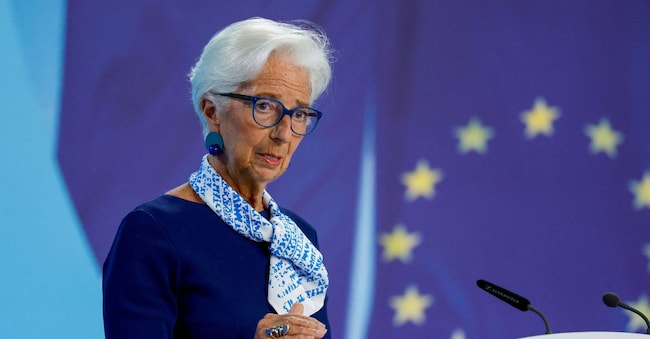
.The level of the official cost of credit can no longer be described as high. The deposit rate is at 2 per cent, the refinancing rate at 2.15 per cent: real rates, assuming the 2 per cent target as the medium-term inflation level, are almost zero and correspond to the neutral level according to various estimates. President Christine Lagarde pointed out in the June press conference that the discussion on neutral rates is not very relevant at this time, because the assessments - all indirect - are made in the absence of shocks, which are not lacking in this period, starting with the shock on the demand for US tariffs.
Core inflation 'cooler'
.However, it is true that the ECB has opened a new phase. 'We have essentially closed that disinflationary cycle we have been confronted with in recent months,' Lagarde said before the summer. Seen from the outside, without the complex analytical tools at the central bank's disposal, the data seem to confirm that the decision to hold rates steady is reasonable. Core inflation has been showing clear signs of cooling for some time: service prices, which have been stuck at 4% for a long time, are starting to slow down, while manufacturing remains in a phase of stability that does not give too much to think about on the demand side.
Cost of labour closer to productivity
Wage inflation, the difference between labour costs and productivity, has fallen rapidly from the very high levels of the past quarters. The figures are stuck in June and 1.6 % is still double the 0.8 % long-term average, but the overheating phase is definitely over.
Salaries under observation
.Negotiated wages - on which the attempt to regain lost purchasing power, where possible, also evidently weighs heavily - should still be watched carefully, after the jump in the second quarter, which is not, however, incompatible with a - bumpy - downward trend.


