
Why we need communities today

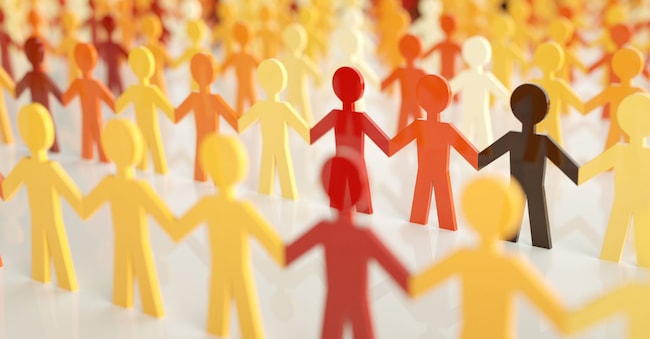
In 1999, the sociologist Arnaldo Bagnasco published for Il Mulino the volume 'Traces of Community' in which, in addition to reflecting on the ancient concept of community, he questioned the importance of seeking out and enhancing those signals capable of building trust between people as a form of resistance to the disintegrating forces of social cohesion in the contemporary world.
Since then, the world has changed profoundly. The economic crisis of 2007-2008, the explosion of the effects of climate change, with floods, fires and extreme phenomena threatening the survival of the planet, the Covid-19 pandemic of 2020 that created the strange suspension of life in much of the world, the return of wars with first Russia's invasion of Ukraine in 2022, and then Israel's invasion of Palestine in a disproportionate reaction to the terrorist attacks of 2023, and finally the United States' aggression or aggressive statements towards Iran, but also aggression or aggressive statements towards other countries such as Venezuela, Cuba, Greenland.
These are only the most obvious changes in a picture that fuels insecurity in people and pushes them towards individual withdrawal. At the same time, other phenomena have accentuated that effect. We have long been discussing the crisis of intermediate bodies: parties, trade unions, parishes, families, neighbourhoods, perhaps we need to recognise that these were not passing crises, but rather a model of organising society that came to an end at the turn of the millennium.
The other major change in the last quarter century has been the rapid spread of the Internet, social networks, and everything based on digital platforms, which has resulted in the shift of many relationships from personal relationships to digital media in so many aspects of people's lives in cities. The growth of online commerce, information shifting more and more to social, socials progressively invading the interpersonal sphere, lead to the radicalisation of stances and are breeding grounds for fake news and populism of various kinds.
Digitisation and individualisation seem to march in parallel: we are always with our bodies somewhere, but with our minds and eyes turned elsewhere, through the screen we hold in our hands.

