Industry

In-flight Wi-Fi: Lufthansa teams up with Starlink; ITA Airways and Air Dolomiti are also part of the plan

High-speed satellite connectivity is becoming more widespread across European fleets. The group is aiming for around 850 aircraft by 2029, whilst among the low-cost carriers, Wizz has signed up, but Ryanair and EasyJet have not for the time being

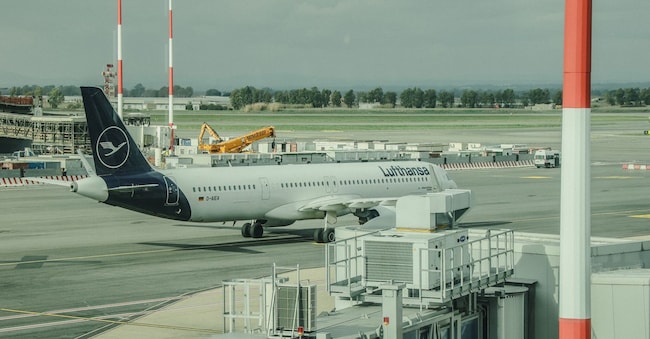
 (Imagoeconomica)

3' min read

Translated by AI
Versione italiana

3' min read

Translated by AI
Versione italiana

The first flight will take off on 19 August. It will be a Lufthansa Airbus A320neo equipped with Starlink, SpaceX’s satellite internet service. This is the first step in a larger project: by 2029, the German group aims to roll out the new Wi-Fi on around 850 aircraft, including the fleets of Ita Airways and Air Dolomiti.

The service, called Lufthansa Group Wi-Fi, will be free in all classes for passengers with a Miles & More or Travel ID account. The group will then gradually roll out Starlink to its other subsidiaries and associated airlines: Swiss, Austrian Airlines and Brussels Airlines are listed among the next fleets to be included. The roll-out will subsequently also include ITA Airways, Air Dolomiti, Edelweiss, Discover Airlines, Lufthansa City Airlines and Eurowings.

Loading...

“Our product promise isn’t limited to the seats or the menu,” explained Dieter Vranckx, the group’s commercial director. With Starlink, passengers will be able to go online and use cloud services, but voice and video calls will remain prohibited, as will live audio and video streams.

What’s changing for Ita Airways and Air Dolomiti

For Italian passengers travelling with the national carrier, this is not entirely new. ITA Airways already offers a satellite connection on its long-haul fleet – the Airbus A350, A330-200 and A330neo – and on the A321neo. Various packages are now available for messaging, web browsing and streaming, with prices varying depending on the aircraft and the duration of the flight.

Air Dolomiti, on the other hand, does not offer an external internet connection, but only an in-flight Wi-Fi network, which is used to connect to the in-flight entertainment system.

Why Starlink is different from the old in-flight Wi-Fi

In-flight internet has actually been around for more than twenty years. Many traditional satellite systems use geostationary satellites, located some 36,000 kilometres from Earth. Starlink, on the other hand, relies on thousands of satellites in low Earth orbit, just a few hundred kilometres away. This shorter distance reduces latency – that is, the time it takes for data to travel there and back – and enables connections with much greater capacity.

Starlink states that its aviation systems offer speeds in the region of hundreds of megabits per second, although actual performance depends on the antenna, the service and the number of users connected. Lufthansa claims that on the first A320neo, the available bandwidth will in many cases exceed that of a standard home or office connection.

With Starlink, the phone does not connect directly to the satellites but to the aircraft’s network, which is routed via an antenna fitted to the fuselage. Airplane mode must therefore remain activated, whilst the Wi-Fi connection is enabled at the same time. This system is therefore different from in-flight 5G, which the European Union has authorised from 2022 onwards on aircraft specially equipped with small internal mobile phone cells.

Starlink expands across Europe

Lufthansa is entering a growing market. airBaltic was the first European airline to make the Starlink system available to passengers, in February 2025. Air France launched its service in 2025 and aims to roll it out across its entire fleet; SAS is currently installing the system; and Virgin Atlantic launched its programme this year, which is expected to be rolled out to all its aircraft by 2027.

Then there is International Airlines Group, which owns, amongst others, British Airways, Iberia, Aer Lingus and Vueling. It has ordered Starlink for more than 500 aircraft, including those operating on short-haul European routes.

Loading...

Elon Musk’s company’s competitor does exist, but it is not yet operational. The Amazon Leo satellite network is still under construction but has already been chosen by, amongst others, the two US airlines Delta and JetBlue.

Wizz Air enters the market, Ryanair waits

European low-cost airlines have taken different paths. The Hungarian airline Wizz Air will be installing Starlink on its next-generation aircraft from 2027; the project also includes the other Indigo Partners airlines: Frontier, Volaris, JetSmart and Cebu Pacific. The programme could involve more than a thousand aircraft in total.

On Wizz, internet access will be sold to passengers who wish to purchase it via a system called Starlink Managed, but the price has not yet been decided.

Ryanair and EasyJet have – for the time being – ruled out the service, and the CEOs of their respective groups have stated that the reasons are primarily financial.

Copyright reserved ©
Loading...

Brand connect

Loading...

Newsletter

Notizie e approfondimenti sugli avvenimenti politici, economici e finanziari.

Iscriviti