
Wildfires: Mediterranean regions most at risk due to high temperatures and drought
This has been highlighted by Greenpeace, which has analysed the data relating to incidents recorded over the last six months

Key points
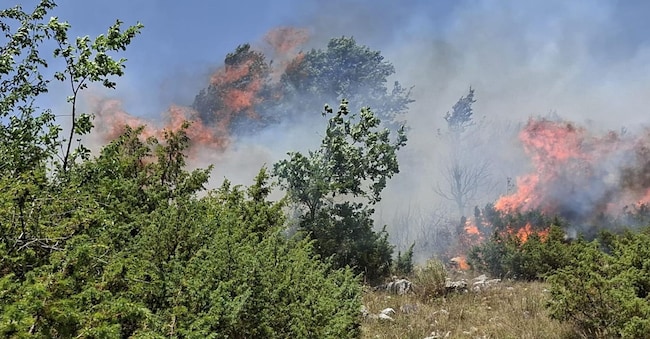
Areas of the Mediterranean are increasingly at risk of wildfires due to a combination of rising temperatures, drought and weather conditions that are increasingly conducive to the spread of fires.
This is highlighted in a Greenpeace study based on data from EFFIS (the European Forest Fire Information System), the European satellite monitoring system managed by the European Commission’s Joint Research Centre as part of the Copernicus programme, according to which ‘between 1 January and 22 July 2026, 36,600 hectares of land in Italia were destroyed by fire, approximately 80 per cent more than the average for the same period between 2006 and 2025 (20,329 hectares)”.
A growing phenomenon
According to the latest available update, dated 22 July, ‘the area affected by wildfires in Italia was approximately 19,000 hectares, an area larger than the entire territory of the Municipality of Milan’. In the European Union, as of 15 July 2026, the area burnt had already reached 167,326 hectares, an area larger than the average for the period 2006–2025.
Increasingly vulnerable regions
“The wildfires currently affecting various parts of Italia are yet another sign that our land is becoming increasingly vulnerable to the effects of the climate crisis,” emphasises Martina Borghi, from Greenpeace Italy’s Forests campaign. What we are witnessing is not simply a difficult summer: the fire season is becoming longer and starting earlier. Wildfires are one of the clearest signs of a changing climate.” These conditions are affecting the regions grappling with the wildfires that, in recent days, have led to evacuations and caused serious damage to woodlands, biodiversity and agricultural activities.
Between climate and intent
“In Italia, wildfires are often caused by human activity,” adds Borghi, “but it is the climate crisis that is creating conditions increasingly favourable to their spread, making the fires more intense and difficult to control, with high temperatures, drought and the sirocco wind all helping to fan the flames and making fire-fighting operations more difficult.”

