
Accident with wildlife, driver has to prove diligent behaviour
It is the driver's responsibility to prove that the animal's behaviour was the cause of the accident. Only then is regional compensation triggered
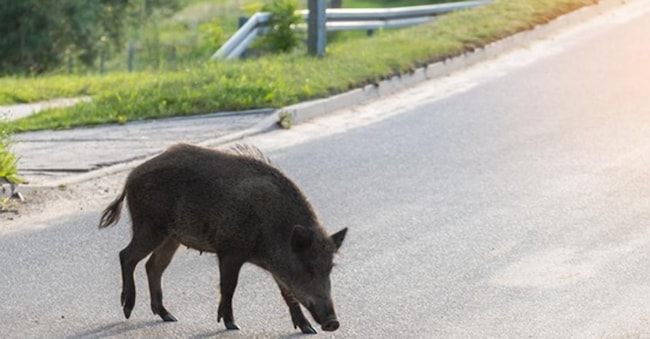
In the case of a accident with wildlife, it is the driver's responsibility to prove that the behaviour of the animal was actually the cause, at least concurrently, of the accident. This was established by the third civil section of the Court of Cassation in its judgment 16888/2026 published on 29 May 2026.
The affair
The case was that of the driver of a motorcycle that, while driving along a state road in the Marche region, collided with a goat that had crossed the road. The Justice of the Peace of Macerata, having accepted the driver's request, sentenced the Region to a compensation of 2,250 euro plus interest and costs.
The administration had appealed to the Supreme Court on three grounds. Article 2052 of the Civil Code would not have been applicable to the case at hand, which is better described by Article 2043 of the Code: it would therefore have been necessary to ascertain in concrete terms a negligent behaviour on the part of the Region itself, which, moreover, was not the owner or user of the wild animals. The Court, however, rejected the plea: damage caused by wild animals is compensable by the public administration, according to the provisions of Article 2052 of the Civil Code. What matters, in fact, is not the duty of custody but the ownership or use of the animal and, finally, the protected wild animals are part of the State's indisposable heritage and are entrusted to the care and management of public entities.
The position of the Supreme Court
Notwithstanding this, however, the Court of Cassation upheld the two other grounds of appeal of Marche, according to which it was up to the driver to prove that he had behaved diligently. Moreover, according to the Region, it was wrong not to apply the presumption of fault on the driver to the vehicle involved in the accident. And in fact, the reasons stated, in the case of damage caused by animals, in accidents involving a vehicle without a railway track, the plaintiff must provide evidence of the exact and dynamic nature of the accident.
"In the absence of adequate, complete and sufficient proof, positive and certain, that the behaviour of the animal, in correlation with the driving conduct of the driver of the vehicle, was in fact the cause, at least concurrently, of the damaging event, the claim for damages of the driver and/or owner of the vehicle (or of third parties) cannot be upheld, not even partially," the Court concluded.

