
Wimbledon and that dream on grass called 'ball kid'
Angelo Carotenuto recounts the epic 1980 Borg-McEnroe final through the eyes of a ball boy: tennis, with its fragilities, tensions and emotions, is a metaphor for life

4' min read
4' min read
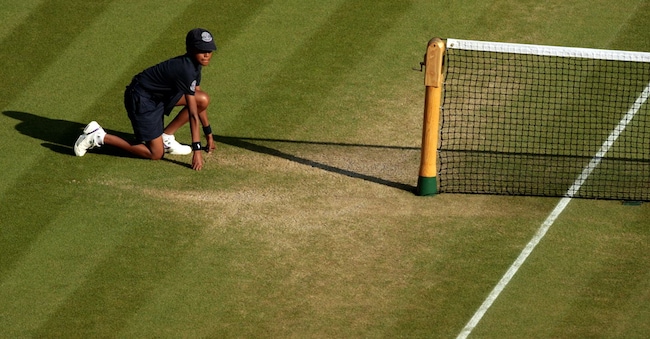
Jannik Sinner passes along one of the unmistakable driveways of Church Road, and a voice asks him "what job would you like to do at Wimbledon?". He thinks about it for a moment and answers "the ball boy", the ball boy. It is a video circulating these days, during the tournament, but the world number one does not know that there is a book dedicated precisely to this experience, unforgettable for a child: Angelo Carotenuto's The Grammar of White. A story that, first of all, is a declaration of love for tennis and for the most beautiful competition on the circuit, unparalleled for its elegance and prestige, loved even by those who prefer clay, celebrated right from the title for its whiteness that admits of no other colours (apart from the green of the grass, it goes without saying). We are in London in 1980, and the scenario is that of one of the most epic finals in the history of tennis: the five sets played on 5 July by Björn Borg and John McEnroe, with the legendary tiebreak in the fourth set (18-16 for John) and the final victory won by the Swede, who exults on his knees on the centre court as in the previous four editions. An exciting rivalry that would be replayed over the years under other guises and that we now find again - albeit in a totally different, faster, more muscular and less varied tennis - in Sinner-Alcaraz.Each chapter of the book is a set, each passage of a set is interspersed with a moment from the life of Warren, the narrator. He is an 11-year-old boy with a peculiar sensitivity, with an apprehensive mother worried about his introverted way of being, far from his peers who - indeed - make fun of him. Warren actually cultivates his passions, loves to go to the library, knows fancy words, and above all likes the Italian language, perhaps because of the father he has never known. When he finds himself enrolled in the ball boy's preparatory course at Wimbledon, he is not happy: it seems to him one of the usual gimmicks of his mother, anxious to see him socialise and heedless of his real desires. Instead, the experience changed his life: his ability to observe details, moods and hidden expressions enabled him to read what was happening on the court. To empathise with the players, entering their thoughts. To feel close even to the wives and coaches in the stands. Tennis teaches something even to those who do not play: for example, not to have regrets about a mistake, the imperative is to look ahead and think about the next point; to forgive yourself if you make a mistake, the error is contemplated and is part of the game; to be courageous, breaking the hesitations and going down to the net to 'take' the point. Under his watchful eye, Borg - nicknamed the Bear, rigorous, never a word or gesture out of place, perfect in his trajectories - and McEnroe - for everyone the Genius and, of course, the unruliness - unroll a script made of talent, endurance and humanity. Warren feels their difficulties, he mentally rejoices with them, the tension of each is his own, he recognises their tics. Of course, he has come prepared from a five-month course, he has learnt everything about tennis, he has listened to the teachings of Damien, the ball kids' instructor, Alison's recommendations on promptness in gestures and in meeting the players' requests (handing a towel as well as balls, being quick in movements) resonate with him. He discusses this with Cicca, his 'colleague' ball boy. Then comes that tiebreak, and the 'people understand that this is becoming a special afternoon and I also understand that every point lasts a point, that there is always a way to get up and play another one, that nothing is ever over before it is over for real'. How many times have tennis fans repeated this to themselves, most recently in the last Roland Garros final, when we could see Sinner lifting the cup and arriving at Wimbledon to attempt a Grand Slam... but instead Alcaraz cancelled three match points one after the other, then broke serve, then the set... and finally the match. John McEnroe on 5 July 1980 won the tiebreak, went to the fifth and would say in the future that that 18-16 marked his path more than any other time he won a trophy. It was a different kind of tennis, and not only because of John's flair and Björn's relentless coolness. There were the line judges, with their authority, there was no super tiebreak, nor were there the articulated teams that we know today. White has survived, and with it the soul of Wimbledon, that subtlety that is not exclusionary because there, during the days of the tournament, there are not only tennis experts: it is a customary phenomenon, involving and transversal, with rules that everyone observes. "Each colour in its uniqueness excludes the others. Not white, white is what it is. White are the spaces between the lines of books, where I put my imagination. White is the freedom of clouds, in their incessant motion. Every colour contains a limit. Not white, it does not live by interpretation. Imagine such a world, a world governed by the grammar of white'. You end the book loving Warren, rooting for him and imagining him making the decisive break to all his insecurities.
© REPRODUCTION RESERVED
Angelo Carotenuto
The grammar of white. A summer at Wimbledon
Sellerio, pp. 256, € 15


