Wind, sea and style on the beautiful beaches of Biarritz
The pearl of the Côte des Basques, home of surfing in Europe, invites you to discover a past rich in history and the strong identity of its territory

6' min read
Key points
6' min read
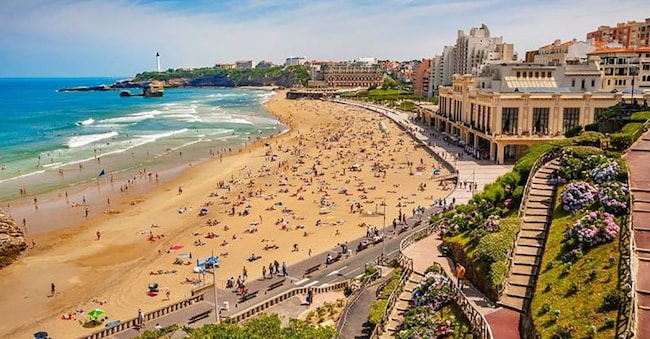
When the sun dips into the Atlantic, the roar of the ocean can be heard, and it is among the white waves, rippled by the wind, that Biarritz appears from the cliff top. Along a path of green tamarisk trees, one descends to the beach that, as far as the eye can see, goes from the lights of San Sebastian, in the Spanish Basque Country, to the great lighthouse that has been guiding navigators and dreamers since 1834, dominating the ocean from the height of its 73 metres. In the pearl of the Côte des Basques, the real protagonist is the lively, majestic sea with raging waves that lap the cliffs and caress long sandy beaches, shaping the identity of the city.
The arrival of surfing in Europe
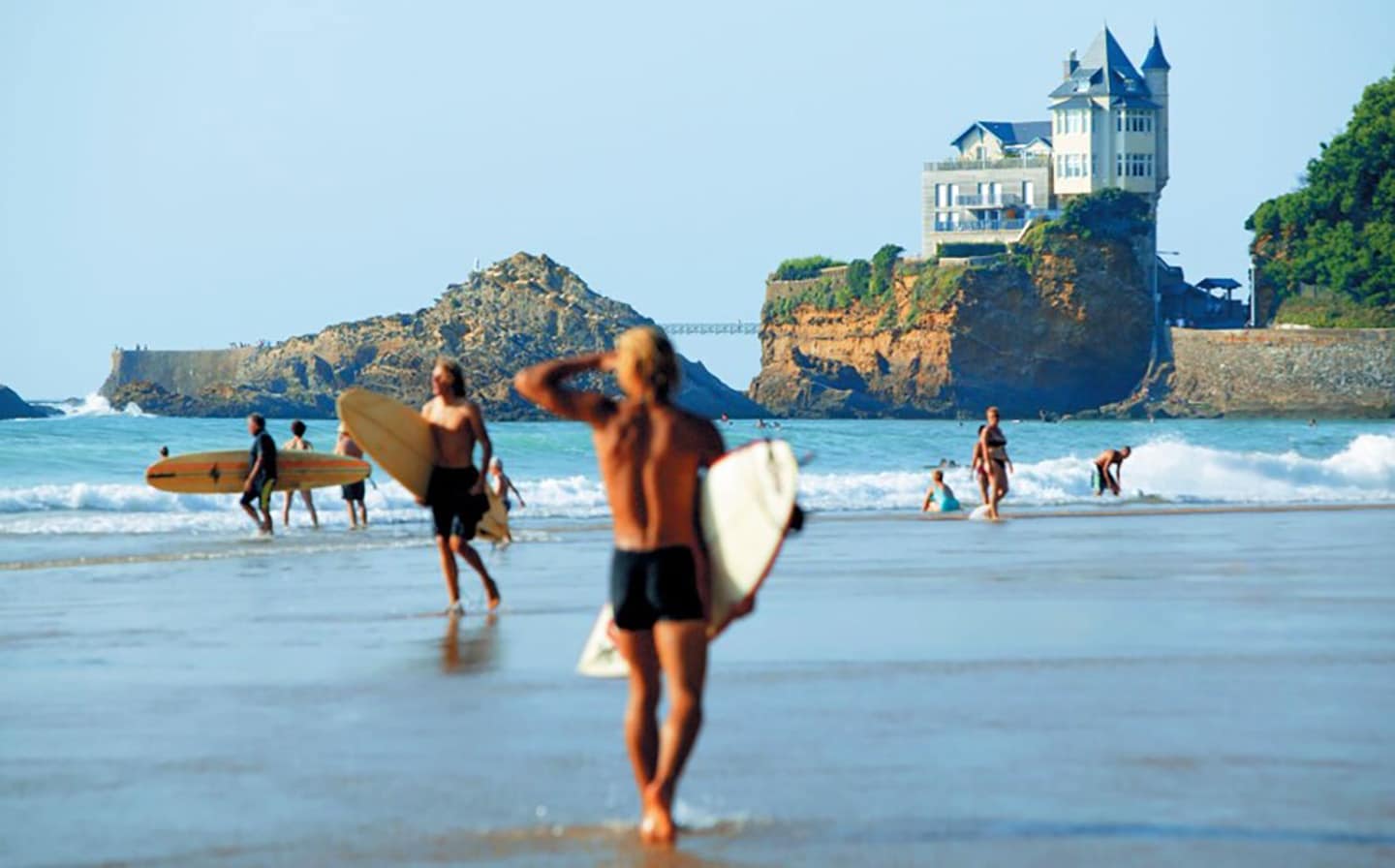
.A unique set, chosen by many films but one in particular has left its mark. It was 1957 and during the filming of 'The Sun Also Rises' (from the novel 'Fiesta' by Ernest Hemingway), the American producer Paul Velter brought a surfboard to the set, landing in Europe. Compared to the Mediterranean Sea, the Basque waters are more unpredictable, perfect for surfers, and that board arouses great interest among residents, helping to spread the passion for the sport. Since then, Biarrizt has been Europe's surfing capital, not only because of the many competitions it hosts (from the historic Madeider Arosteguy to the Biarritz Surf Festival scheduled for 12 to 14 September) but because the lure of the waves is irresistible to thousands of residents and nonresidents alike, and surfing embodies the city's typical lifestyle. Vintage boards and colourful longboards invade the streets, squares and beaches where there is a colourful human spectacle that mixes generations, united by a desire for freedom in testing themselves on the waves, patient in waiting for the right moment, eager for relaxation after effort.
The Empress Beach
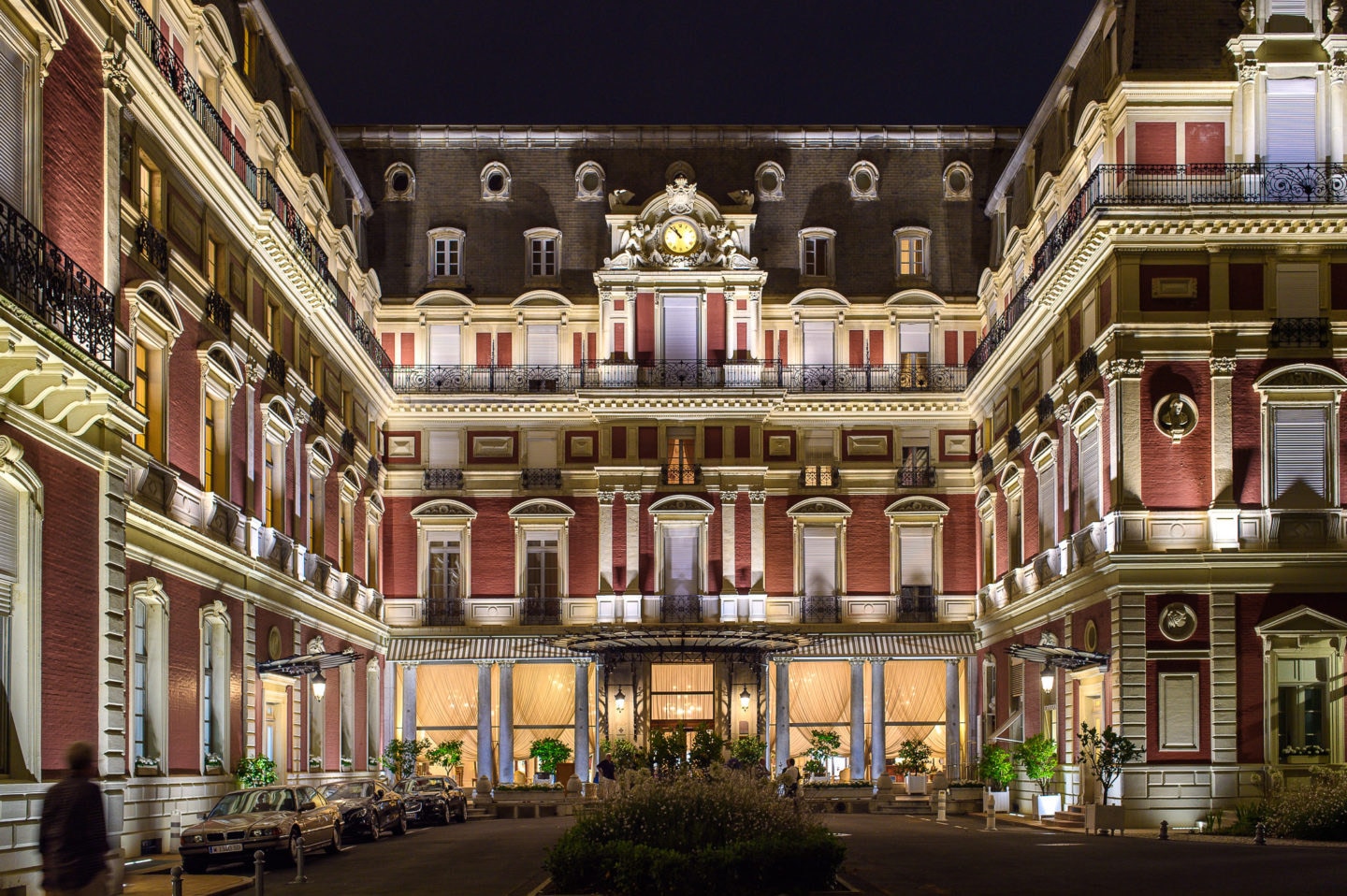
.In search of the right wave, there are those who go to the beaches of Anglet and those who go to the cliffs of Bidart (the view from la Tantina playa while enjoying Basque-style cod is beautiful). But on the coast, the most famous theatre of victories and defeats for neophytes and champions is the Grande Plage (Great Beach) whose fame long predates the arrival of surfing. It was here that, in honour of his beloved wife Empress Eugénie in 1854, Napoleon III acquired almost 50 acres of sand dunes and built Villa Eugénie which, in classic Empire style, became the summer residence of the imperial court. Even today, walking along the beach, one is struck by its splendour ('Palace of France' since 2011 and luxury hotel Hyatt in 2022 underwent a superb renovation). With the king and queen, illustrious personalities arrived in Biarrizt and the resort's fame spread around the world, attracting the aristocracy and high society. After the death of the Empress in 1881, the residence was turned into a casino, then into the Hôtel du Palais and after a tragic fire in 1903, it was rebuilt in the shape of an 'E' in honour of the Empress. Later, royal opulence gave way to glamour with the presence of art and fashion personalities such as Victor Hugo, Frank Sinatra, Gary Cooper, Ernest Hemingway and Coco Chanel, to whom a splendid suite is now dedicated.
The Art Deco of charming buildings and hotels
.All that remains of its glorious past are the beautiful villas towards the lighthouse, the many Art Deco buildings (from the Casino Municipal on the Grande Plage to the luxurious Plaza Hotel at the Maritime Museum). But also some small charming hotels in the heart of the city between Rue Gambetta and Boulevard Esplanade. Delightful is the Hotel Eduard VII, formerly 'Villa des Rosiers', between Avenue Victor-Hugo and Avenue Carnot. The King of England, Edward VII, used to stay there and appreciated the invigorating sea air that soothed his coughs. Each room, decorated with fine Art Deco furnishings, tells a detail of the city's past. From there, in just a few minutes, a maze of streets opens up where you can discover craft shops (from Graine, a textile brand produced locally, to the perfumed essences of Le Corner De Sofie to the unmistakable fabric deckchairs).
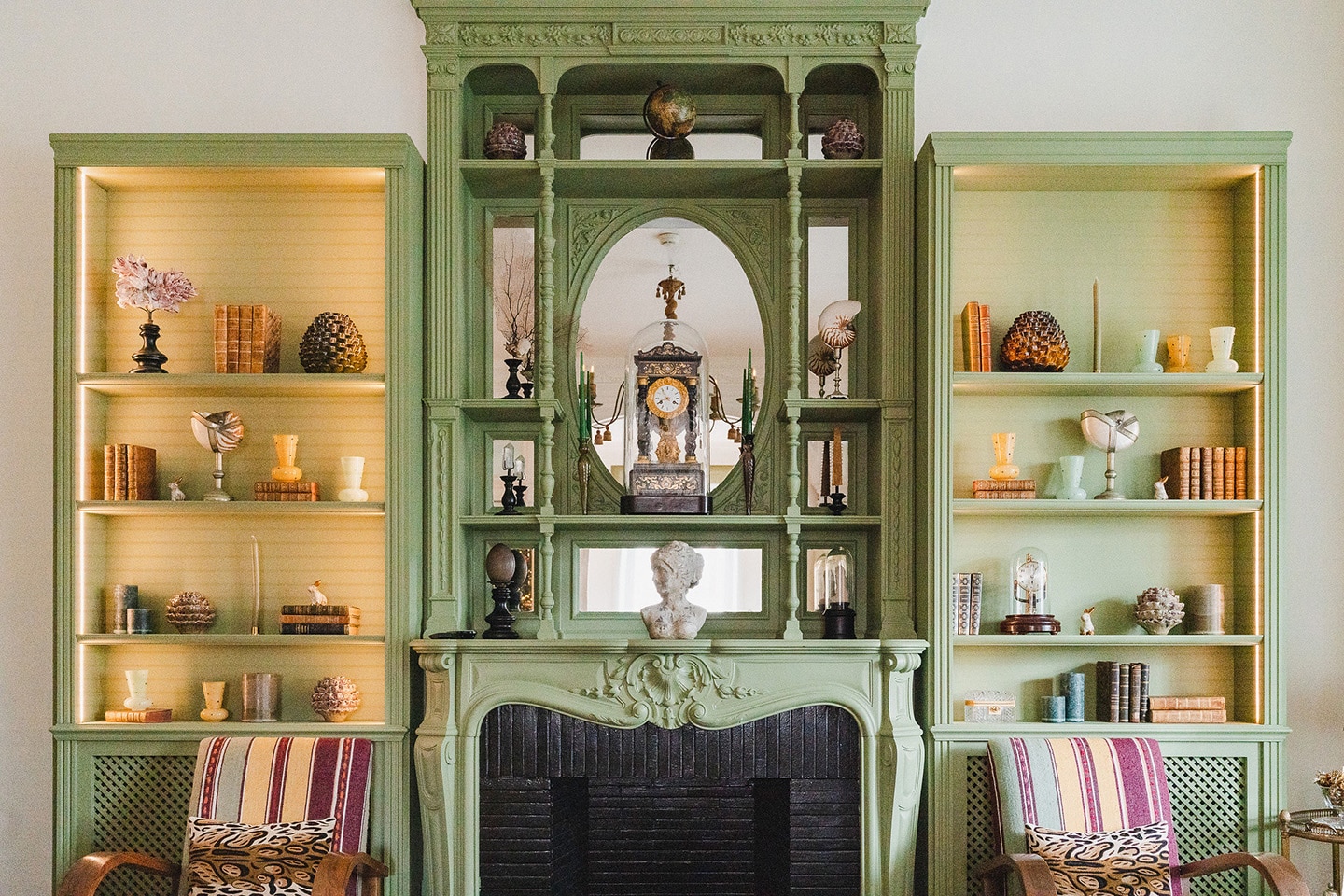
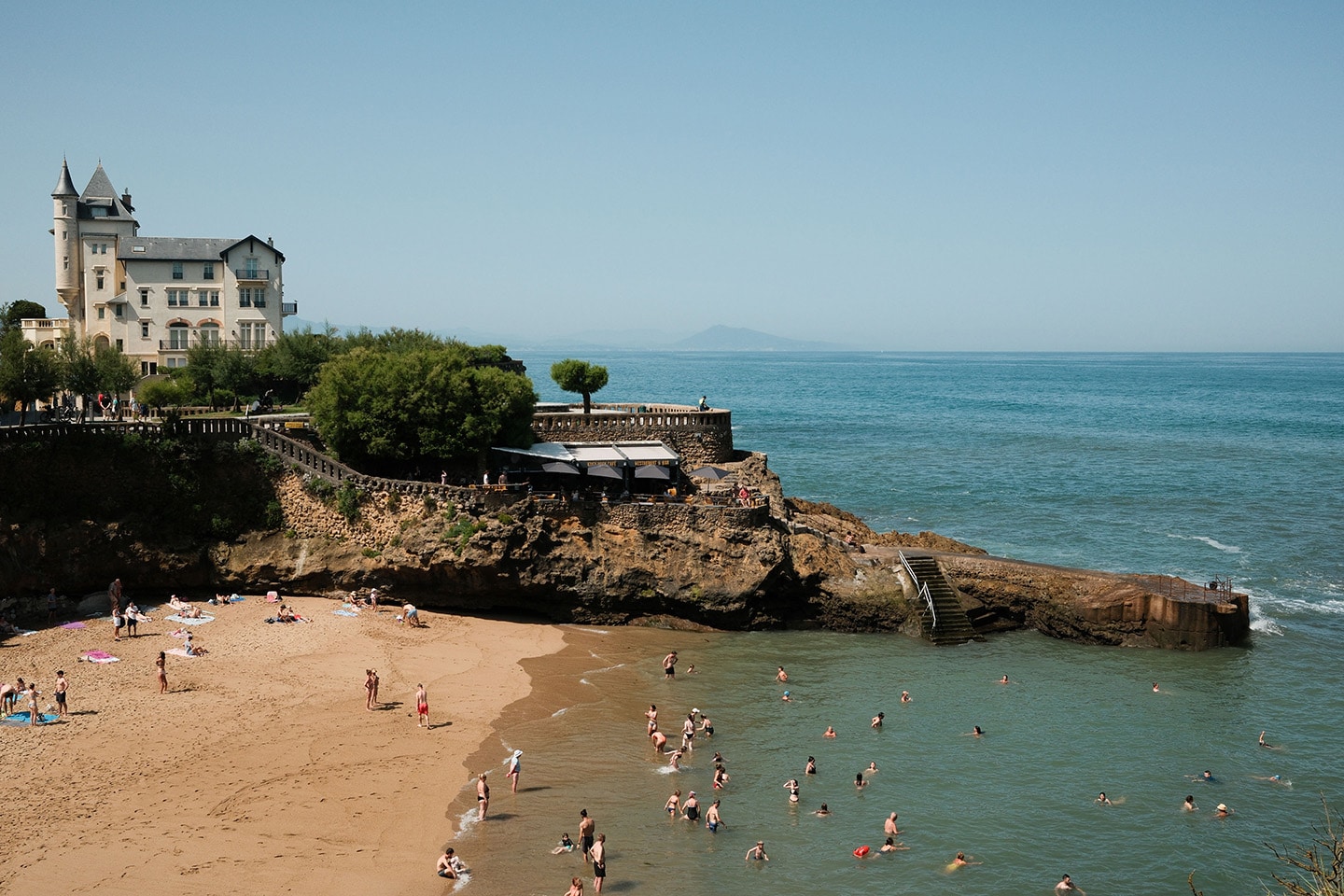
A few more steps on foot and you arrive in Rue Des Halles: a must stop at the unmistakable covered market to taste gastronomic specialities from pintxos, Basque tapas, made with fresh fish, to the famous Jambon de Bayonne, the local raw ham. Returning towards the sea on the Cachaous rock, stands the beautiful Villa Belza, another magnificent Belle Époque building with breathtaking views of the sea. From there, the scenery becomes spectacular again as the tamarisk trees thicken until you reach the Rocher de la Vierge (Rock of the Virgin), lit in the middle of the ocean and reached by an iron bridge between the rocks. A sentinel of wave-beaten stone, erected in memory of a miracle at sea, for more than a century, the Virgin has watched over sailors, and offers visitors a panorama of the bay and the Pyrenees. The best sunset view of the Rocher De La Vierge is from the roof top of the Hotel de la Plage, which is also open to non-guests. Far from the urban hustle and bustle, set like a pebble on the Port-Vieux beach, it invites you to linger in the heart of the coast's cosmopolitan charm. Interior architect Olivier Granet-Sottis has created a design that echoes the surrounding landscape. Mineral tones, light woods and raw fabrics interact with the natural light, evoking the sea and the contours of the Basque land to which it proudly bears witness. Each piece is custom-designed, the result of collaborations with local craftsmen and artists.