
Wine, the growth of resistant vines points to Prosecco and Pinot Grigio
Piwi crosses make it possible to create sustainable varieties that need few fungicide treatments, but in Italy only ten regions are authorised to date and it is not possible to use these cultivars in doc and docg

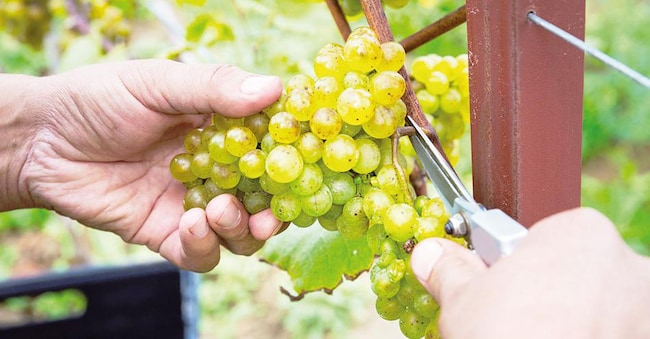
They represent a great opportunity for the future of wine, but Italy seems to be lagging behind in following this path. They are the Piwi vines (an acronym of the German term meaning 'fungus resistant'), i.e. vine varieties resistant to pests, diseases or even extreme climatic conditions such as drought. These are vine cultivars resulting from a selection of crosses that, thanks to their resistance characteristics, guarantee growers a strong reduction in pesticide treatments in the vineyard. And in perspective a chance to combine environmental sustainability and product quality.
This is the conviction of the European Commission, which a few years ago allowed the use of resistant varieties even within designations of origin (EU Regulation 2021/2117 of 2 December 2021). An opportunity that has been seized, for example, by France, but not by Italy, where instead resistant vines are allowed for table wines and IGT but not for DOC and DOCG (as provided for by Article 33 paragraph 6 of the Testo Unito del Vino, Law 238/2016).
Requirements that are greatly limiting its diffusion in Italy. Suffice it to say that in our country, compared to a national vineyard of 680 thousand hectares, the area cultivated with Piwi varieties does not exceed 3,600 hectares, or about 0.5% of the total. The European scenario is different. France is already over 0.7%. The Aoc Champagne has integrated the resistant vine variety Voltis since 2022, permitting its cultivation on up to 5 per cent of the surfaces, and a similar path has been followed by the Aoc Bordeaux with the vine variety Artaban. In Germany and Switzerland, the areas with resistant varieties exceed 2.5 per cent; in Hungary they are already over 8 per cent.
Another aspect limiting their spread in our country is the fact that resistant varieties are currently authorised in only ten out of twenty regions. Excluding them are above all the southern regions where the warmer climate limits the attacks of vine diseases and pathogens and thus makes it less urgent to find countermeasures.
In Italy, the Vivai Cooperativi Rauscedo (Vcr) has been at the forefront of research, development and dissemination of resistant varieties for over ten years. The first resistant Italian varieties were in fact entered in the Register in 2015 and were the result of a research programme launched in 1998 in collaboration with the University of Udine. The Fondazione Mach di San Michele all'Adige, which experiments with Chardonnay-derived Piwi for the production of sparkling wine bases for Trentodoc, has also been working on the subject for some time. The first varieties developed were Fleurtai, Soreli, Sauvignon Kretos, Sauvignon Rytos, Merlot Kanthus and Cabernet Volos.


