
Pierrakakis wins, a Greek at the head of the Eurogroup ten years after the crisis
The 42-year-old Hellenic finance minister overcomes competition from Belgium's Van Peteghem, who may have been penalised by the EU confrontation over the use of frozen Russian assets. Pierrakakis takes over from Irishman Donohoe
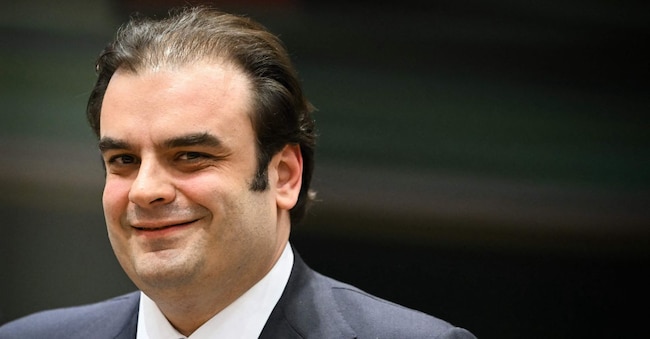
Greek Finance Minister Kyriakos Pierrakakis, 42, will be the president of the Eurogroup for the next two and a half years, taking over from Irishman Pascal Donohoe, who resigned for a post at the World Bank. Pierrakakis prevailed over the Belgian budget minister, Vincent Van Peteghem, in the vote held by the Eurozone finance ministers, with the endorsement in his favour made explicit immediately beforehand by Germany.
Ten years after the most critical moment of the sovereign debt crisis, it will therefore be the country emblematic of that crisis, Greece, that will lead the institution then called upon to take key decisions on the future of Athens and Europe. The memory of those dramatic meetings in June-July 2015, when Greece, led at the time by Alexis Tsipras and the controversial finance minister Yanis Varoufakis, was on the brink of default and seemed about to exit the euro, is still vivid.
Then three international bailout plans, a 'blood and tears' consolidation path during which the Eurogroup and European institutions in general were perceived in Greece as odious guardians of rigour, and finally a rebirth that today sees the country among the few with a budget surplus (1.1% of GDP according to the Commission's latest 2025 estimates), a higher growth rate than many partners and a debt that is still a record (147.6% of GDP), but is steadily and decisively decreasing.
An identikit that makes him a sort of model pupil, as Jeroen Dijsselbloem, the former Dutch finance minister who chaired the Eurogroup at the time of the bailout, had rightly pointed out on the eve of the vote: 'It would be recognition of Greece's success in turning over a new leaf. Hard work and reforms have paid off: an example for many other member states'. And as Pierrakakis himself emphasised in his candidate letter: 'My generation was shaped by an existential crisis that revealed the power of resilience, the need for reform and the strategic importance of European solidarity. Our history is not only national, it is deeply European'
It may therefore have been this narrative that favoured Pierrakakis, a member of the European People's Party, along with the general good impression he made among his colleagues at meetings in recent months. In his aforementioned candidacy letter, he listed the savings and investment union, the completion of the single market, the digital euro and the technological sovereignty of Europe among his priorities. He is also a strong advocate of cross-border mergers and acquisitions and the creation of 'European champions'.


