Winter tyres, it's time to comply
Since mid-October in some Alpine areas, the ordinances concerning driving in the cold season are already in force. In the rest of Italy, the season for winter tyres, chains and approved snow socks starts in mid-November. Here is what you need to know

2' min read
2' min read
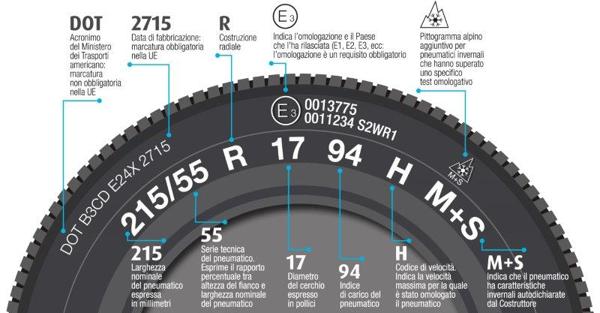
Until 15 May 2025, the ordinance binding the circulation of cars and commercial vehicles up to 3.5 tonnes to the presence of winter tyres is in force in Valle d'Aosta and on some roads in other regions. Alternatively, those who occasionally have to deal with difficult road conditions can resort to all-season tyres, chains and snow socks provided they are type-approved. In contrast, in many other parts of Italy the winter road traffic season starts on 15 November and runs until 15 April. Roads and areas affected by ordinances in which specific road signs appear indicating the obligations they entail and their duration can be found in advance at https://www.stradeanas.it/it/info-viabilità/ordinanze-web and https://pneumaticisottocontrollo.it. It should be added that these regulations are often spotty, so in order not to be found unprepared, it is a good idea to inform yourself, to know how to equip yourself and to plan well in advance for your tyre change.
Winter tyres, what the Highway Code requires
Driving without the correct equipment risks penalties ranging from EUR 41 in built-up areas to EUR 84 on out-of-town roads, but up to EUR 318, the deduction of three points from the licence and the immediate immobilisation of the vehicle. In practice, it has to be removed from the road with a tow truck or only by adopting the prescribed devices. If you continue not being in order and are stopped, further penalties are added and three points are deducted from your driving licence.
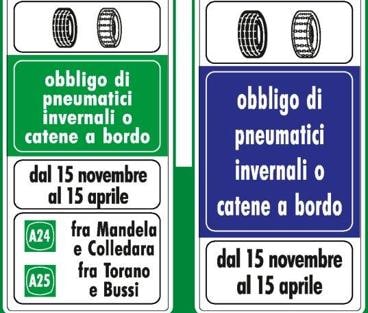
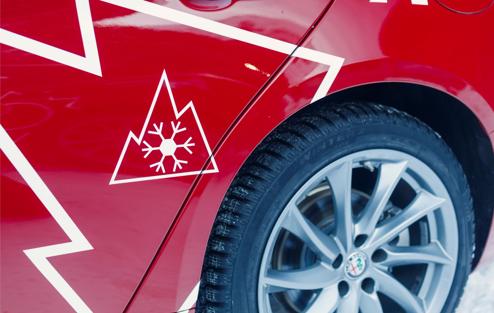
As a reminder, winter and all-season tyres are marked M+S (i.e. MS, M/S, M-S and M&S) and with the additional Alpine pictogram (a three-peaked mountain with a snowflake inside it), if applicable, must be of sizes that comply with those in the booklet.
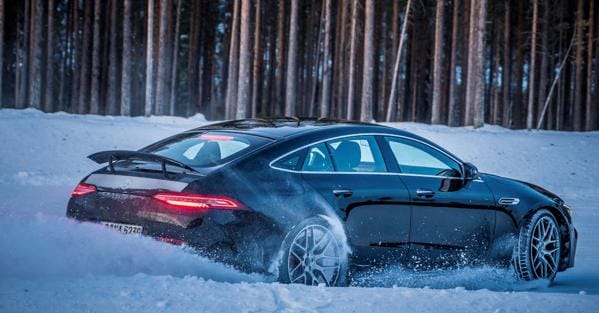
In addition, it is good to remember that winter tyres are very effective for safety in cold temperatures even when the road surface is not snow-covered. Finally, the Ministry of Transport recommends winter tyres on all four wheels. A wise piece of advice that, in practical terms, reflects on safety, since the uniformity of the 'tyre' positively affects the car's behaviour in all driving situations.