
Winter tyres: instructions for use
Using winter tyres is a common-sense choice because, all at once, it increases safety and avoids inconvenience in snow and ice. Here's how and why to adopt them and how to store them.

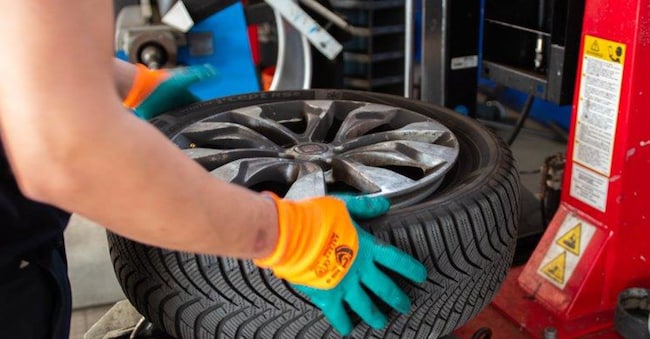
Winter tyres, why use them
The purchase of a set of winter tyres should not be regarded as an additional investment but as an upfront expense that, sooner or later anyway, you will have to make. In fact, in the bad season by using a set of winter tyres, the summer one sits idle, just as the former does in the warmer season. Ultimately, both sets of tyres have a longer life cycle, almost twice as long, as one that works in all seasons. Although there are no specific standards, winter tyres must be fitted on all four wheels (the cost of the operation varies from tyre dealer to tyre dealer) in order to ensure uniform grip conditions on the road surface even when the temperature can create ice formations imperceptible to the eye. In fact, having winter tyres (nowadays almost all defined as thermal tyres due to their specific characteristics and identified by the Alpine pictogram, which encloses a three-peaked mountain with a snowflake inside) on the drive wheels and summer tyres on the others jeopardises stability on low-grip surfaces in the case of a front-wheel drive car because even wet tyres can be enough to skid, while in the case of a rear-wheel drive car it compromises the directionality you want to impart by steering. Furthermore, the fact of having an all-wheel-drive car should not inspire the certainty of being unstoppable, because when grip is zero even these cars can become ungovernable. Therefore, it is always wise to have tyres suitable for the bad season not only if you live in or have to travel to places where it is easy to encounter snow. A recommendation that applies even more so to those with an SUV, which is always heavier than a conventional car. In fact, both when cornering and when releasing the accelerator or braking and when going downhill it is more subject to the stresses of weight that can suddenly trigger uncontrollable behaviour.
Winter tyres, maintenance and care
Winter tyres do not require any more attention than summer tyres or all-season tyres, which avoid the hassle of mounting/dismounting because they can be used all year round but are a less specialised choice than the others in the event of heavy snowfall. All these tyres are subject to the same wear limit as summer tyres in the Highway Code: 1.6 mm tread depth measured in the main longitudinal grooves. In addition, they should be inflated to the same pressure as normal tyres and have no structural damage. When not in use, winter tyres should be stored in a dry, ventilated, temperate room protected from light. It should be remembered that many tyre dealers offer storage of the set of tyres that are not in use for a fee, usually at a flat rate that also includes assembly and disassembly operations. A very important recommendation concerns these operations, which must be carried out by a professional, especially in the case of cars manufactured since the end of 2014, which are compulsorily equipped with Tpms. This device signals any loss of pressure with a warning light in the dashboard and, therefore, an unskilled person could compromise its functionality or break the pressure detection sensor, resulting in high repair costs.

