Cannes Film Festival

Martone's wisdom of looking at the world like Goliarda

The only Italian film in competition at Cannes, 'Fuori' recounts the prison experience of the author of 'The Art of Joy'. Very good Valeria Golino

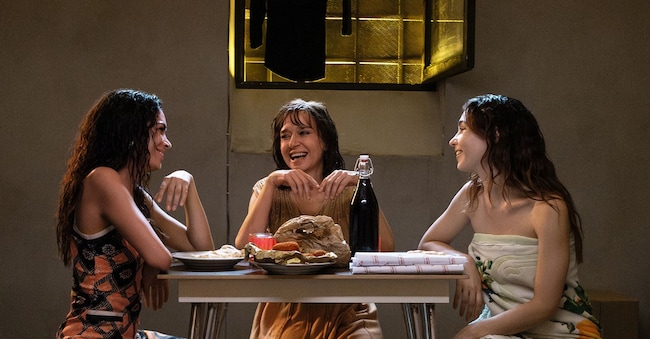
Elodie, V aleria Golino, Matilda De Angelis in una scena del film «Fuori» di Mario Martone.  (Copyright: Mario Spada)

3' min read

Key points

  • The 1980s
  • Out of prison
  • The Rebirth of Goliarda
  • Very good Valeria Golino
  • The author
  • Rome of jovial beauty

3' min read

Fuori, the only Italian film in competition at Cannes, in cinemas from 22 May, is a subtle balance between the outside and the inside: inside and outside of oneself, inside and outside of society, inside and outside of prison.  Mario Martone knows how to manoeuvre these thin walls with extreme skill and so does his leading actress, Valeria Golino, who plays Goliarda Sapienza.

The 1980s

It is the 1980s and the writer of The Art of Joy is forced into prison (for five days in reality) for stealing jewellery from a friend's house. Inside she is greeted with suspicion, like a spy. You can tell by the clothes she wears, the way she behaves that she is not someone used to being in the slammer. She is subjected to mistrust and isolation by the other inmates, but when, responding to aggression, she shows the wildness of the others, she is accepted by that world of extreme, but genuine feelings for better or worse. She befriends above all Roberta (Matilda De Angelis) and Barbara (Elodie) and is co-opted into their shady and generous circles.

Loading...

Arriva l’unico film italiano in gara a Cannes

Photogallery35 foto

Out of prison

Once out of prison Goliarda realises she has no future. Too 'old' to be a waitress or to be hired as a cleaner, too inexperienced to do any other kind of work, too compromised to be rehabilitated by the well-to-do society of Rome whose expectations and standards she has betrayed. She finds herself lost: the only person who makes her happy and who stands by her side is Roberta, also released from prison and unfit for life outside. What Roberta does and what she did to earn her imprisonment, Goliarda never asked. Perhaps she is just a common delinquent, or perhaps much more.

The Rebirth of Goliarda

What is important is that in life outside only the company of Roberta and Barbara makes Goliarda come alive, makes her feel alive. Especially Roberta, for the care she shows towards the writer's talent and for the sincere human closeness, even in her slabby and manipulative way, probably the only one she knows.
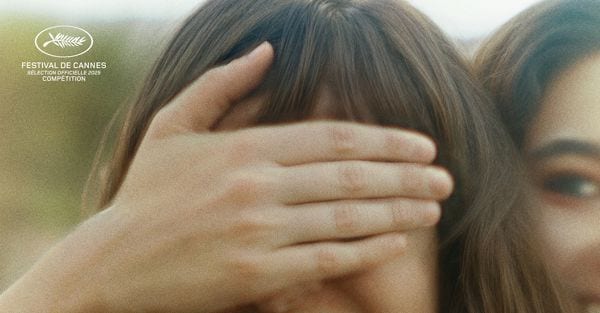
La locandina del film

Bravissima Valeria Golino

Valeria Golino was excellent in mastering, without overplaying her hand, the psychological inside and outside of Goliarda Sapienza, a character the actress and director knows well from having directed the television series The Art of Joy, based on Sapienza's book.

The scenes in the women's prison

.

Martone, in turn, enters the 1980s philologically and manoeuvres a direction that lets the images have the force they need to express. The scenes in the women's prison, from collective protest to individual struggles, are beautiful. Intense is the disorientation of these women for whom life inside is certainly not easy,but it is more intelligible and less cynical than outside. Goliarda who outside has always struggled to live is now even more lost, but somehow reborn, with a desire to write.

Goliarda Sapienza in carcere

Sicilian author

Martone, like Golino, and co-writer Ippolita Di Majo have long studied the Sicilian author. Martone brought to the theatre Il filo di mezzogiorno (1969), an account of psychoanalytic therapy with the Messina doctor Ignazio Majore, starring a magnificent Donatella Finocchiaro, a play taken from Sapienza's second book. The first had been Lettera aperta (1967), which recounted her childhood in Catania. Sapienza had come to writing after being an actress and in the film world she had met her first husband, Citto Maselli, to whom she was bound for 18 years, and then the writer and actor Angelo Pelligrino, who is also a character in the film.

After his prison experience Sapienza wrote The University of Rebibbia and The Certainties of Doubt, in which he reflected on how in the society outside there were 'civilised' pitfalls no less dangerous than inside.

Rome's jovial beauty

.

Martone and Di Majo do not bypass the text, but spread it over time to adhere to the character and her emotional experience. We seem to see an element of contemporaneity when Goliarda and Roberta find themselves at Termini Station, as had happened with the concrete pylons in Noi credevamo (2010) about the Risorgimento from Anna Banti's text. There is a Rome of a jovial and friendly beauty, full and open, that has taken the place of Naples, city-divinity, good god, object of love and veneration, and fierce with ugliness and decay. Martone's cinema has always been innervated with magnificent Neapolitans, such as the mathematician Renato Caccioppoli, born of the director's association with another powerful Neapolitan character, Fabrizia Ramondino. And again, L'amore molesto (1995), the Scarpetta of Qui rido io (2021), the Edwardian Sindaco del Rione Sanità, the film Nostalgia (2022).

Copyright reserved ©
Loading...

Brand connect

Loading...

Newsletter

Notizie e approfondimenti sugli avvenimenti politici, economici e finanziari.

Iscriviti