At table with Pietro Sella

Artificial intelligence makes the relationship between bank and saver more intimate

by Paolo Bricco

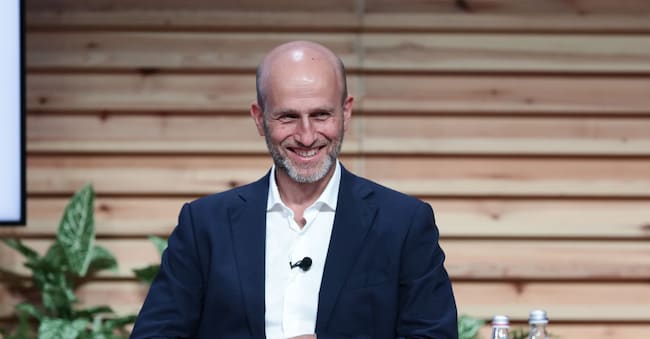
Pietro Sella (Imagoeconomica)

6' min read

Translated by AI
Versione italiana

6' min read

Translated by AI
Versione italiana

"The paradigm shift affects everything and everyone. It is a shift comparable to the adoption of coal in England in the first Industrial Revolution and the exploitation of hydromechanical energy that, here in Biella and throughout northern Italia, enabled the first manufacturing settlements in textiles, when our country was agricultural. The impact of artificial intelligence on factories is to be assessed. But that on the work of the banker and bank officer will be ever greater. The relationship with the saver and the entrepreneur must be turned towards a depth that, if it already existed before, must now become even more intimate and marked. The concept of risk must be rethought. Procedures and regulatory mechanisms must be reconsidered. The concept of confidentiality must be reshaped'.

Pietro Sella belongs to a family of bankers that is among the last to have its name in the business. He is an engineer who, during his years as a student at the Milan Polytechnic, gained his first experience on the family's agricultural estates ('unpaid', he smiles, exerting self-mockery on the proverbial Biella parsimony) and then chose to join the bank.

Loading...

We are in the bistro that Simone and Sergio Vineis have opened in Biella. The two - father and son - have brought the Michelin-starred Patio di Pollone to town for over twenty years. Next door is the restaurant. The ambience is designed by Michele De Lucchi. A corn waffle with pancetta piacentina is served on the table. Then comes an aubergine with a mousse of parmesan cheese and an herb oil. All accompanied by a bubbly from Tenute Sella, called 'Insubrico' and made from Nebbiolo grapes.

Sella, who has the dual dimension of engineer and banker, is able to assess the overwhelming force of technological breakthroughs on the real economy and factories, on financial infrastructures and banks. But, above all, he is an expression of a land like Biella that is hidden and central to the Italia model, in its history and in its present, in its limits and in its potential. His family gave the country - among others - Quintino Sella, several times finance minister of the historic Right in the first Kingdom of Italia, and Vittorio Sella, a cult photographer among mountain enthusiasts. His land has given a reckless man of business and finance, culture and art like Riccardo Gualino and solid textile entrepreneurs like the Piacenza, Rivetti, Barberis Canonico and Zegna families.

Maurizio Sella died on 22 November last year. "My father,' says Pietro, 'had internalised an identity between business, family and institutions. Before he left, he prepared everything. He left everything perfect. In his way he conceded a lot about himself. In him there was no distinction between goodness and harshness. He did not allow you to think you were not good enough. His was a special and elevated form of love and respect for the other, who was constantly pushed to measure himself against himself and his own limits, his own fears and his own strength'.

The absence of a father takes everyone's breath away. The family is a form of destiny that everyone then interprets according to their own vocations and possibilities. In a moment, we return to the here and now. Sergio Vineis (the son) brings to the table a plate - abundant and very good - of square agnolotti with three different roasts: veal, pork and chicken. To drink, we choose a 2016 Lessona San Sebastiano allo Zoppo, an outstanding vintage in the Langhe and also very good for upper Piedmont nebbiolos like this one.

The Sella family - between textiles and credit, family retreat and public life - have a leathery tradition full of dedication to their work, with a moroseness marked by the family saying 'poor family, rich company'. Since 1986, family members have on average received no more than 10 per cent of the bank's net profits, which have come to them through the controlling companies.

In front of here - where the Banca Sella Patrimoni, a booming business led by Pietro's brother Federico, now stands - was once the bank's headquarters. In Biella's memory, it is said that during the Crisis of 1929 - when the name was Gaudenzio Sella & C. - the head cashier had the idea of putting all the coins, all the banknotes and all the securities in view behind the counter. So he showed, to those who asked about what was happening all over the world, that the wealth and savings were there. The bank was showing them and protecting them and was therefore solid.

The agnolotti are remarkable. The temptation to ask for more falls at the thought of the moroseness in every aspect of the Biellese. The speed of today's transformation has accelerated a banking practice that, for centuries, was repetitive. Says Pietro: 'When I was born in 1968, everything was done by hand. My father used to tell me about it. On the first of January at nine o'clock in the morning the clerks would start calculating the interest for the past year. The next day, the interest was credited to each account. My father became managing director in 1974. At that time, punch cards were introduced. That mechanisation left many in Biella perplexed: it seemed like an excessive investment and too costly.

The loneliness of prime numbers is a rule that also applies when defining the strategies of companies, both manufacturing and financial. So much so that the choice of those investments was surrounded by the perplexity of a community religiously devoted as much to work as to saving, at home and in the company, in the family and in the workshop. Second come the meatballs made with meat from Carmagnola chickens. Outside there is the silence that only exists in provincial towns, which at midday seem to reduce their pace to respect the ritual of lunch. Nothing, however, is as mobile as the Italian province which, for at least two centuries, has been measuring itself against the new forms of infrastructure of the real economy and technological frontiers. Two centuries ago, hydromechanical energy brought the spirit of Manchester to a land of mountains, valleys and rivers. At the end of the 20th century, there were the first digital applications in an Italian bank, Banca Sella. In February 1997, Banca Sella offered the first payment service via the internet and, in 1998, it offered the first online account and carried out the first share purchase and sale transaction on the Italia market via the internet. Today, everything is immersed in the flow of artificial intelligence. Pietro explains: 'It is not a bubble at all in its practical consequences. It is very real. Already now, the amount of data handled by the most advanced forms of artificial intelligence is immense. It will become even more so. The transactional content in the relational activity of the bank is bound to shrink. Instead, the emotional, relationship and human knowledge content of the customer is set to increase. This will be true in Biella as in New York, in Milan as in London, in Rome as in Taiwan, in Palermo as in Johannesburg'.

The Lessona of 2016 flows well. "A few years ago we started to make small, targeted investments. To improve the quality of the product and to better position our wines. With the increase in temperatures, the Nebbiolos that grow in the north and at higher altitudes will have more and more space and importance,' Sella notes.

As a banker (and as an engineer) Pietro expresses a point of view that is both secularly traditional and hyper-innovative on the new structures in equity and in the managerial classes: 'I am a founding member of Aidaf, the association that brings together the exponents of family capitalism in Italia. This shareholding structure guarantees short-term stability and long-term management. At the same time I am founder of the Italia chapter of Endeavor, a non-profit organisation for the support of new, high-impact entrepreneurship. There is no contradiction. I think the two dimensions are complementary. I think it is natural that, alongside traditional businesses, new ones are constantly being created. We have done so. The Sella family's first activities in textiles date back to 1570'.

As a final dessert, Simone Vineis (the father) brings us caramelised cherries dipped in a Catalan cream that has been foamed and burnt with sugar. And, as Pietro and I say goodbye, I am reminded of Quintino Sella's harsh judgement that 'in Italia there is not enough desire to get rich through work and savings. There reigns a general inactivity not only in the economic field, but also in the scientific, literary and political fields. This quietism is the death of the nation'. Between the industrial revolution and artificial intelligence, manufacturing and small banks, microcosms and international scenarios, I think Quintino was wrong, because Italia remains that country in which the optimism of the heart ultimately gets the better of the pessimism of reason.

Copyright reserved ©
Loading...

Brand connect

Loading...

Newsletter

Notizie e approfondimenti sugli avvenimenti politici, economici e finanziari.

Iscriviti