
With Great-ER the four universities of Emilia together to grow twelve start-ups
At the Dama Technopole in Bologna, entrepreneurial projects incubated by Emilia-Romagna universities were presented, including digitisation, 3D bioprinters and artificial intelligence

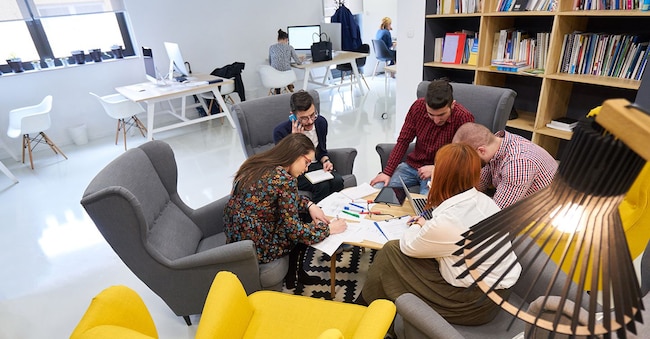
Sixty entrepreneurial ideas, some of which have already become start-ups, others spin-offs. In the end, twelve were selected, with a high technological innovation content, to follow an incubation programme for the first time at the service of all four universities in Emilia-Romagna.
Not only the Alma Mater, through Almacube, the incubator and innovation hub born 25 years ago from the partnership between the University of Bologna and Confindustria Emilia area centre, but also the Universities of Ferrara, Modena and Reggio Emilia, and Parma. Between robotics and artificial intelligence, 3D bioprinters for the large-scale production of customised therapeutic devices, and blockchain technologies to digitise and certify work safety certificates, the programme concluded at the Dama technopole in Bologna, where the projects were presented.
"Generally speaking, the criteria we used to select start-ups and spin-offs ranged from the validity of the entrepreneurial teams to the underlying technologies and the potential for market development," says Shiva Loccisano, managing director of Almacube, which has supported more than 300 business ideas since it was set up. The advanced incubation process lasted 11 months. And it enabled the involvement of all four universities, with the Great-ER project, thanks to 300,000 euros of structural funds provided by the Region.
All incubated start-ups represent a snapshot of the new generation of European technology companies, with teams capable of combining research and innovation with industrial concreteness, under the banner of digital transition and sustainability. So much so that they have already raised a total of more than EUR 1 million in public and private capital.
Thus, here are fast solutions for the diagnosis of infectious diseases, through technology that combines genetic analysis and artificial intelligence to detect pathogens at any place and time. But also new digital platforms for maintenance that reduce costs and guarantee high-quality data, and protective technologies for helmets that reduce the danger of brain injuries. Also: the system that transforms wastewater pollutants into sustainable fertilisers, as part of the circular economy, and automation combined once again with artificial intelligence to reduce human errors in the quality control of industrial panels.

