
With "Corda Litica" the Arsenal evokes Pinuccio Sciola
In Venice, the poetic and universal language of Pietre Sonore

2' min read
2' min read
It is not just a question of sound. Because those stones, designed and characterised by squares and parallelepipeds, give and tell much more: a journey and a multi-sensory and interactive experience in which all the elements come together and merge. The sound of the universe accompanied by a mix of emotions. That which Pinuccio Sciola, the Sardinian artist from San Sperate, who died a few years ago, was able to give with his sonorous stones. And it is precisely the "brilliant intuitions of Pinuccio Sciola" that inspired the monumental installation "Lithic Chords / Corda Litica" exhibited at the 19th International Architecture Exhibition of the Venice Biennale, which redefines the expressive and structural possibilities of stone.
The 'Country Museum'
.Because Sciola, who transformed the centre of the Campidano where he lived into a 'Museum Town', considered his stones to be the 'memory of the universe' and reflected on the sounds generated by the processed and transformed stones, once caressed.
"The Lithic Chords / Corda Litica installation represents a coherent and profound evolution of his intuitions," says Tomaso Sciola, vice-president of the Pinuccio Sciola Foundation, "connecting art, matter and sound in a dialogue that continues to inspire the world of architecture, design and sound research.
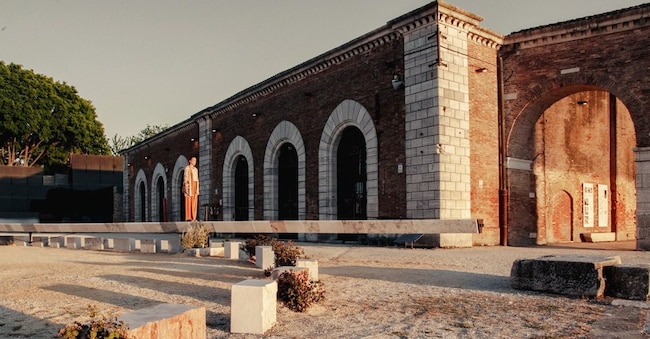
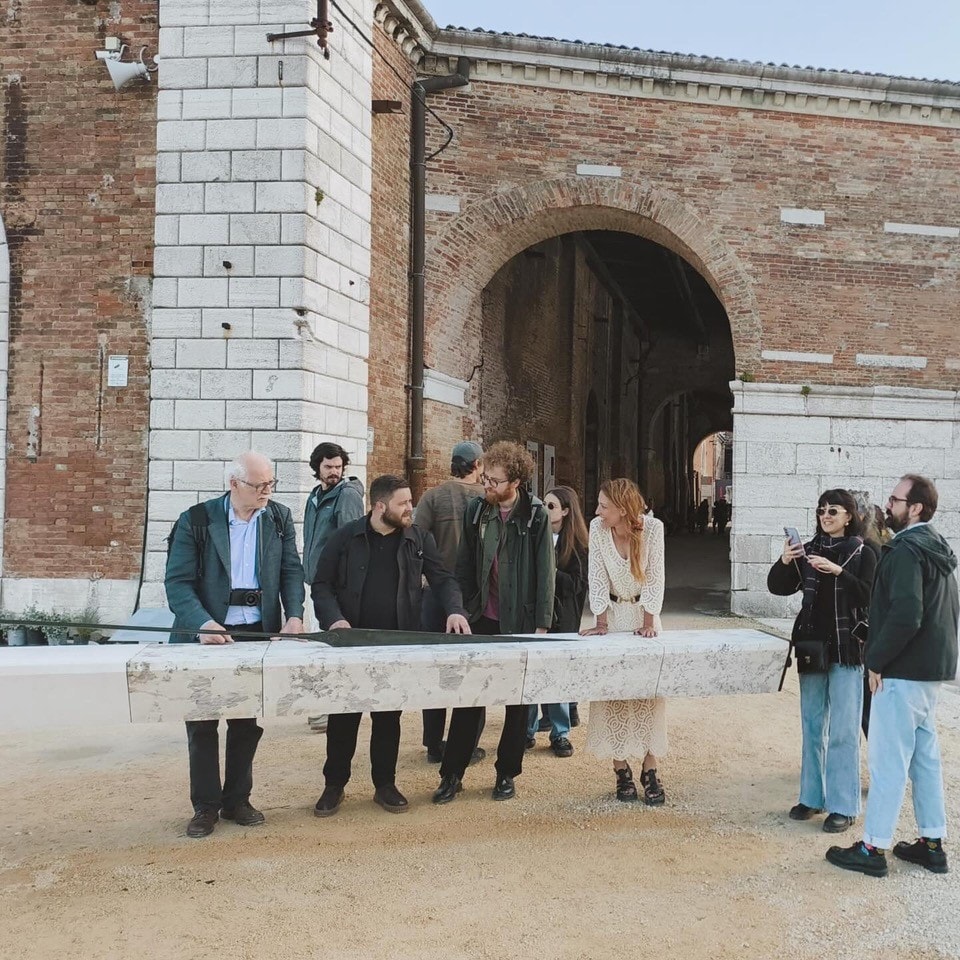
Located in the historic Venice Arsenal, the structure is 21 metres long and is made of leftover stone: in the design, the synergy between stone and steel, articulated through a well-defined structural system, echoes the internal mechanics of a stringed instrument.
Seven types of stones are used to make up Lithic Chords, to which as many sounds correspond, activated with a dynamic and interactive proximity system. Walking around the sculpture, melodies and harmonies are generated from sources hidden from view. The last point of this installation then returns the sum of all the sounds put together. The project reveals the stone's flexibility, overturning the traditional perception that would have it rigid, heavy and immobile. Almost a revolution. "Stone, from being a static element, becomes a living, resonant organism, capable of engaging the senses and the spirit," concludes Tomaso Sciola. "We are grateful to the designers and artists who, with great sensitivity and rigour, were able to give voice to this vision. The return to the Venice Arsenal marks a further step in the Foundation's journey towards the international diffusion of the poetic and universal language of Pietre Sonore'.

