Investments

With missiles Trump diverts capital flows to the US

The US dollar is once again considered a safe haven, directing European flows back to the star-studded financial markets

2' min read

Translated by AI
Versione italiana

2' min read

Translated by AI
Versione italiana

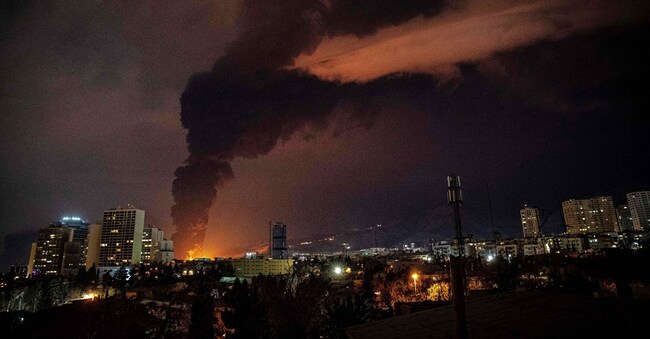
In the space of a week, the world has turned upside down, also from the point of view of financial dynamics. With the joint US-Israeli attack on Iran, the loser is primarily Europe, at the very moment when the Old Continent was attracting huge flows of capital fleeing from the United States.

With a prolonged closure of the Strait of Hormuz, Europe would face an energy shock that households and businesses already feel after one week of conflict. While the US, thanks to shale oil, is more self-sufficient.

Loading...

The missiles fired on Iran thus allowed Donald Trump to reverse capital routes in a few hours, drawing them back to their homeland. The US dollar has once again become a safe haven, directing European flows back to the stars and stripes financial markets. Until last Saturday it was a different story. Perfect timing or just a mere coincidence?

Historically, the US has attracted capital from Europe due to economic growth tending to outpace that of Europe. This trend weakened during 2025 and reversed in early 2026.

After years of increasing concentration of flows towards US markets, the latest data showed that this inclination was coming to an end: for every 100 dollars invested in global equity funds, until last week only 26 dollars went to US equities. The rest was invested in other international listings: from Europe to Asia, not neglecting the emerging countries.

This was the lowest allocation to the US in recent years. By 2022, the US had come to attract 92% of capital invested in equity funds globally. The latest share of 26% was therefore minimal compared to that peak and was the result of a combination of economic, political and social factors that had undermined investor confidence in the US market, in particular due to Trump's erratic tariff policies and the resulting trade tensions, which have continually fuelled a climate of uncertainty in the markets with grave concerns about the long-term sustainability of the US economy.

But with the attack on Iran last Saturday, Europe has become economically more fragile again. And so we are back in the loop of seeing a flight of savings leaving the European Union and heading for the States.

A dispersion of European resources - estimated in recent years at up to EUR 300 billion per year by Enrico Letta's report 'Much more than a market' - that would be strategic for financing innovation and businesses in the Eurozone. Instead, they end up supporting American companies once again.

Copyright reserved ©
  • Gianfranco Ursino

    Gianfranco UrsinoResponsabile Plus24

    Luogo: Milano

    Argomenti: Fondi comuni, Etf, Assicurazioni, Conti correnti, Conti deposito, Mutui, Polizze fideiussorie, Anatocismo, Usura, Risparmio postale, Libretti Coop, Banche, Borsa, Consob, Banca d’Italia, Abf, Acf, Oam, Ocf, Consulenza finanziaria, Fondi pensione, Casse di previdenza, Fintech

Loading...

Brand connect

Loading...

Newsletter

Notizie e approfondimenti sugli avvenimenti politici, economici e finanziari.

Iscriviti