Mind the Economy / The story isn’t over yet

With no future to speak of

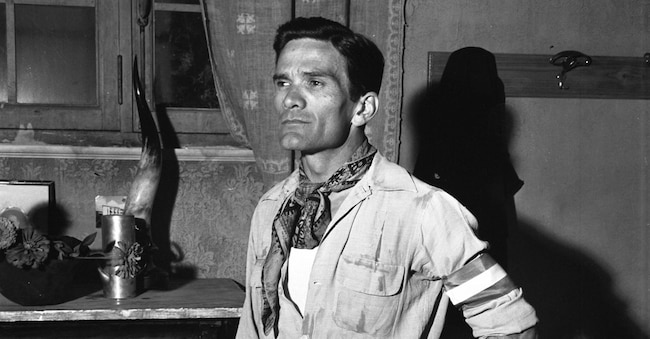
Pier Paolo Pasolini (ANSA/OLDPIX)

15' min read

Translated by AI
Versione italiana

15' min read

Translated by AI
Versione italiana

In February 1975, Pier Paolo Pasolini published one of his ‘corsair’ essays in the Corriere della Sera, entitled ‘The Void of Power in Italia’, though most people will remember it as ‘The Disappearance of the Fireflies’. Pasolini recounts that in the early 1960s, fireflies were still to be found in the countryside. Then, within the space of a few years, they had vanished. No more flickering lights at the onset of evening. An insignificant detail which, in his poetic language, came to symbolise an enormous change. The advent of the consumer society, capable of sweeping away the culture, desires and way of thinking that had defined us as Italians for centuries. The new power, writes Pasolini, has brought about a level of standardisation that fascism, with all its horrific violence, had never managed to impose. The consumer society achieves this without needing to proclaim a brazen ideology, but by working on everyday life, on models of success, and on the images through which each person learns to represent themselves and the world. “It was impossible for Italians to react any worse than this to such a historical trauma,” writes Pasolini. “In just a few years (especially in central and southern Italy), they have become a degenerate, ridiculous, monstrous, criminal people. You only need to step out onto the street to realise this. But, of course, to understand the changes in people, you have to love them.” But who loves the people anymore?

Admittedly, this analysis contains a great deal of nostalgia for ways of life among the common people that were by no means free or egalitarian. Modernisation had also brought education, prosperity, and the collapse of ancient and harmful hierarchies. Yet the value of this insight remains profound nonetheless. A social order also exercises power by determining what people desire, what they regard as normal, and what they are capable of imagining. This is the new fascism that is asserting itself ‘after the disappearance of the fireflies’.

Loading...

In politics, all this is crucial. A political tradition can survive for a long time, retain its organisations, win elections and even govern for a long time, whilst at the same time losing the ability to shape the way in which a society interprets itself. It may have highly detailed programmes, agreed with its allies and signed off on, but no convincing or inspiring vision for the future. It may have a ready answer for every problem and, at the same time, no answer to the question that really matters. What sort of society do we dream of becoming?

For much of the twentieth century, the various strands of European progressivism had answered this question in different and sometimes irreconcilable ways. Communists, socialists, social democrats and the Catholic co-operative movement all differed on the means, the timing, the concept of property and the role of the state. They were convinced, however, that these differences could be resolved through collective action and that individuals’ lives could be improved by changing the nature of social relations. This deep-seated conviction made it possible to place very concrete demands within a broader context. A pay dispute certainly concerned income, but also – and above all – the issue of dignity. Demanding a high-quality education for all meant challenging the dominance of the ‘lottery of birth’. The struggle for public healthcare was a demand for a right whose protection could not be tied to one’s financial means. Every social achievement mattered for what it could deliver in the immediate term, but it also mattered, in a broader perspective, because it nurtured a promise of emancipation – the promise of a better future for oneself and one’s children. Politics had a temporal dimension. It linked the present to the future, to one’s children, to the possibility of achieving a better social and economic status. The future became the arena of shared responsibility. This was not the exclusive preserve of the Left, of course. The demands of liberals, republicans and many Christian Democrats likewise embodied grand projects of social transformation. But for the Left, the link between today’s experience and tomorrow’s emancipation was an integral part of its very identity.

If the future loses its direction

What happens when that link between the immediate present and the imagined future is severed? One initial answer has to do with the end of grand narratives. The twentieth century had ascribed various meanings to the idea of progress, often underpinned by an excessive faith in the direction of history. Marxism offered a theory of class struggle and the succession of modes of production. A section of social democracy, for its part, envisaged a gradual democratisation of the economy through social rights and state intervention. Other schools of thought attributed progress to education, the growth of citizenship and the spread of democratic practices. These were very different visions. Some claimed to represent historical necessity, claims which proved disastrous. Others had underestimated the conflicts between freedom, equality and power. The collapse of communism, economic crises and the end of industrial society have forced us to radically reassess many positions that were once regarded as scientific and certain.

This re-evaluation seems to have gone further than that. For, along with the confidence – often a faith – in the inevitable course of history, the yearning for any kind of radical change appears to have faded in many people. The realisation that no reform project is guaranteed to succeed becomes a reason to be wary of any attempt at reform as such. This is a flawed line of reasoning. If no law guarantees progress, the future depends all the more on what we do: on the institutions we build, the decisions we take, and the quality of the relationships we manage to forge. The uncertainty of history makes politics all the more necessary, not less so.

We have seen from Gramsci that a political project is also judged by its ability to shape public perception. Here, I believe, lies the heart of the progressive crisis. It is not just a matter of lost votes or dwindling membership. It is about the frameworks through which people understand and interpret social problems. A political tradition may reduce some inequalities without changing the way in which inequalities are justified. It can strengthen public services whilst, at the same time, the idea spreads that everyone must fend for themselves. It can defend sacrosanct individual rights without, however, managing to find equally effective words to define the responsibilities that arise from living in a community.

Let us consider the issue of inequality. It can be interpreted as the result of differences in talent and effort – as those who espouse meritocratic rhetoric do. Or it can be justified as the inevitable effect of market forces. Or as the result of institutions that distribute resources, opportunities and power poorly. These three interpretations, which offer different diagnoses, will lead to different policy proposals. The first will focus on the qualities of individuals. The second will seek remedies for the social costs that are nevertheless considered necessary. Only with the third diagnosis does it become possible to challenge the causes that produce inequalities. Not the differences themselves, but the causes of those differences. The choice between these perspectives does not depend solely on the data – which, whilst telling us a great deal and being necessary, is not the only factor – but also on the moral frameworks through which a society conceives of justice. If the Left is unable to envisage a criterion of justice different from that proposed by the Right, it will be unable to ask different questions. Let alone suggest different answers.

The dismantling of the symbolic imagination

I shall try to reiterate the same point more directly, whilst also attempting to identify some of the causes. The Left has not merely lost its vision of the future. It has ceased to recount its own past. And perhaps this is even more serious. For generations, it had preserved a wealth of symbols, dates, places, faces and songs. May Day and 25 April, the strikes of March 1943 in the factories of the North, the land occupations, Di Vittorio and the female farm labourers of the South, the struggles for state education and healthcare. This is not folklore but the lives, dreams and commitment of millions of people who discovered themselves to be political actors, capable of becoming protagonists in a history of great social achievements.

From the late 1980s onwards, that heritage began to be treated as an inconvenient burden, vintage junk. After 1989, it was necessary to come to terms with the legacy of communism, and rightly so. But along with the myths that deserved to be criticised, those that were fully deserving of defence were also cast aside. The history of democratic achievements, to which the Italian left had contributed more than anyone else, has been transformed into an embarrassing legacy, to be evoked with caution on anniversaries and kept well away from public discourse and electoral manifestos alike. The language of modernisation did the rest. ‘Rottamare’ – the word that, in the early 2010s, accompanied the renewal of Italy’s main left-wing party – speaks volumes about a relationship with the past that is fit only for the rubbish tip. It is a mystery how such an important tradition of values, struggles, and lives spent and dedicated to others could have been dismissed so quickly and superficially without a thorough and in-depth process of evaluation and the necessary self-criticism.

Loading...

The case of the Workers’ Statute is a prime example. For forty years, Article 18 – which protected workers from dismissal without just cause – stood as a symbol of the dignity won by multitudes of male and female workers in factories and offices. It was a centre-left government that, in 2015, not only called it into question but effectively undermined it. The merits of that reform are open to debate, and many have done so with serious arguments. Its symbolic significance, however, is hard to misinterpret. The left was relinquishing one of the narratives that made it recognisable, and was not proposing another, equally convincing one in its place. A clear loss in symbolic terms – and not only that.

A vacuum in politics never remains a vacuum. Hannah Arendt explained this very well, emphasising how the breakdown of social bonds and the isolation of individuals can pave the way for totalitarian movements. Uprooted individuals, deprived of a sense of belonging and of trust in the shared world, become more vulnerable to the allure of ideologies capable of offering a comprehensive explanation. The nation, the homeland, memory, tradition and pride in belonging become the monopoly of the right, which has built upon them a powerful narrative of glory, defeat, humiliation and redemption.

Symbols, by their very nature, belong to no one. They belong to those who know how to make them their own. When a tradition ceases to tell its own story, that story does not disappear. It is simply that others begin to tell it, naturally attributing a different meaning to it. And so the very same homeland that was born on 25 April and grew in the spirit of the founding fathers and mothers can be transformed into a homeland of closed borders, of naval blockades, of peace built on rearmament and deterrence, of a two-tier tax system, of the violence of shouted rhetoric and the demonisation of political opponents.

Reclaiming that heritage does not mean taking a step backwards. It means understanding that a history of emancipation is a political heritage, not a legacy to be disowned. Education for all, universal healthcare and workers’ rights were won by ordinary people. Telling this story means telling those who today feel powerless, unrecognised and invisible – and who turn to the ‘strong man’ or ‘strong woman’ – that those who fought and won were people just like them. It is the democratic myth, the story of a promise that others, before us, believed in, for which they dedicated themselves and which they began to fulfil.

A society without a common identity

The second major transformation concerns social structures. The left of the twentieth century had placed labour at the heart of its identity, and at the heart of labour the industrial working class, drawing strength from its economic clout and its capacity for organisation. For decades, factories and trade unions, co-operatives and local branches were the places where individual problems could be transformed into shared collective experiences. That world has now changed radically. Industry has lost jobs, the service sector has grown, and forms of employment have multiplied into a myriad of different types; meanwhile, mobility, immigration, women’s work and digitalisation have reshaped the composition of our societies. It is not enough to seek a new social subject to replace the working class. People’s lives today are characterised by multiple affiliations. This is because economic status is intertwined with gender, age, region of origin and family background. Plurality and differences, however, do not eliminate the need for political ties; they simply make that need more difficult to fulfil.

A young researcher on a precarious contract, just like a logistics warehouse worker, a nurse or a family weighed down by a mortgage and a lack of childcare services – but also the small business owner who depends on the terms set by a digital platform – do not share the same social identity. Yet they face problems that are only apparently different, because all of them, in reality, concern the distribution of power, economic security and access to opportunities. Today, in order to try to build a common political identity, we must begin by recognising these connections without erasing the differences, whilst striving to ensure that different people can arrive at a shared understanding of their own problems.

The left has struggled precisely in this regard in recent years. It has tackled the issues one by one, as if they belonged to different worlds: labour on the one hand, civil rights, the environment, migration, education and regional disparities. Each issue has given rise to valuable movements, expertise and proposals. But, paradoxically, talking about problems that are, at heart, shared has ended up accentuating the differences and divisions between social groups. We have failed to find a unifying principle that would link all these legitimate concerns without reducing them to a single identity.

The Words We Have Lost

The third transformation concerns moral language. For a long time, progressive traditions have ascribed political significance to words such as solidarity, dignity, emancipation, community and responsibility. These are weighty words, certainly not mere rhetorical flourishes. Words that described a way of being in the world, together. But each of these words is ambiguous in nature. Solidarity can stop at the boundaries of the group and turn into indifference towards others, just as ‘community’ can demand conformity, or ‘belonging’ can lead to exclusion, or ‘dignity’ can mean that I owe you respect or that it is up to you to respect yourself – and that’s not my problem. Perhaps because of this unresolved ambiguity, a section of progressive discourse has preferred to shift towards categories we might call ‘administrative’. Hence the emergence of inclusion, accessibility, skills, sustainability and innovation. These are certainly useful terms, and at times even indispensable for drafting a law or a call for proposals. But they are not enough, however, to express an ideal of living together. A policy may promise more efficient services or resources allocated more judiciously. But why? What conception of the individual, of social relations, of justice makes those objectives desirable? What links those who receive a benefit to those who bear the cost?

When these questions remain unspoken, public discourse becomes technically flawless but, at its core, risks becoming morally impoverished. Bringing these questions back to the fore does not mean pursuing the ideal of a culturally homogeneous community. I reiterate this once again. Precisely because democratic societies are pluralistic, they need spaces where differences can emerge and be discussed without any particular viewpoint claiming to represent everyone’s identity.

Even so, the need to belong does not disappear when a political tradition chooses to no longer give it a voice. People continue to need to feel recognised, to have connections, and to have a narrative of their own experience that goes beyond their individual biography. Some of today’s forms of nationalism offer a very simple answer to these needs: the group defines itself by what sets it apart from others, and the ‘us’ is reinforced by pointing out who does not belong, or who might threaten its survival. These narratives ‘by exclusion’ do not rely solely on fear. They work because they give a collective meaning to experiences that would otherwise remain scattered. Jobs disappearing, a country losing its population, a neighbourhood changing beyond recognition and becoming alien; and, as the backdrop to all these changes, the terrible feeling of being invisible, of not being heard. Everything is woven into a narrative that identifies the culprits, recognises a shared destiny and promises to restore the power that has been lost.

A progressive response that merely condemns the exclusionary nature of this strategy is not enough. We need to understand what needs these narratives manage to articulate, and why so many people cannot find equally compelling words elsewhere. To understand this is to recognise that the desire to belong is a legitimate part of the democratic experience, and that a society of formally free individuals but lacking the bonds within which to exercise shared responsibilities leaves something essential unfulfilled. What is needed, then, is a sense of belonging that does not demand homogeneity. A ‘we’ capable of recognising differences without creating hierarchies, where shared identity is not a prerequisite for cooperation but can arise from common institutions and practices.

Elizabeth Anderson offers a framework for understanding the contours of such an identity. If equality concerns the quality of relationships between people, democratic solidarity does not require similarity. It can flourish through cooperation between different people, when institutions enable everyone to recognise one another as equals. This does not happen of its own accord. Living side by side does not guarantee recognition, and having the same rights on paper does not erase social hierarchies. We need institutions that foster encounter, cooperation and genuine participation in decision-making. And we need narratives in which different people can recognise a shared story.

From words to institutions

At some point, the narrative must begin to shape social organisation and institutions. Words can bring problems and possibilities to light, but they are only credible if they are rooted in real experiences. Those who promise solidarity must create the conditions for it to become a reality. Those who speak of dignity must take action to repair those relationships that cause humiliation. Those who call for participation must ensure that the opportunity to have an impact and bring about change is distributed fairly. This is why the crisis of political imagination cannot be resolved simply through more effective communication. Words matter; images and metaphors are fundamental and have always been part of politics. But a story only truly becomes persuasive when those listening recognise, in their own lived experience, at least some of what the narrative portrays. The great progressive traditions had forged their own language through decades of organisation, conflict and achievements. Solidarity was not merely a proclaimed value but took the concrete form of mutual aid societies or co-operatives, trade unions and access to public services. Words were backed up by practice. When these practices weaken, words risk becoming devoid of meaning. Community becomes an abstract concept and solidarity a sentiment to be experienced in private. Politics may well retain the vocabulary, but it can no longer convey the nature of the social relationships that that vocabulary describes.

The problem facing the Left, therefore, cannot be resolved by seeking new slogans, but by attempting to rebuild the link between an interpretation of society, a political project and a collective organisation. There are at least three important steps to take in this regard. The first is to look at social transformations without viewing them as an immutable fate. Growing inequalities, the concentration of economic power, job insecurity, and the segregation of neighbourhoods and our cities are all aspects of a single issue: that of how resources are distributed, but above all the power to set the agenda and make decisions. The second is to construct a narrative of society that connects diverse experiences, not by imposing a common identity but by identifying issues on which different people can recognise a shared responsibility. Issues around which we can identify with one another and bring about a political ‘we-ness’. Today, the crucial issues are those of work, care, education, housing, the environment and the future of young people. This is the natural ground on which to carry out this process of recognition and political organisation. The third task to be undertaken relates to the development of a moral language and a collective memory befitting pluralistic societies, in which freedom, equality, dignity and solidarity once again come to describe concrete institutions and relationships, rather than merely generic promises. A society in which the history of democratic achievements is recounted as a collective legacy. None of this guarantees success. Plural and complex societies such as ours remain constantly exposed to conflict and also to differing notions of justice. But tackling those conflicts without giving up on building a shared world is one of the fundamental promises of democracy.

Pasolini’s *The Disappeared Fireflies* signalled a cultural shift that the politics of those years had failed to grasp. It was not merely the material conditions that had changed, but the way in which Italians interpreted their own desires. Today, the issue presents itself in a different form. European societies possess wealth, knowledge and technology that past generations could not even have imagined. Yet, when faced with problems requiring collective decisions, politics seems incapable of presenting a vision of the future that inspires confidence and encourages participation.

There is no shortage of proposals, nor of the expertise to assess them. What seems to be lacking is a vision of society in which everyone can see the link between their own destiny and that of others. This is where we should start afresh: by recognising that the future is open-ended and that its direction depends on the nature of relationships and the quality of the institutions through which a society chooses to organise itself. We do not know what form that future will take, and no one can guarantee that it will be better. We can, however, still discuss what we want to build together, which injustices we are prepared to fight against, and what responsibilities we wish to assume towards one another. It is this possibility that politics must once again make credible.

Copyright reserved ©
Loading...

Brand connect

Loading...

Newsletter

Notizie e approfondimenti sugli avvenimenti politici, economici e finanziari.

Iscriviti