
With Omoda & Jaecoo, Chery accelerates international expansion phase
After landing in Italy, Greece, Poland and Hungary will arrive by the end of the year. Next summer France and Germany. Negotiations open for a factory in Europe: Spain and Turkey in pole position. A design centre in Turin
by our correspondent Lello Naso
 Aggiungi Il Sole 24 Ore
ai preferiti su Google
3' min read
3' min read
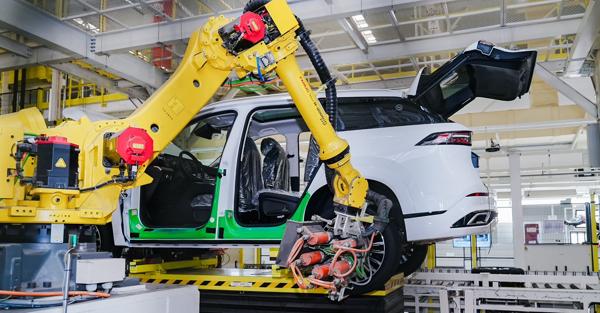
WUHU (CHINA) - In the Chery plant in Wuhu, the city-brand of the Chinese automotive group (worth 25% of the local GDP), the silence, the cleanliness, the distance between the workstations, the young faces of the employees are striking. The average age of the employees is 19. The level of technology and automation is in the numbers: in the shed where the body parts are built, there are one hundred employees and 370 robots. At assembly, the young faces increase. Between the lines, robots travel, bringing the parts to the stations. A car comes out of here every minute. In our language, we would call it a model factory. Technology, efficiency, safety, young workers. Chery engineers call it a superfactory. In China, out of seven Chery factories, there are two superfactories. A third is under construction and a fourth in the planning stage. On Chinese times they will be ready in a year. They will become the mouths of fire for the group's international expansion policy supported by the factories that will be built around the world, one in Europe.
Twenty-seven years on, with 25 million cars sold, the Chery Group is China's second-largest car manufacturer, but it is first in exports, with 47% of the approximately 1.8 million vehicles it will sell in 2025 registered abroad. Chery is in the midst of international expansion: in 2024, it will top the growth charts with +42% in sales. At the group's global convention in Wuhu, Yin Tongue the managing director, and Shawn Xu, the number one of Omoda & Jaecoo, the two-headed brand created for international markets, emphasised this strongly. Chery is present in 114 countries. After an initial phase of growth in the Brics and the non-aligned world, the low and medium-regulated world (Australia and New Zealand, Arab countries and the Middle East, countries of the former Soviet Union, South America), the expansion phase in the more hostile West is now coming into its own.
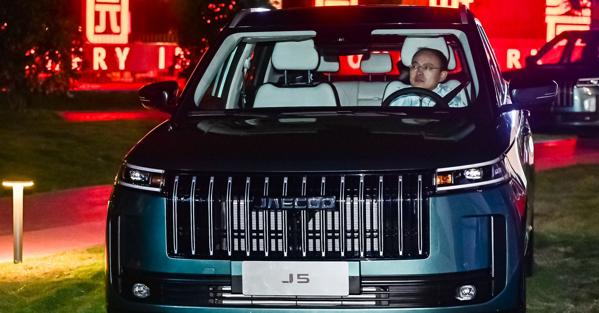
Last spring the landing in Spain, in July in Italy and Great Britain. At the end of 2024 Greece, Poland and Hungary will arrive. In the summer of 2025 Germany and France. Then the United States, Korea and Japan, the most difficult markets in terms of regulation and presence of competitors. The models will be in segment B, C and D with a range of different motorisation options: from pure endothermic, to hybrid in its various forms, to pure electric.
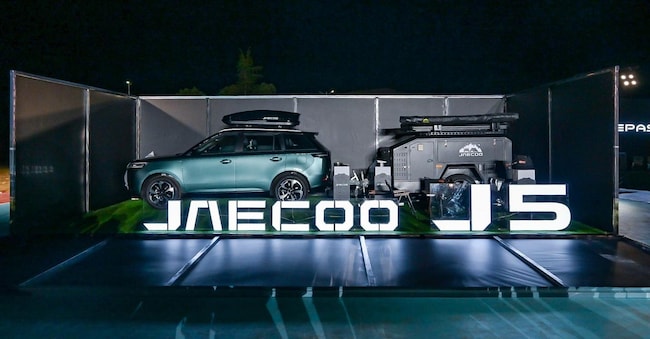
The figures for the first year in Europe, with two models on offer, Omoda 5 (petrol and electric) and Jaecoo 7, are those of a classic start-up: eight thousand cars sold, about a thousand a month on average, more or less in line with the 11 thousand in South Africa, Australia, Malaysia and Indonesia. In Italy, the sales average is 500 cars per month. "The target in Europe in 2025," says Shawn Xu, "is to sell three thousand cars per month. The first feedback on orders and brand visibility is positive'.
The focus for Europe, and for Italy, is not only on the market, but also on production and technological and research centres. After the opening of the screwdriver factory in Barcelona on the former Nissan site, in joint venure with the Spanish EV Motors, the group plans to start a real production plant. "Our approach," says Shawn Xu, "is production in the market for the market. In Europe, we need a second plant and a battery factory that will support the production of electric cars'. The Spanish plant, after initial delays, will start up the lines in December. "These are physiological delays," says Shawn, "there is nothing worrying". While on the second plant the hunt is on. Spain and Turkey are serious candidates for the conditions and certainty they can guarantee. Italy has been analysed and fundamentally discarded for the system's endemic weaknesses: high energy and labour costs, problematic logistics and bureaucracy. Representatives of Chery held talks with the government. The plants at Termini Imerese (discarded mainly because of the logistics bottleneck) and also Grugliasco were proposed, but the answer was a polite Chinese 'no, thank you'.


