
‘We’re damaging our brains with aggression’
Michela Matteoli: “In Italia, research is always struggling to survive; public outreach is essential. We are also defined by the way we live.”

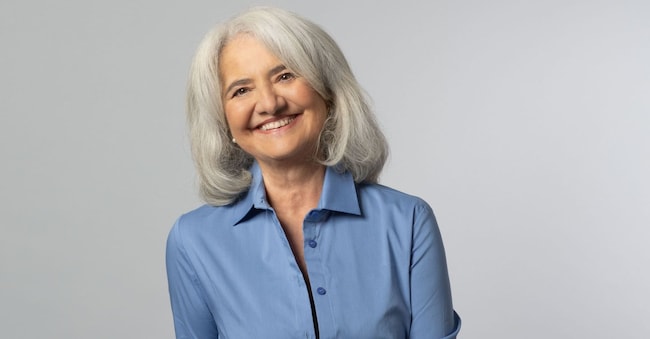
Whilst I was face to face with Michela Matteoli, the vesicles were watching us. And it was inevitable: throughout my conversation with the neuroscientist, I imagined how my synapses were reacting as I listened to the secrets of the brain. How grey matter changes in response to stimuli, and how this former girl from Pontedera, who was destined for a career in teaching, rose to the top of the CNR, became a member of the Accademia dei Lincei, took charge of the neuroscience programme at Humanitas, at Yale and to the highest honours in science.
‘We are also the environment in which we live and the way in which we live, beyond our DNA. Our minds change; they are nourished by both tangible and intangible ‘food’: we should never stop learning, being curious, feeling moved; we should never stop cultivating good social relationships, investing in kindness rather than aggression, and engaging with complexity rather than shutting ourselves away within the ‘friend or foe’ mindset. Our brains will be healthier and live longer.” Having spent thirty years studying the brain, married for forty, with two children and a proud Tuscan accent, Michela Matteoli begins her exploration of how chemical impulses are transformed into ideas by discovering how ‘depending on the stimuli, two different populations of vesicles, present in the synapses, carry the message from the nerve to the muscle: there are those small, round ones and there are these larger ones’, she explains, pointing to a black-and-white image. It is as if to say, in McLuhan’s words, that the medium is the message. The vesicles that will be watching us all morning in her office at Humanitas, on the outskirts of Milan, are a snapshot from her first piece of work pinned behind her desk: ‘Back then, we’d go from the microscope to the darkroom to print; today it’s all digital’. The era in question is the early 1990s, when the path to a career as a neuroscientist opened up for the daughter of a Vespa test rider, who began studying the most mysterious organ of the human body thanks to the book *From Neuron to Brain* by John Nicholls and thanks to the father of the classmate with whom she used to study physics: “Professor Vespi told me I had a scientific mind.” This encouragement helped steer her towards degree courses that were, at the time, considered unsuitable for women: “My mother was pushing me towards the arts, thinking it would be easier to balance with family life. On the morning I was due to enrol at university, I boarded the train from Pontedera to Pisa, not knowing whether I was heading for biology or classical studies.” Her personal experience would strengthen her determination to support young women in STEM fields, where they are still far too few in number – though not in her own department, where three women have secured the most prestigious European research grant.
If it is true, to quote Cesare Pavese, that ‘the richness of life is made up of memories, forgotten’, those of his early days remain very much alive in Matteoli’s memory: ‘when,’ he recounts, ‘I used to go to conferences at my parents’ expense’. Even today, his room is proudly displayed with leading scientific journals featuring his studies, awards, photos with two Presidents of the Republic, Nobel laureates and a mountain of badges. These are signs of his achievements and the efforts made in the hunt for research funding. ‘In Italia, we remain in a state of uncertainty. If it weren’t for foundations such as Telethon, AIRC or FISM, we’d be lost. I spend whatever time I have left after lab work looking for supporters. Research relies on funds obtained through competitive grants in Italia and Europe, but sometimes that isn’t enough and donations become crucial. Now, together with other scientists, we are fighting to rectify an absurdity: in Italia, it has been decided that those who have secured ERC (European Research Council) grants – the most prestigious European funding awarded following in-depth international evaluation – are ineligible to apply for Research Projects of Significant National Interest (PRIN). Why penalise those who bring Italia to the heights of excellence? It’s a contradiction: there are countries where, on the contrary, extra funding is given to ERC grant recipients. Moreover, in science, you cannot expect funding decisions within 1–2 years: the question underpinning a project may well have become obsolete in the meantime.’ Michela Matteoli’s words are always clear. When necessary, she speaks plainly, calling a spade a spade. ‘You cannot expect flowers to bloom if you do not cultivate the soil: research must be supported consistently; it takes time; you have to nurture people and projects; you cannot expect results to materialise out of thin air.’ Like the human brain, it thrives on exchange, relationships and care. Not least because ‘persimmons all ripen together’, she repeats, quoting her ancient Greek teacher. Progress is made in a particular direction when many people dedicate themselves to it. ‘Progress is being made on brain diseases, but it takes time and funding. And public outreach is crucial.’ She considers explaining discoveries to be an integral part of her work: ‘I always say that we must step out of the laboratories; people want to know. After Covid, I realised just how necessary this was: people were confused by the changing guidelines; but science is about change because it adds new insights every day. We need to make that clear. So I rang Eliana Liotta, a journalist and writer known to the Veronesi Foundation, who had asked me to write a book for her series published by Sonzogno.’ Together they co-authored the bestseller *La mente radiosa* (*The Radiant Mind*), which was adapted into a staged lecture in collaboration with Il Piccolo Teatro. “My research into the relationship between the environment, the immune system and the brain had progressed, and further discoveries were emerging from the scientific community: how could I not mention that when you walk at a brisk pace, substances are produced in the muscles that reach the brain and trigger the production of the key factor for neuroplasticity and learning? My research was progressing at the very same time that other researchers, such as those led by Lamberto Maffei at the CNR in Pisa, had demonstrated the benefits of physical activity and cognitive stimulation for elderly people showing the first signs of Alzheimer’s: not only did the disease not progress, but in some cases – as confirmed by MRI scans – there were improvements. It was on this basis that memory clinics were established: multidisciplinary centres for the management of cognitive disorders, including through stimulation activities. It is our duty to share this information in order to promote healthy lifestyles.”
Matteoli takes me on a journey into the inner workings of the brain, long considered isolated from the rest of the body, but in reality deeply intertwined with the immune system. ‘Having changed my perspective, I asked myself: could it be that the immune system also influences the function of synapses, which play such a central role in diseases?’ It was from this question and a discussion with Alberto Mantovani, an internationally renowned immunologist, that one of her new chapters began, after she left the US and the University of Milan to set up the neuroscience programme at Humanitas and head the CNR institute. “I am extremely proud to have also involved Giacomo Rizzolatti’s team in Parma, who discovered mirror neurons.” Those small steps in science that lead to great strides for humanity. Behind every discovery lie mistakes, trials and long periods of time – a different dimension to the ‘here and now’ imperative of an age that brushes failures aside.
Beyond the transparent walls, researchers walk by: ‘They’ve returned to Italia, secured PNRR funding, set up their projects – and now what? It’s as if we were constantly on an oxygen tank, holding our breath,’ sighs Matteoli. He thinks back to the days when, together with others, he proposed not to hand out EU funds indiscriminately, but ‘to concentrate them on projects dedicated to individual researchers, such as the FIS (Italian Funding for Science)’. He tells stories of colleagues who, at 35, still cannot run a laboratory – a prerequisite for joining the international networks where science advances. To provide financial support so that even the youngest researchers can attend conferences, the group has set up a savings pot “with the proceeds from public outreach initiatives. ‘I started it; now everyone contributes.’ You can sense the value of the team – the ‘we’ that drives progress, rather than the individual. Dialogue rather than confrontation, which so many resort to on social media. ‘I always tell my children too: don’t send messages, talk to each other. We’re ruining our brains,’ he declares, ‘drowning in cortisol and aggression. We’re not helping our synapses – those essential contact points that allow neurons to communicate, which form the basis of how our brains function. They form and grow when we learn or genuinely engage with one another. The opposite of ‘in or out of the pack’: a constant state of readiness to attack activates the stress circuits, and the continuous release of cortisol is disastrous for the hippocampus, the area of the brain vital for learning and spatial orientation. Our brain, on the other hand, craves love – understood as emotional connection and a sense of belonging.”


