Football & Media

'Piracy devalues TV sports rights'

Interview with the CEO of Dazn Italia, Stefano Azzi: 'So less revenue for clubs' who 'must play a more active role'. Missing are 'penalties for users'.

by Andrea Biondi

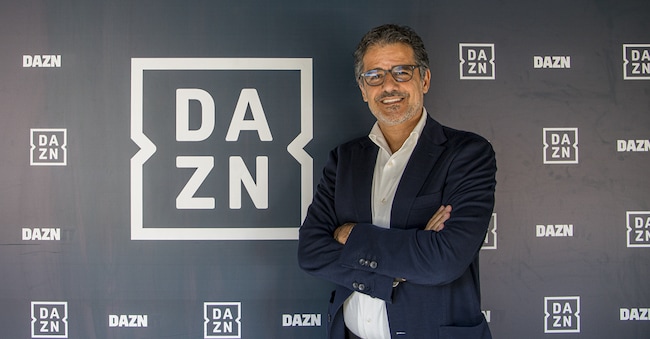
Il ceo di Dazn Italia, Stefano Azzi

3' min read

3' min read

"There is not much to use the imagination. The numbers are as eloquent as the risk is clear: digital piracy is devaluing sports rights. We are not alone in saying this. We should not joke about it, nor should we waste time. Stefano Azzi has been CEO of Dazn since March 2022. The platform under Len Blavatnik's Access Industries was awarded, among others, the rights for Serie A for five leagues, starting with the current one. The required investment was 700 million per year, with the addition of a revenue sharing mechanism with the Lega Serie A when certain subscription thresholds were exceeded. The first year is coming to an end. And Dazn is now preparing to play an important chip between June and July, with the World Cup for clubs, to which it has exclusive rights and which it will make visible to all, free of charge (Mediaset, by virtue of an agreement with Dazn, will broadcast one match per day in Italy and Spain).

Are you satisfied with the growth in the number of subscribers? Will you activate the revenue sharing clause with the Lega Serie A??

Loading...

It is not the year that we look at. I am interested in the long-term path and growth. Right now I have to say that the market has not yet felt the effects of anti-piracy action, despite the excellent legislative work. What is still missing are user sanctions; hence the lack of a full deterrent effect. We are confident that they will come. Moreover, they will also be retroactive, those who buy piracy leave a digital trace of their online viewing.

Is it by aiming for more pirates to emerge that you can expect to make more subscribers?

The numbers are frightening. In Italy, according to the latest Fapav-Ipsos Observatory for 2023, almost 4 million are subscribers to illicit platforms. In addition to these, there are 12 million occasional fans: that is, those who enjoy sport by buying matches of their interest and big matches every now and then, in pay-per-view mode, always illegally. And in all this there is one issue to consider carefully.

Which one?

Among those who resort to illegal viewing there is a large percentage of wealthy people who can afford football, do not pay and risk their reputation for one euro a day. This is a cultural issue that must be tackled head-on. Complicated but vital battle that is going in the right direction. Not least because, as Javier Tebas, the president of the Spanish La Liga, and Luigi De Siervo, CEO of the Lega Serie A, have stated, there is a whole industry that risks paying a very high price. Including the clubs.

From whom do you expect a more active role?

Yes, because those same rights are being devalued and risk being devalued even more without even more incisive action. To which it is important that everyone contributes: legislators, police forces, but also the clubs. The latter are the closest to the fan communities. They are the first point of reference and can play a more active role in triggering the necessary cultural change. In addition to the work being done at national level, it is equally important that clubs act at local level.

We are talking about piracy, but what is the state of health of Dazn, often the subject of less than favourable forecasts?

So much so, I would say, that we acquired the global rights to the Fifa Club World Cup in a historic deal. Then add Foxtel in Australia. That alone is enough to answer. The direction of growth is clear.

The issue of paid sport on TV is intertwined with that of the quality of the football product. Perhaps there is a need for improvement in this respect?

Certainly improvement is a key point. Football should open itself up to more experimentation to increase involvement. This does not mean, however, that we start from a low level, quite the contrary.

While talking about sport, one also comes up against the idea that football should be made available for free or almost free. 

The investments required for exclusivity are high and cannot be repaid by advertising alone. To equal the value of the rights of each season of Serie A would require collecting at least 15 times the value of the advertising programmed in Sanremo each year on the audience that the kermesse does. Assuming there are companies with that capacity and benefit from doing so. I say we should not go around the problem. More digital piracy equals lower value of rights, which then equals less willingness of broadcasters to invest. And that means less revenue for clubs. The equation is, unfortunately, all too linear.

Copyright reserved ©

Brand connect

Loading...

Newsletter

Notizie e approfondimenti sugli avvenimenti politici, economici e finanziari.

Iscriviti