
With the 'Giardini Poët' Milan remembers the first Italian lawyer
Between Via Chiossetto and Largo Marco Biagi, in the shadow of the Palace of Justice, the city pays homage to Lidia Poët, pioneer of women's emancipation and voice of minorities
4' min read
Key points
4' min read
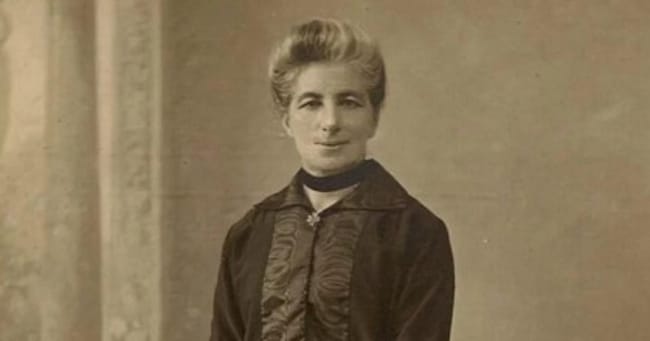
Milan celebrates Lidia Poët with a garden a few steps away from the Court, in the small square in Via San Pietro in Gessate. A symbolic gesture to remember a character who, in the struggle for women's emancipation, made a difference. And history.
The Story of Lidia Poët
One of the first female law graduates in Italy and the first woman to enter the Bar, Poët dedicated her life to countering the stereotypes that kept girls away from the courts and public life. Because they were too emotional to handle a profession that required coldness. Or because they were ill-suited, due to the customs of the time, to untangling themselves 'in the forensic gymnasium and the clamour of public judgments'.
Prejudices with which she has come up against herself. A degree with honours, a brilliant apprenticeship and a qualifying examination passed without difficulty were not enough to stop her detractors. First and foremost, the Attorney General of the Turin Court of Appeal who, having challenged the young lawyer's registration with the bar association, is clamouring for it to be annulled. In fact, according to the Court of Cassation, Poët cannot take part in debates or sign court documents because, according to the law, advocacy remains the exclusive prerogative of men.
The news inflamed cultural circles, ignited the debate in the newspapers and, above all, encouraged Poët not to hang up her gown: at the forefront of international penitentiary congresses and one of the leading figures of the National Council of Italian Women - which she had joined since its foundation in 1903 -, she collaborated with her brother's law firm and became the voice, even outside Italy, of the battles for the rights of the last. She calls for universal suffrage, the liberalisation of divorce, equality between legitimate and natural children and more protection for minors and prisoners, convinced that rehabilitation must pass through education and work, rather than punitive strategies.
After the First World War came the turning point. With the Sacchi Law, in 1919 women were finally able to enter public office (except for the judiciary and politics) and, at the dawn of her 65th birthday, Lidia Poët crossed the finish line, officially becoming the country's first female lawyer. Working in the sunlight and demonstrating that gender equality, although far away, was not so unattainable. Until now: in recent years, the rediscovery of her character through books, conferences and publications has given her new life. And the Netflix series The Law of Lidia Poët, with its record-breaking numbers, has turned her into a pop icon, making her known to the younger generation as well.

