
Kellogg’s removes rice from Rice Krispies: it’s expensive and becoming increasingly hard to find
Kellanova, part of the Mars Group: ‘Climate change also affects quality’ – the company is revising its traditional recipe by introducing maize flour. This change applies to the British and European markets, but not to the American market, which is managed by WK Kellogg, owned by Ferrero

Key points
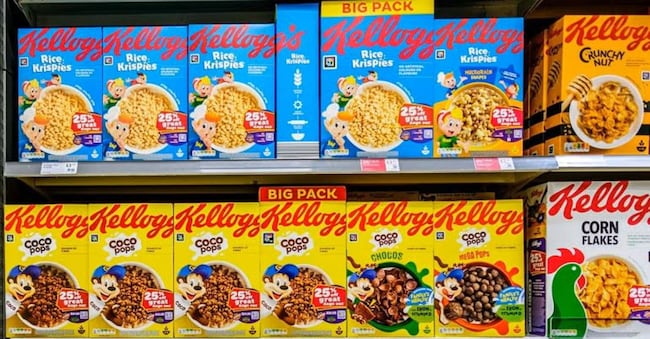
No more rice in Kellogg’s Rice Krispies and Coco Pops: climate change is jeopardising the quality and availability of the cereal, and the company acquired by Mars via Kellanova in 2024, is reformulating the iconic recipe using maize and rice flours, with the addition of wheat gluten as a structural binder in the new recipe.
Launched almost a century ago, Rice Krispies are sold all over the world, particularly in the hugely popular chocolate version, Coco Pops.
Italia among the markets affected
The news reported by The Guardian and the BBC has caused a stir in the UK. The restructuring concerns – precisely – the UK market, but is expected to affect all international markets outside North America – namely those controlled by Mars following the acquisition of Kellanova in 2024 – and therefore the whole of Europe (and consequently the Italian market).
The other half of the spin-off, WK Kellogg, which owns the same cereal brands in the North American markets and has come under the ownership of Ferrero, was quick to clarify to Just Food magazine: “Our Rice Krispies cereals in the United States are made with real rice and will continue to be so.”
Rice under threat from climate change
According to the company, the extreme weather conditions that affected Spain in 2022 and 2023, in particular, have reduced the availability of the rice varieties used in breakfast cereals. As recently as last September, the index of the FAO rose by 9.5 per cent compared with September 2025 and by 1.4 per cent month-on-month. The situation has been particularly exacerbated by El Niño, a meteorological phenomenon that is having a severe impact on agricultural production in South-East Asia, which accounts for over a quarter of the world’s rice production.

