
Wizz Air wants to fly to the US after Abu Dhabi bankruptcy
A first test was carried out with a state flight from Budapest to Washington carrying Hungarian Prime Minister Orban for the meeting with Trump

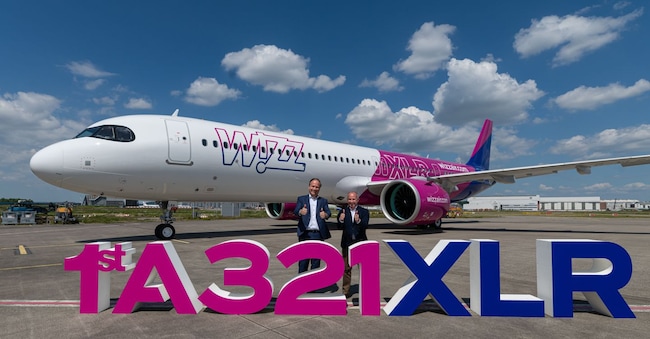
Hungarian low-cost carrier Wizz Air is at it again and through its UK division has applied for permission to fly to the United States, months after the company's plans to expand in the Middle East and the closure of its Abu Dhabi office and joint venture failed.
Wizz Air UK has submitted an application to the Department of Transport for permission as a foreign air carrier to operate scheduled and charter flights between the two countries, according to a document filed last week and viewed by Bloomberg. No potential destinations were mentioned, although the airline said it wanted to begin services as soon as possible. The request was made just months before the start of the FiFA World Cup football championship.
A first test was already conducted last November when the Hungarian company flew from Budapest to Washington with an Airbus A321XLR, carrying Hungarian Prime Minister Viktor Orban and his entourage to meet President Trump.
Already in 2022 the low-cost airline applied for permission from the US Department of Transport, but was rejected: in that case it was the Hungarian subsidiary of Wizz Air that submitted the application. Now in its role as the Hungarian premier's 'Airforce One', obtaining permission to fly to the US could be easier.
For years the carrier's CEO Jozsef Varadi had ruled out expansion towards the United States, preferring other destinations such as the Middle East to India. Then the failure of the Middle East adventure due to geopolitical tensions, which made it difficult to operate flights in this area of the world, made the new Airbus Extra Long Range aircraft models inefficient, so much so that Wizz Air decided to reduce the A321XLRs ordered from 48 to 11: these are single-aisle (narrow-body) aircraft designed to cover very long distances, up to 8.700 kilometres or about 10-11 flight hours, capable of connecting intercontinental destinations such as Europe-USA or Asia, while consuming 30 per cent less fuel than the previous generation aircraft.


