
Women's appointments to boards of directors slow down in 2023
The proportion of women in the financial sector in Europe has fallen to 44% from 51% in 2022 among new board members


2' min read
2' min read
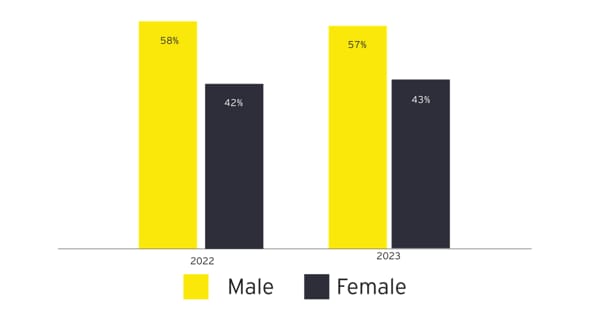
Finance takes a step back when it comes to gender equity. Last year, only 44% of new appointments to the boards of European financial services companies were women, down from 51% in 2022.This is back to 2021 when the percentages had been 58% men and 42% women. This is the finding of the EY European Financial Services Boardroom Monitor, which tracks the profile, experience, education and skills of board members of 84 companies in the MSCI European Financials Index with a total of 1014 board members. Looking at all board members in the financial sector, not just those appointed during 2023, the percentages are 57% for men and 43% for women.
The trend in Italy
.In this context, Italy - with 43.5% of women on the boards of listed companies operating in the financial sector - is second only to France (46.6%) in terms of female representation on boards. It is followed by: The Netherlands (42.2%), Germany (39.7%) and Spain (39.4%). However, new female appointments to the boards of European financial institutions in 2023 are down from the previous year: 44% of new board members are women, down from 51% in 2022.
In general, however, there are still many realities (31%) where female representation on boards of directors remains below 40%, with women holding the most senior positions on boards in only 29% of companies.
The most in-demand skills
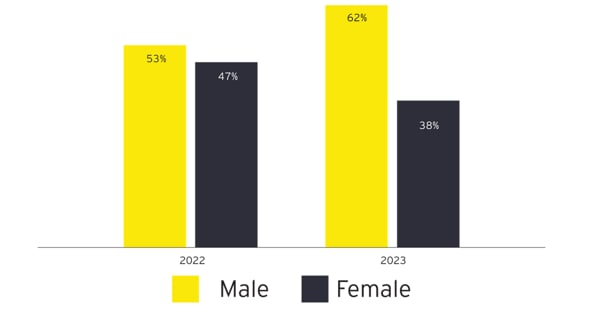
.More specifically, looking at the characteristics of board members, it emerges that 59% of the directors appointed in 2023 have top management experience, but of these only 38% are women, down from 47% in 2022. To highlight, once again, that while the percentage of women has grown over the years thanks to the gender quota laws passed in various European countries, the career growth of women up to executive levels remains more complex.
"The lower growth rate of women on European boards compared to last year must be read in the light of the increase that has occurred in previous years and the gradual achievement of the 40% threshold of non-executive directorships occupied by women, as envisaged by the 'Women on Boards Directive' to be implemented by 2026. In Italy, the current regulations already provide for compliance with this threshold and therefore the real challenge for our country will be to achieve similar percentages also for senior figures,' comments Stefano Battista, Italy financial services market leader at EY.


