
Women on the side of democracy
The story of three protagonists who chose the Resistance, with different fates but the same objective: to fight against the Nazi-Fascist occupation and lay the foundations for the Republic

5' min read
5' min read
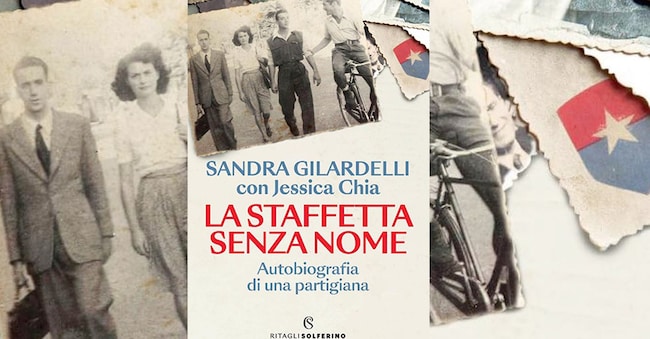
Sandra Gilardelli will turn one hundred years old on 1 July, she was eighteen when she joined the Resistance, but her voice still resonates crisp and precise in the pages of her autobiography. Lidia Beccaria Rolfi, an elementary school teacher and relay girl, survived the Ravensbrück Lager (where she was deported after her arrest in 1944): hers is also the experience of those who return and come to terms every moment of their lives with the deep scars of that experience. Iris Versari died in the cruellest way: she killed herself at the age of 21 during a round-up so as not to hinder the escape of her partisan bandmates. Three female figures, three different temperaments, paths and epilogues, united by a single goal: to act and risk to regain freedom and thus lay the foundations of that Republic whose 79th anniversary we celebrate tomorrow.
Sandra Girardelli's autobiography is written with Jessica Chia, who with sensitivity and care listened to and reconstructed the events that took place in the territory - crucial for the Resistance - of Verbano-Cusio-Ossola, in Piedmont. Born in Milan and brought up in an anti-fascist family (her paternal grandfather was a Mazzinian republican), Sandra left the city targeted by the bombs that destroyed their home to evacuate first to Gorgonzola and then to her holiday home in Pian Nava, in Verbano. There her life changed: in October 1943 she joined the Cesare Battisti Alpine Brigade. She is not given a battle name and is assigned to help doctor Paolo.
He immediately finds himself in the fray, there are medicines and bandages to be procured, shrapnel to be removed from wounds, gauze to be 'invented' when the real ones ran out, woollen sweaters and socks to be made up as best they could; and then letters and documents to be delivered, material to be hidden. To read these pages is to experience the everyday life of those days, amidst sudden searches and seemingly insurmountable obstacles. You meet the other courageous men and women protagonists of that season and also the partisan with whom Sandra falls in love, who will become her husband: Michele Fiore, code name 'Mosca', an expert in disguises. The joy of the Liberation would come after the pain and dismay of terrible massacres such as Trarego (ten young men, almost all in their twenties, betrayed by a spy and massacred by the fascists), or Fondotoce: 43 partisans shot, three at a time, after torture and fake hangings. This is why Sandra, having reached the end of the story, cannot understand all the people not going to vote. "We fought for the vote and so many people died," she sternly reminded a friend who had announced her intention not to go to the polls. "The things I have experienced cannot be forgotten."
Lidia Beccaria Rolfi (1925 - 1996) has never forgotten them either. A certainty declared right from the title of the book dedicated to her by Bruno Maida: Non si è mai ex deportati, published by Utet in 2006 and now republished in an expanded edition by Einaudi. Born in Mondovì into a peasant family, she was the fifth and last child and in her mother pinned all her hopes of social emancipation: to see her graduate and become an elementary school teacher, as actually happened. Her first appointment in a school came on 11 November '43, when the German occupation was in place and the awareness of Nazi atrocities in her was total, after the return of two of her brothers from Russia and their accounts of the brutality against the Jews. Lidia too, like Sandra Girardelli, is eighteen years old and makes her choice: in Val Varaita, where she teaches, she joins the Garibaldi brigade and becomes a relay girl with the name "maestrina Rossana". She went through checkpoints, hid a case of hand grenades under her bed, and saw with her own eyes the first dead: 'Two disbanded southern soldiers, killed like dogs in Venasca'. In the course of a few months, the situation precipitates, Nazi violence is rampant, and between the end of March and the beginning of April 1944, Lidia's school is closed 'for rounding up'. The arrest, inevitable, came on 13 April. Bruno Maida follows in detail the evolution towards the abyss of deportation, recounted by Beccaria Rolfi herself in Le donne di Ravensbrück (1978). With 13 other women from Turin she arrived in the camp at the end of June and remained there until 26 April 1945. From then on she is just a number, like all the internees. Hers is 44140. We find again in these pages the decay and transformation of the body, the progressive dehumanisation and at the same time the idea that it is necessary to fight the process of annihilation described in other dramatic testimonies of survivors. Maida analyses and reconstructs the aftermath: the difficulties of return, indifference, silence, and then writing, which is salvific.
There are also those who, like Iris Versari, were not able to experience the exhilarating moments of the Liberation, nor the winning of the vote for women, nor the choice of the Republic on 2 June 1946. The partisan from Romagna, who came from an anti-fascist family (her parents and two brothers were arrested by the Nazi-Fascists), committed suicide on 18 August 1944, dying as she had lived: with the impetus, decisionism and shamelessness of someone who has clear ideas and imposes them, even on herself, until the very end. She is 21 years old, in January '44, when she joins the gang led by Silvio Corbari, known to everyone as 'the Curbéra', with whom she falls in love and to whom she does not give up, even though she is married with a child. And it is to give him and his other comrades (Arturo Spazzoli and Adriano Casadei) a chance to escape that, wounded in the knee and immobilised in the farmhouse at Ca' Cornio (in the Forlivese area), she waits for the fascists and the Germans stationed there to burst in: the former shoots him in the chest, then turns the gun to her own temple. His sacrifice is useless, however. The others will be caught and massacred; they are in their early twenties. Their bodies will be hung, in the usual macabre manner, under the portico in the centre of Castrocaro. Walter Veltroni has made an impassioned account of them, giving us the figure of a courageous, non-conformist woman, a gold medal winner for military valour. The form is that of the novel: in some ways, the mark of Iris's brief existence.


