Made in Italy

Wood-based panels: production remained stable in the first five months of 2026

The Assopannelli general meeting has re-elected Paolo Fantoni as president: European issues are the priority for his term of office

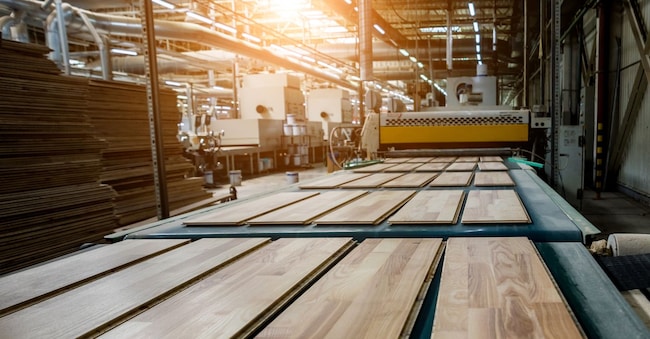
(Adobe Stock)

3' min read

Translated by AI
Versione italiana

3' min read

Translated by AI
Versione italiana

European policy dossiers – in particular the one on CBAM, the regulation introducing a tax on imports of raw materials and semi-finished products whose production involves high CO₂ emissions – will be at the heart of Assopannelli’s policies over the next four years, for which the association, which is part of FederlegnoArredo, has just appointed a new executive committee, confirming Paolo Fantoni as president until 2030.

In a complex economic climate – characterised by the impact of international geopolitical tensions – certain measures adopted by the European Union, with the laudable aim of reducing the environmental impact of production, risk in fact hampering competitiveness, which is already compromised by high energy costs and a shortage of key raw materials.

Loading...

The sector’s performance

Despite these difficulties, industrial production of panels in Italia between January and May this year remained stable (+0.8 per cent), whilst the timber industry, by contrast, saw a decline (-4.6 per cent), according to figures from FederlegnoArredo’s research centre.

Prices, too, remained stable over the same period (+0.6 per cent), despite the fact that the timber industry is experiencing significant price pressures (with increases of 3.7 per cent on average), linked primarily to timber as a raw material. Exports in the first quarter rose by 1.1 per cent, whilst imports increased by 3.3 per cent.

A trend towards consolidation following the strong results of 2025, which closed with production turnover of over 2.3 billion euros, up 2 per cent on the previous year. Production destined for the Italian market, which accounts for 58% of the total, recorded a 3% increase last year, exceeding €1.3 billion. Exports, totalling €979 million, rose by 1.1%, with varying trends across the different sectors: plywood and various panels were down, whilst chipboard, veneer and MDF showed positive growth.

However, a warning sign comes from imports, which rose by 14 per cent to reach a value of 1.4 billion euros – exceeding the value of production destined for the Italian market.

Priorities for businesses

Among the association’s priorities is also the revitalisation of poplar cultivation, following the new agreement signed in September 2025 with the five regions of the Po-Veneto plain to strengthen national self-sufficiency in this raw material, as well as the process towards obtaining Protected Geographical Indication status for derived products.

On the ‘End of Waste’ front, the association is also continuing its efforts to safeguard a timber recycling system which, in Italia, ranks among the most efficient in the world, whilst highlighting the role of businesses in the transition towards an increasingly circular economy.

“Our commitment for the next four years will be to strengthen the association’s involvement in European policy issues, whilst continuing to call for regulatory simplification without compromising on sustainability objectives,” said Paolo Fantoni. We also want to promote domestic raw materials and the wealth of expertise and recycling capabilities that our sector represents, whilst at the same time opening up new avenues for growth through internationalisation and greater commercial protection for our businesses.

Training and human capital

There is also a focus on training: the fifth year of the Master’s in Sensorial Surface Design, run in partnership with the Politecnico di Milano to meet the growing demand for expertise in surfaces, CMF design, interiors and furniture, will begin in October. Through a combination of lectures, guest talks and project work carried out with companies and industry experts, the programme trains professionals to design the sensory, emotional and functional experience of spaces and objects, with Assopannelli and its member companies once again playing a key role in this fifth edition.

Loading...

The new board

The Assopannelli General Meeting also elected the Executive Committee for the four-year term 2026–2030: joining Paolo Fantoni, president and director responsible for the Particleboard Group, will be Nicoletta Azzi (director responsible for the Plywood Group), Pierluigi Corti (director responsible for the Surfaces Group), Alessandro Corazza (director responsible for the Semi-finished Products Group), Susanna Brivio, Enrico Bonzano, Luciano Caspani, Giuseppe Conti, Stefano Dall’Ozzo, Giovanna Frati, Giuseppe Invernizzi, Esat Bayram Ozoguz, Stefano Saviola, Marco Solari and Andrea Tagliabue.

Copyright reserved ©
Loading...

Brand connect

Loading...

Newsletter

Notizie e approfondimenti sugli avvenimenti politici, economici e finanziari.

Iscriviti