
Wooden panels: costs spiralling out of control due to high energy prices
Businesses sound the alarm at the Sicam trade fair in Pordenone: in addition to the war in Iran, the CBAM effect is taking its toll – urea prices up 51 per cent since January

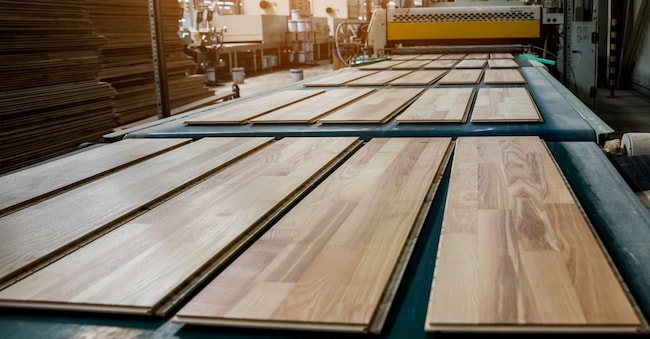
From Sicam – the Pordenone trade fair dedicated to components, semi-finished products and accessories for the furniture industry – comes the warning from wood-based panel manufacturers regarding the ‘out-of-control’ rise in production costs, which is undermining the competitiveness of European firms in the face of competition from international producers. These European companies are taking centre stage in Pordenone at the moment, at an event which, as is traditional, prides itself on its organisational policy of prioritising the presence of EU exhibitors, despite the long list of applications from non-EU manufacturers.
Rising energy and raw material prices
The main factor is the rise in energy prices caused by the wars, which are driving up electricity bills (+106 per cent in the second half of this year) and gas prices (+85 per cent). The latter, in turn, is having an impact on the price of urea – an essential raw material for the production of the adhesives needed to manufacture the panels – which has risen by 51 per cent in six months, driven in part by the entry into force last January of the CBAM, the EU regulation introducing a tax on imports of raw materials and semi-finished products whose production generates high levels of CO₂.
Added to these are price rises for transport, paper and timber raw materials, which are equally vital for panel manufacturers: logs for chipping, for example, have seen a rise of around 23 per cent since January, according to figures released by FederlegnoArredo, a situation that companies in the sector describe as ‘unsustainable’, particularly in light of the surge in pellet prices (+35 per cent).
Decrease in profit margins
“A situation not unlike the one we faced five years ago, following the Covid-19 pandemic, with the difference that back then the market was growing strongly, which allowed us to pass on the rise in costs to the market”, explains Paolo Fantoni, president of Assopannelli. Now, however, with a stagnant market, this is almost impossible, with the result that margins for manufacturers are shrinking: “Profit margins in our industry are very low, as is the case in the paper and ceramics sectors, to the extent that some companies are considering temporary production halts, both because there is no market and because costs are skyrocketing,” adds Fantoni.
It is difficult to estimate the impact of these price rises on the production costs of panels, given the wide range of products on the market (chipboard and laminated chipboard, MDF and laminated MDF, etc.), but according to companies, the increases from January to the present have averaged around 30–35 euros per cubic metre, of which about two-thirds have been absorbed by the market in recent months; however, the remaining difference will have to be passed on to the market over the next 4–5 months to prevent companies from being brought to their knees. ‘Not least because,’ Fantoni points out, ‘January will see the second of four increases on urea effectively imposed by the CBAM, which will result in a further rise of 40 euros per tonne for this raw material.’

