
Legnoland leads the way in house reconstruction
Twenty companies from Friuli present a project to recover wood from forests devastated by conflict

2' min read
Key points
- Italy is a leading country in the recovery and reuse of wood
- De Santa: < We can deal with the reconstruction of small villages in rural areas >
- At least 3 million hectares of forest and at least 300,000 houses damaged
2' min read
Reconstruction in Ukraine is an issue of great political complexity, in which the confrontation between political leaders remains vibrant. There are, however, other issues that we could euphemistically call 'collateral': the reconstruction of houses is one of the first social emergencies also because there are 3.7 million displaced persons in Ukraine.
Italian companies attend the international conferences on reconstruction with solid expertise, as well as a history marked by excellent levels of competitiveness. The most accredited 'cordate' is the one led by Legnolandia, in Forni di Sopra, in the province of Udine, whose president is Marino De Santa. Also from Friuli are the other partners, the Fantoni Group, led by Paolo Fantoni, European leader in chipboard panels, Rete imprese Carnia and Legno arredo Friuli Venezia Giulia. Some twenty companies are well positioned to face competition from Americans, Canadians, Norwegians, Swedes, Belgians and Austrians.
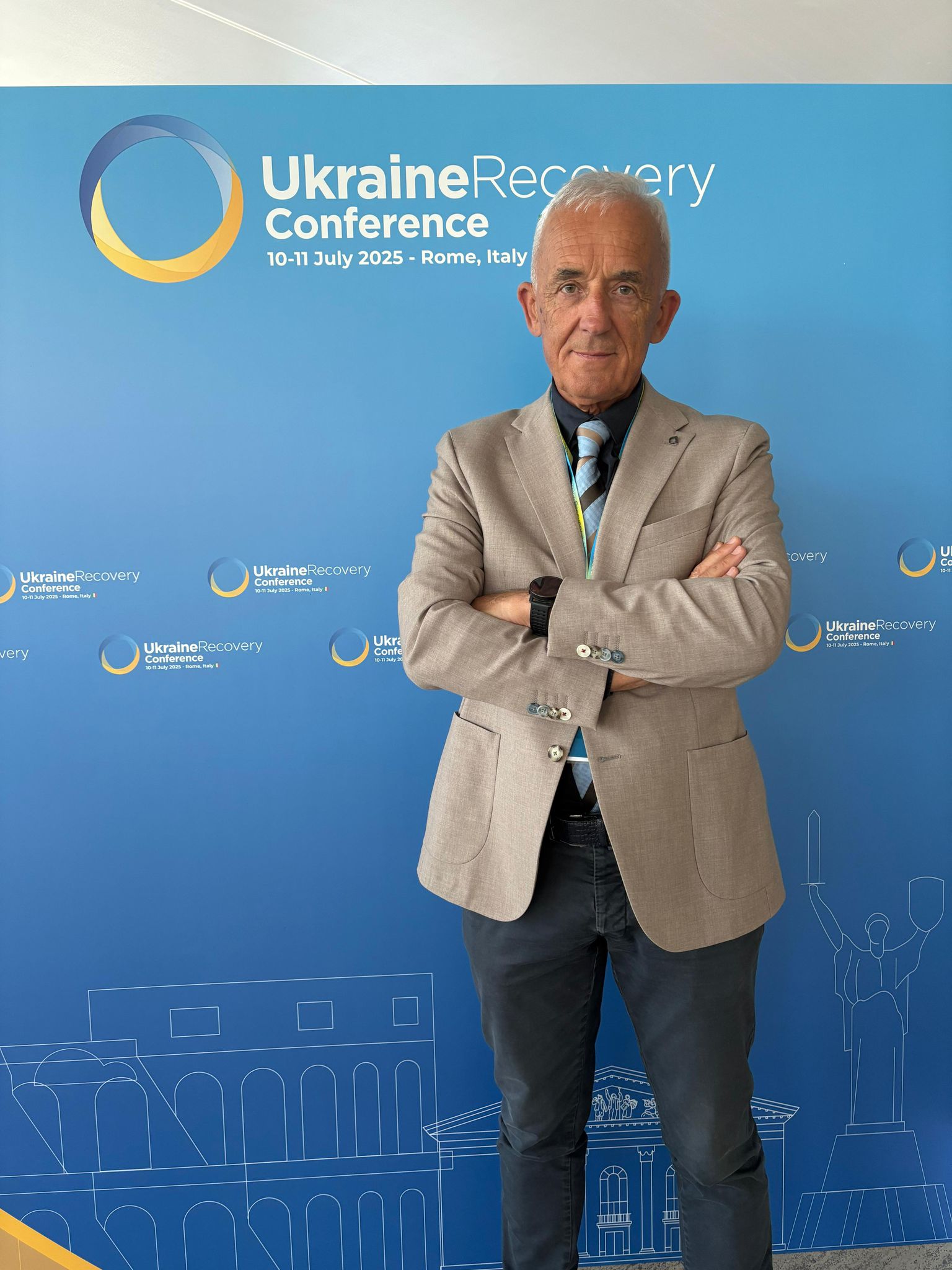
'The project will be presented in these hours,' De Santa explains, 'at the international conference being held in Rome. There are several panels including 'roads', 'energy', 'transport'; we can take care of the reconstruction of small villages and remote areas and destroyed forests in a country as large as Ukraine". Some numbers give an account of the needs of a country plagued by years of bombing: there are many destroyed or damaged rural houses, between 300,000 and 600,000. In addition to housing, schools and rural villages will have to be rebuilt. Ukraine has 10 million hectares of forests, 15% of its territory: the damage caused by the war has affected 3 million hectares of forest. Between 200 and 400 million cubic metres of fallen trees are in danger of being lost.
Italian companies, it should be remembered, are world leaders in the recovery and reuse of wood. A tradition reinforced by the low availability of raw materials that favours the activation of a circular economy. Paolo Fantoni tells Il Sole-24Ore that the idea is to bring in devastated wood and then proceed with bio-building processes. Transport could take place by rail, since the distances between Friuli and Ukraine are quite manageable. 'It would be important,' Fantoni explains, 'to quickly define who does what, so as to have a potential schedule for building the houses.
The unknown, it is clear to all, is the near future of relations between Russia and Ukraine.

