
RoBee, from factory work to ‘non-judgemental’ therapy in hospital: meet Oversonic’s humanoid robot
The benefit corporation will soon be making robots available to healthcare organisations

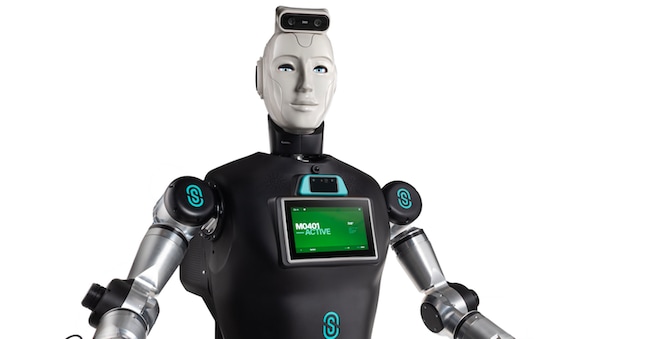
For Oversonic, they are not humanoids, but machines: sophisticated and specialised automation systems. The general-purpose machine, capable of doing everything, remains for now a concept from the movies, and its arrival in homes is a long way off. The Brianza-based company, founded in 2020 and a benefit corporation since 2022, has built its RoBee around three key requirements: safety (including cyber security), operational autonomy without remote control, and industrial-grade reliability.
Industrial automation
The choice was clear from the outset: industry rather than entertainment. The humanoids that dance or run are small and light: there are no specific safety standards for machines with feet, and given their small size, a fall causes little damage. But precisely for this reason, they lack the reliability and autonomy to last a full shift.
RoBee, on the other hand, complies with the rules governing industrial automation: the Machinery Directive – which will become a regulation from January 2027 – and certification as a collaborative robot, the latest of which was obtained with the Fraunhofer Institute in Stuttgart. On sale from 2024 at a price of 140,000 euros, it operates in the factories of STMicroelectronics – which has also been a partner since July – where it moves materials between machines and prepares kits for operators. All on-premises: major clients do not accept the robot’s data being stored in the cloud.
Robots in healthcare
Healthcare is an area on which the company places great emphasis. At the Santa Lucia Foundation in Rome, an institute specialising in neuroscience, RoBee worked for 28 months with patients who had suffered a stroke or had Parkinson’s disease. It does not provide physiotherapy: it works one-to-one with patients on cognitive exercises, combining words, images and colours, and on motor exercises, adjusting the intensity according to the patient’s response.
The problem to be solved is a real one. Brain injuries would require ongoing treatment, which at present depends on the availability of healthcare staff and is often suspended at weekends. The aim of the trial was to demonstrate that, with more treatment, patients can be treated more effectively and more quickly.

