Senate

Non-EU work, final yes to the Flussi Decree. Baby sitters for small children also among the 10,000 out-of-quota entries

In twelve articles, the measure pursues several objectives: it makes the pre-filling of applications on the Ali portal of the Ministry of the Interior structural; it lengthens the time required to issue the nihil obstat and the stipulation of the residence contract for work reasons; it renews on an experimental basis for 2026-2028 the out-of-quota channel for 10,000 family and social workers, also including baby sitters for children up to 6 years of age; it strengthens controls and action to combat illegal labour and labour exploitation in agriculture

by Manuela Perrone

Via libera definitivo del Senato al decreto Flussi.

6' min read

Translated by AI
Versione italiana

6' min read

Translated by AI
Versione italiana

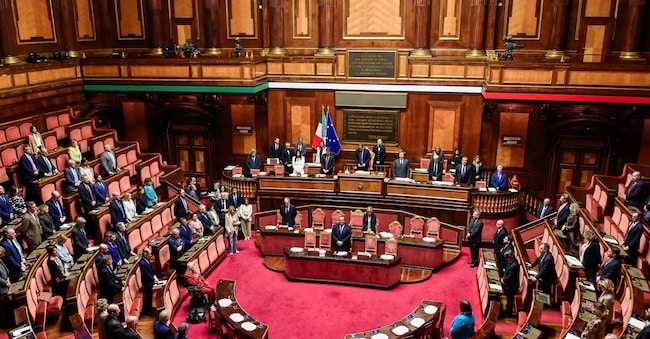
The Senate definitively approved the flow decree, confirming the House text. The decree was voted by a show of hands. In favour was the majority, against the opposition. The green disk came after that of Montecitorio, on 18 November. The measure had been given the green light by the Council of Ministers on 4 September, but then went back to the CDM on 2 October.

With the Senate's final green light, the framework is completed according to the schedule of 500,000 entries in the three-year period 2026-2028 defined by the Dpcm already published in the Official Gazette. In twelve articles, the measure pursues several objectives: it makes the pre-filling of applications on the Ali portal of the Ministry of the Interior structural; it lengthens the time for the issuance of the nihil obstat and the stipulation of the residence contract for work reasons; it renews on an experimental basis for 2026-2028 the out-of-quota channel for 10,000 family and social-health assistants, including baby sitters for children up to 6 years old; it strengthens controls and action to combat illegal labour and labour exploitation in agriculture.

Loading...

Clearance time increased

In the first article, the Law Decree raises from seven to 15 days the deadline within which, after the issue of the nulla osta, the employer must proceed with the confirmation of the application, on which the issue of the entry visa depends. Also increased from eight to 15 days the term, which starts from the date of entry of the worker into Italy, is to stipulate the contract of stay for subordinate work, from which the issue of the residence permit depends. All the steps - confirmation of the nulla osta, contract and any documentation to be attached - can be carried out through the employers' organisations that are representative at national level or through certain categories of professionals (labour consultants, lawyers, accountants and accounting experts). For the permit for subordinate work there are 60 days for the decision on the nulla osta; twenty for seasonal work.

Tighter controls on special cases and skilled workers

The anti-abuse and infiltration of organised crime crackdown, on which the government has shone a spotlight both with the complaint to the National Anti-Mafia Prosecutor's Office presented by Prime Minister Giorgia Meloni in June 2024 and by introducing the pre-filling of applications, is strengthened. By amending the Consolidation Act on Immigration, the decree law requires administrations to carry out checks on the veracity of declarations provided by employers for the issuance of work authorisation in special cases outside the quotas and for highly qualified workers (such as managers, university lecturers and professors, translators and interpreters, artists, corresponding journalists, digital nomads and remote workers from outside the EU, nurses, doctors accompanying sports delegations for competitive events), by the organisers of volunteer programmes and research institutes, and by host entities for the purpose of issuing intra-corporate transfer authorisation to foreigners holding an ICT residence permit issued by another State. In the event that the self-certifications or declarations in lieu of affidavit reveal "flaws" or omissions that can be detected ex officio, the official in charge of receiving the documentation notifies the interested party that he must regularise or complete the documentation.

Early Checks also by the Labour Inspectorate

In addition to bringing the pre-filling phase of applications and the ceiling of a maximum of three applications for each individual employer into full swing, a provision added to the Law Decree during its examination in committee at the Chamber of Deputies provides that the National Labour Inspectorate can also carry out the inspections falling within its competence in advance. This is in addition to the non-sampling checks conducted on all pre-filled applications through the interoperability between the Viminale's IT system and the services of Unioncamere, Agenzia delle Entrate, Inps and Agid.

News for workers trained abroad

The measure also intervenes on the procedures for foreigners who have followed a training course in their countries of origin: a maximum term of 30 days is introduced for the issuance of a work authorisation from the moment the application is submitted, and the requirement that the application for an entry visa must be accompanied by the employer's confirmation of willingness to hire is eliminated. The Ministry of Labour is required to inform the Interior and the Farnesina of the personal details of course participants within seven days of the start of the courses in the country of origin and to provide those of employers interested in hiring at the end. An amendment passed in committee extended from six to 12 months on an experimental basis until 31 December 2027 the deadline for submitting an application when education and training activities abroad have been completed.

Trafficking and exploitation victims, permits increase to one year

The decree extends from six months to one year the duration of residence permits issued for special cases, i.e. to victims of trafficking or serious exploitation, domestic violence, illegal brokering and caporalato. It has also been established that the National Labour Inspectorate, in order to express its opinion to the judicial authority or the Questore on the issuance of a residence permit for victims of 'caporalato', is required to transmit any element deemed useful. Permit holders for social protection reasons and special cases are granted the possibility to benefit from the inclusion allowance, which is also extended to family members of victims of caporalato. The estimated annual financial burden is 303,000 euro, which, according to the technical report, is within the limit of the funds allocated for the inclusion allowance by the Work Decree of 2023.

Also baby sitters for children up to 6 years

The non-quota entry of 10,000 foreigners per year to be employed in the family or socio-health care sector in favour of persons with disabilities or the elderly is renewed for the three-year period 2026-2028. In fact, due to differences of opinion in the government, the initial proposal to eliminate the ceiling did not pass, and in committee the category of baby sitters for children up to 6 years of age was also included in the experiment. Applications for these categories of workers can only be made through employment agencies or employers' associations that are signatories to the national collective agreement for the domestic sector.

Family reunification, up to 150 days for clearances

The decree also provides that the entry quota of foreigners admitted to participate in volunteer programmes is no longer set annually, but over a three-year period, and extends the deadline for issuing the nulla osta for family reunification from 90 to 150 days. Finally, it stabilises the operativeness of the table for combating 'caporalato', to which it also admits civilly recognised religious entities, and includes employment agencies and entities authorised to act as intermediaries among those who can access the Fund for combating the illegal recruitment of foreign labour. The last provision concerns Lampedusa: also for the two-year period 2026-2027 the Ministry of the Interior will be able to use the Red Cross to manage the hotspot on the island.

New Collaboration: "Social value of domestic work recognised"

An approval that 'represents an important signal for thousands of Italian families' according to Alfredo Savia, president of Nuova Collaborazione (National Association of Domestic Workers), 'because it confirms the centrality of domestic and care work within the national policies dedicated to the entry of foreign workers. This sector, often not very visible but fundamental for the country's wellbeing, provides daily support to fragile people, balance in family life and serenity in the homes of Italians. Recognising domestic work within the framework of the Flussi Decree means acknowledging its social role: a pillar of family welfare that contributes decisively to the cohesion of our community. In this perspective, the extension until 2028 of the extra-quota entries intended for family and sociomedical assistance assumes an even more significant value. It responds to the real needs of families and gives continuity to a sector where the demand for qualified figures is constantly growing. Guaranteeing a stable, regulated and programmable channel makes it possible to ensure reliable, professional and fully regular services, offering families concrete tools to cope with increasingly widespread care needs'.

Assindatcolf: 'Great satisfaction, but critical issues remain'

"We express great satisfaction - said Andrea Zini, president of Assindatcolf - we thank Parliament and the government for accepting a request that we at Assindatcolf had made during the hearing in the Constitutional Affairs Commission at the Chamber of Deputies last 15 October. This means that, from next year and for the entire three-year period 2026-2028, it will be possible to call on non-EU family assistants using the 10,000 out-of-quota units even for the care of children up to the age of six'

Zini emphasises that, despite this step forward, there are still many critical issues related to the procedures, even with regard to ordinary quotas: 'Long times, complex bureaucracy and the click day mechanism make the instrument, although fundamental, inadequate to fully meet the needs of families in the care sector.

Copyright reserved ©
Loading...

Brand connect

Loading...

Newsletter

Notizie e approfondimenti sugli avvenimenti politici, economici e finanziari.

Iscriviti