
Changing work: from drudgery to a means of self-fulfilment
The conflict between traditional and modern visions of work
by Lorenzo Cavalieri*
 Aggiungi Il Sole 24 Ore
ai preferiti su Google
3' min read
3' min read
In recent years, in companies, we are increasingly witnessing a kind of cultural conflict concerning the view of work. On the one hand the 'elderly' linked to a conception of 'work as hard work', on the other hand the 'young' linked to a conception of work as 'self-fulfilment'.
Obviously the distinction between 'old' and 'young' is a simplification that has no strict correlation with age. It tends, however, to be the over 40s who have assimilated the age-old vision of work as an existential condemnation to sacrifice (in many areas of southern Italy the word 'work' is replaced by the dialect word 'fatica', in Spanish, French and Sicilian work is 'travaglio'), while it is typically the younger ones who have a more instrumental vision of work: either work improves my life or I find a way to do without it.
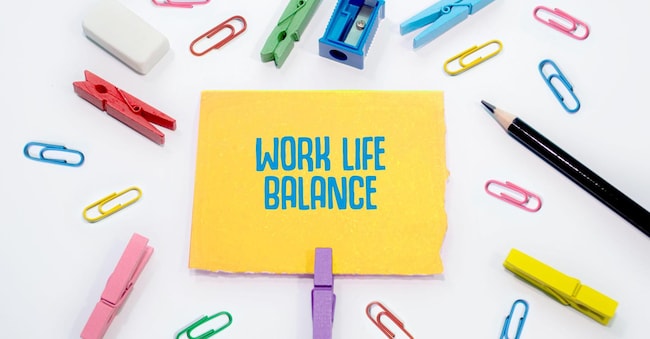
In everyday life, the conflict between these two visions takes shape mainly because the 'elders' are often the leaders of the 'young'. The former see in work first and foremost the dimension of quantity, the latter the dimension of quality. The former tend to find themselves in the nostalgia of heroic times, of hard work: 'When I started out, we worked without looking at the clock, no more leave and smartworking'; 'In my day, if my boss nodded, I would snap to attention'; 'No more promotion! First you break your back and then we talk about it'. The latter, on the contrary, are in love with the work life balance and frame the evaluation of work always in terms of quality of life. For them, stability is not an absolute value. They are constantly fascinated by the idea of change and are in no way willing to compromise (with ethics, with their time, with their character, with their autonomy).
Job interviews sometimes comically capture this 'conflict of civilisations'. Those who started working in the 1980s/90s and remember their first interview are likely to be overwhelmed by the paradigm shift: 'These guys are out of touch. It seemed like you were doing me a favour to come to the interview. I'm the one offering you an opportunity, not you...'. It is no coincidence that in some contexts the distances between recruiter and candidate are so pronounced that the HR department literally has to act as interpreter and cultural mediator.
However, despite the difficulties, these two visions of work are laboriously coexisting and are slowly contaminating each other. The impression is that we will soon arrive at a 'cultural substitution', compounded also by the development of technology and artificial intelligence. We are moving towards a world in which people work by choice and only under certain conditions, a world in which the boss/employer has to 'sell' solutions to their employees, who are increasingly free not to buy them.

