
World Bank, Africa growth to +3% in 2024. Education reform needed to accelerate
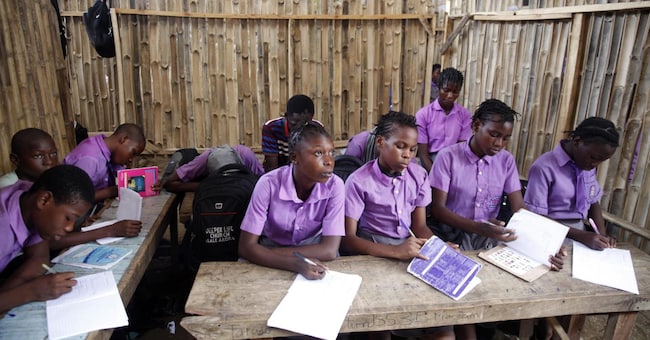
According to the Washington-based institute, 170 million children and adolescents are missing out on 'universal' education and sustainable expansion
3' min read
3' min read
The sub-Saharan economy is recovering from the Covid slide, but remains stuck in modest growth rates. To accelerate them, a double push would be needed: stabilisation of the economic systems and, above all, educational reform to provide the 'growing regional workforce' with the qualifications and experience required by the market that is being defined in the continent's more than 50 countries.
This is the diagnosis contained in the latest edition of Africa Pulse, a bi-annual publication by the World Bank on the outlook for the sub-Saharan region. The institute forecasts the bloc's growth at +3% in 2024, revised downwards from the previously assumed 3.4%, while moving towards an expansion of 3.9% in 2025 (up slightly from the previously estimated 3.8%). Inflation is expected to ease to 4.8% from 7.1% in 2023, due to a combination of monetary tightening, more stable currencies and less fragmentation in the supply chain.
In 2024, according to World Bank figures, GDP per capita will trudge along at a growth rate of 0.5 per cent, compared to the 2.4 per cent recorded on average between 2000 and 2014. Among the most cumbersome obstacles cited by the Washington-based institute are conflicts, the effects of climate change and rising debt servicing costs, an increasingly heavy burden on the continent's public finances. In the current year, African governments will spend an average of 34% of their revenues on servicing their debts, 'leaving little room for productive investment'. Including those in education, one of the unexploited levers for economic growth.
Integrating 170 million children and adolescents into education
The title chosen for the latest report is already eloquent, 'Transforming Education for Inclusive Growth'. : transforming, renewing education for inclusive growth.
The one now languishing in the region, suspended between an ever-running nominal expansion and the inability to translate the plus sign into benefits and, indeed, the inclusion of a workforce fuelled by the demographic exploit of a continent that will double from 1.3 billion to 2.5 billion in 2050.


